Arctic cold snap threatens US after winter storm leaves at least 38 dead
The NWS warns that much of the northern half of the country will remain continuously below freezing through Feb. 1, and another blast of Arctic air is expected to bring "the coldest temperature seen in several years in some locations and the longest duration of cold in decades."

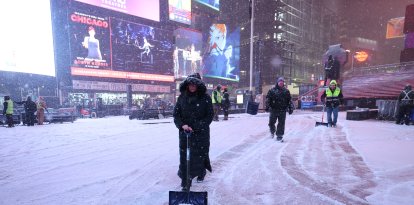
Cold in NY

A powerful ice and snow storm is hitting large parts of the country after a massive storm caused at least 38 deaths from the Deep South to the Northeast, knocked out power to hundreds of thousands of people, and threw air travel into chaos.
Another arctic wave is expected this weekend that could bring new hardship to more than 100 million Americans, with record low temperatures and another big storm looming, even as municipalities are digging through deep piles of snow and ice.
The storm was linked to more than three dozen deaths, according to an AFP compilation of state government and local media reports, with causes including hypothermia as well as accidents involving traffic, sleds, all-terrain vehicles and snowplows.
Three Texas siblings between the ages of six and nine died Monday after falling through ice on a pond north of Dallas, authorities said.
The death toll from the storm is expected to rise after New York Mayor Zohran Mamdani said Tuesday that at least 10 New Yorkers who died were found outdoors in extreme cold, although it remains to be determined whether all the deaths were from hypothermia.
In Bangor, Maine, seven people died when a small plane crashed while attempting takeoff during a snowstorm, the Federal Aviation Administration reported.
Power failures and flight suspensions
Air travel was also severely affected. More than 24,500 U.S. flights, an alarming number, were canceled between Saturday and Tuesday, as the storm crippled transportation across the country, according to the FlightAware website.

Heavy snowfall
The heaviest snowfall, 31 inches (79 centimeters), occurred in Bonito Falls, New Mexico, on the western edge of the colossal storm, followed by East Napanoch in upstate New York, where 30 inches fell, according to the National Weather Service (NWS).
In Boston, residents were digging out their debris Tuesday after the Massachusetts metropolis was hit by more than 23 inches of snow.
Many of the hardest-hit areas were in the South, where authorities are less accustomed (and often less equipped) to deal with severe winter weather.
In the Gulf Coast state of Mississippi, for example, several cities were blanketed by thick, treacherous ice that brought down power lines and trees and made roads impassable.
Meanwhile, the NWS warns that much of the northern half of the country will remain continuously below freezing through Feb. 1, and another blast of Arctic air is expected to bring "the coldest temperature seen in several years in some places and the longest duration of cold in decades."
The NWS warned that much of the northern half of the country will remain continuously below freezing until Feb. 1.
He said regions as far south as Florida should brace for "hard freezes."
At the same time, a potentially significant winter storm could spread from Canada along the East Coast generating widespread precipitation as a low-pressure system collides with frigid air. Meteorologists say it is still premature to determine the exact path of the storm or whether it will fall as rain or snow.
LATEST