Hurricane Melissa hits Cuba: Strong wind, rain and flooding damage eastern part of the country
The island's meteorological authorities warned of storm surges and coastal flooding on the southern coast, which will spread to the north-eastern coast in the coming hours. They insist that the calm of the eye does not mean the end of the hurricane, as the winds will return with equal or greater intensity in the opposite direction.
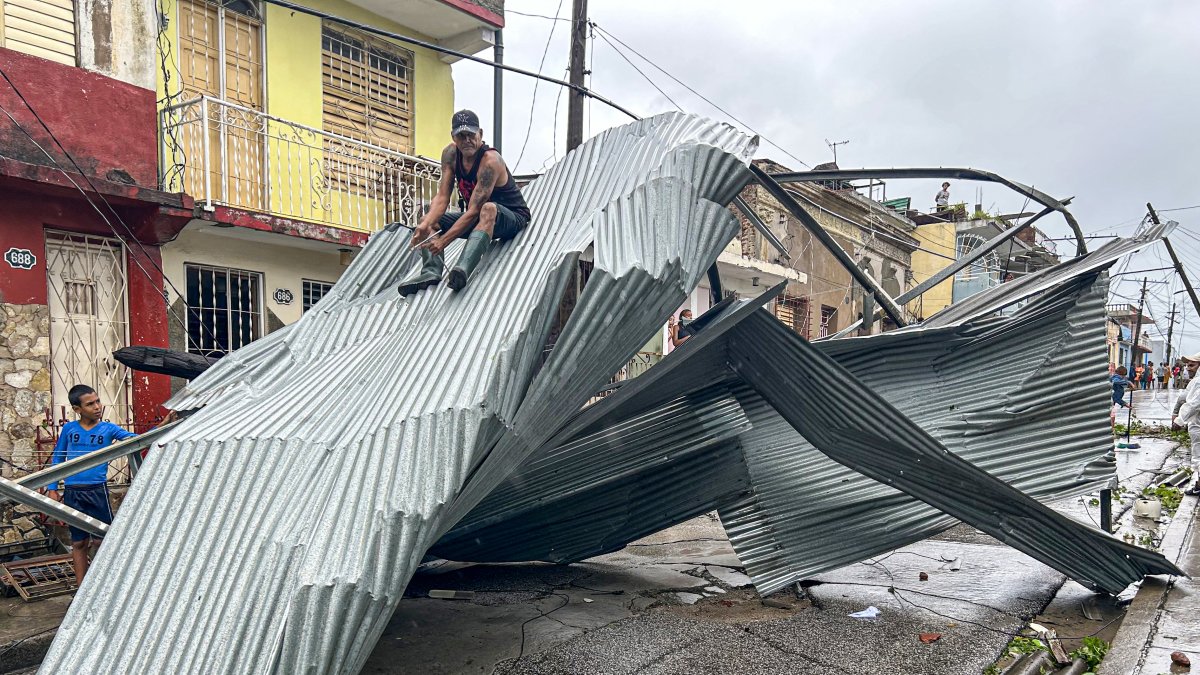
Cubans during Hurricane Melissa

Hurricane Melissa made landfall in Cuba during the early morning Wednesday at around 3:10 a.m., by the municipality of Guamá, in the province of Santiago de Cuba, as a Category 3 hurricane with maximum sustained winds of 120 miles per hour.
At 6 a.m., wind speeds were still has high 115 miles per hour with a central pressure of 960 hPa, while advancing northeast of eastern Cuba at 12 miles per hour.
The center of the system was roughly 12 miles south of San Germán and 47 miles southwest of Banes, Holguin, the province where it is expected to go out to sea during the morning. Hurricane force winds and heavy rains have been reported in Santiago de Cuba, Holguin, Granma and Guantanamo, with gusts of up to 116 miles per hour in Contramaestre and tropical storm force winds in areas of Las Tunas, including the coastal area of Puerto Padre.
Videos shared on Facebook by users show the strength of the winds with which Hurricane Melissa lashed Cuba this morning, after turning slightly to the east on its path over the eastern territory.
The island's meteorological authorities warned of tidal waves and coastal flooding on the southern coast, which will extend to the north-eastern coast in the coming hours. They insist that the calm of the eye does not mean the end of the hurricane, since the winds will return with equal or greater intensity in the opposite direction. Although storm has begun to show signs of weakening, its effects will continue throughout Wednesday morning.
So far, no deaths have been reported on the Caribbean island.
Official report from Cuba
"It has been a very complex early morning," the official said on X, without specifying the damage caused by the hurricane, which reached the island after hitting Jamaica.
Díaz-Canel did not report that while the hurricane swept through eastern Cuba from end to end, the entire region remained disconnected from the national energy system, had difficulty forecasting Melissa's trajectory and did not have access to basic services.
The hurricane system has hit Cuba as the island faces one of the worst economic, energy and epidemiological crises in its history.

Trajectory and evolution of the hurricane
Hurricane Melissa made landfall in Jamaica on Tuesday, Oct. 28 at noon as a Category 5 hurricane, with maximum winds of 183 miles per hour, before weakening to a Category 4 a few hours later.
The system formed on Oct. 21 over the Caribbean Sea and reached hurricane status on Saturday, Oct. 25, rapidly intensifying to become the most powerful hurricane of the 2025 season.
Hurricane-force winds extend up to 28 miles from the eye, and tropical storm-force winds reach 195 miles, significantly expanding its impact zone.

Risk of flooding and landslides
Specialists from the Florida National Hurricane Center warn that Melissa could generate flash floods in low-lying areas and near rivers, mainly in Santiago de Cuba, Granma and Guantanamo.
Significant storm surge is expected on the southeastern coast with waves between 6 and 9 feet, accompanied by destructive swells.
For eastern Cuba, rainfall accumulations of between 10 and 15 inches are forecast, with local highs of up to 20 inches. This rainfall could cause catastrophic flooding and landslides in mountainous areas.
Tropical storm force winds will remain for more than 24 hours, while hurricane force winds will lash the eastern region for at least six continuous hours.
The system will also affect the Bahamas as well as Turks and Caicos with hurricane conditions today, authorities specified.
">5am EDT Oct 29 Key Messages for #Hurricane #Melissa:
— National Hurricane Center (@NHC_Atlantic) October 29, 2025
The Major Hurricane is now moving across E #Cuba & will affect the #Bahamas and the Turks and Caicos today with Hurricane conditions.
Latest info at https://t.co/tW4KeGe9uJ pic.twitter.com/NX6J2VaYIH
The most intense hurricane of the season
In the early hours of Tuesday morning it surpassed Hurricane Katrina (2005) for the all-time wind speed record in the western Caribbean, turning into an unprecedented threat to the region.
LATEST