ANALYSIS
Nick Fuentes, Candace Owens, Tucker Carlson... Report reveals these radical personalities have little real influence among younger conservative electorate
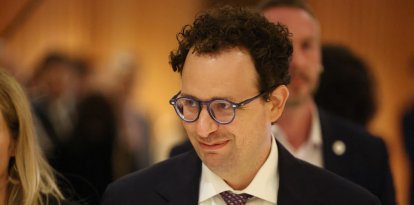
Eric Kaufman, professor of politics at the University of Buckingham, argues that the time has come to curb the panic around the anti-Semitic and racist influencers who are dominating young conservatism. In his view, the real concern should focus on how the collapse of social trust is fueling nihilistic conspiracy theories.

A study by Eric Kaufman, professor of politics at University of Buckingham, published by the Center for Heterodox Social Science and disseminated by Compact magazine, analyzed new polling data to profile the U.S. audience of right-wing media figures such as Nick Fuentes, Tucker Carlson and Candace Owens.
Surprisingly, the results show that their followers are less white and less male than is usually assumed. Although audiences for these personalities are more likely to believe in conspiracies related to Jews or Israel, the report indicated that they are not particularly anti-Semitic, anti-black or akin to white nationalism.
In addition, the study notes that statements by Fuentes, Owens and, to a lesser extent, Carlson appear to have limited impact, even among their own followers.
In that regard, in his article on the report for Compact, Kaufman argued, "It’s time to press pause on the panic about antisemitic and racist influencers taking over young conservatism. We should worry more about how a collapse in trust is fueling nihilistic conspiracy theories."
Fuentes is little followed by Trump voters
Comparing him to Tucker Carlson or Candace Owens, Nick Fuentes is considered by many to be the most openly racist and anti-Semitic of the three, but the study revealed that very few young Trump voters follow him.
Eric Kaufman noted that within Fuentes's audience -of a size almost similar to that of Alex Jones- "Just 3% of adults and 7% percent of Trump voters under thirty-five tune in regularly." Among young Trump voters, an additional 4% consume its content occasionally.
According to the author, only a minority of Fuentes' regular followers fit into the category of white nationalists. Just "13% say immigration should be cut to zero," and only 20% argue that to be a "true American" you need to be white or have a U.S. accent. On the other hand, nearly a quarter believe that "a non-English speaking America would be no less American than the country is today."
The study also showed that Fuentes' audience is more diverse than is usually assumed: "One in three Groypers are minorities and a similar share are women."
The political scientist noted that, according to a sentiment thermometer, the black population scores 57 out of 100, a relatively positive rating. As Kaufman summarizes, the cultural profile of these followers more closely resembles that of those who follow figures like Kanye West than that of the historical referents of white supremacism.
Carlson has a lower impact on the audience
The report notes that, unlike Fuentes, Tucker Carlson has a much broader audience, but his discourse is less inflammatory and his "impact on his audience is more muted than Fuentes’s."
Kaufman argues that while Carlson occasionally makes wild claims, he generally "does not directly advocate for extremism." However, he recalls that the host has offered space on his show to more extremist figures without subjecting them to real questioning.

Politics
Tucker Carlson o la cruzada conspiranoica contra Israel, "el problema más insultante" de EEUU
Carlos Dominguez
The study shows that Tucker Carlson's influence among young conservatives is significant: "one in three Trump voters under thirty-five tuning in at least occasionally." However, his regular supporters, of whom 25% are non-white, do not hold extreme positions overwhelmingly.
According to the report, only 9% say immigration should be reduced to zero, while 40% believe that a non-white majority America would be no less American than it is today.
Sentiment toward Jews and Israel
According to the researcher, Nick Fuentes' regular and occasional audience shows a cooler attitude toward Jews than other groups, although it still registers a warmth level of 43 degree. In contrast, the study indicates that followers of Tucker Carlson and Candace Owens reach values near 60, only slightly below the 65 degrees felt by followers of Ben Shapiro.
After controlling for other factors, Kaufman revealed that following Tucker has a "weak association with anti-Jewish sentiment," and only among his most regular young followers. So, while it is understandable that there is concern about some anti-Semitic posts, the study indicated that "the effect and scale of the problem is limited."

On the other hand, the online right influences attitudes toward Israel, but less than is often claimed. The study found that young followers of Nick Fuentes rate Israel very negatively, with 26 ratings, and those of Candace Owens and Tucker Carlson also show a low rating, at around 34. However, young people who consume MSNBC or The New York Times don't express a particularly favorable opinion either, with 42 and 44 respectively, and even Ben Shapiro's young Trump-voting audience gives it only 50.
According to Kaufman, the study concludes that the variable that best explains skepticism toward Israel is not following right-wing influencers, but simply being young. Also, in the set of right-wing influencers analyzed, "their audiences average 10 to 20 points cooler toward Palestinians than Jews."
The rise of the "conspiracy vote"
Kaufman warns that the most disturbing data from his research is the widespread youth support for conspiracy theories about Jews. According to the study, two out of three Nick Fuentes followers under 35 believe "Israel Can Get Away With Anything Because its Supporters Control the Media," and about half of the young people who follow Tucker Carlson or Candace Owens share that idea.
But Kaufman stresses that this tendency is not exclusive to the online right: among young Trump voters, half of those who watch MSNBC and more than a third of readers of The New York Times or Ben Shapiro's audience also agree with that statement. For the researcher, Fuentes' followers are the most radical, but what the study really reveals is a broader generational pattern.
In this sense, Kaufman warns of a more disturbing phenomenon: the emergence of a floating "conspiracy vote" leaning young and non-white people, "which could shape the political and cultural direction of today’s unprecedentedly low-trust America".
What Kaufmann finds most striking about the study is not the presence of hostility, but the turn toward nihilism and irrationality among young people.
"The takeaway from my report is that for many Zoomers, violating taboos is a separate cognitive dimension from holding racist, white nationalist and antisemitic political attitudes...
What is more disturbing than any group animus is young peoples’ nihilistic apolitical anti-authority orientation, which is breeding cynicism, mistrust, and unreason. Data from the long-running General Social Survey (GSS) and ANES show that, as of 2024, just 8 percent of Americans under thirty-five say that other people, and the federal government, can be trusted."
LATEST