ANALYSIS
Congress wants to rename street 'Oswaldo Payá Way' in front of the Cuban embassy in Washington, DC
"The sacrifice of Oswaldo Payá Sardiñas and Harold Cepero is a stark reminder that the ruthless Cuban regime has no respect for human life, dignity, or human rights," said lawmaker Mario Díaz-Balart on the 13th anniversary of the pro-democracy activists' deaths.

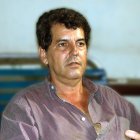
Cuban activist Oswaldo Payá in a file photo.

Lawmakers Mario Díaz-Balart and Debbie Wasserman Schultz reintroduced a bipartisan bill to rename the street in front of the Cuban embassy in Washington, D.C., as "Oswaldo Payá Way," in honor of Christian Liberation Movement founder and leader Oswaldo Payá Sardiñas, who was allegedly assassinated by State Security.
Payá Sardiñas died at the age of 60 on July 22, 2012, following a car accident allegedly orchestrated by the Castro regime, in which young activist Harold Cepero also died.
The bill was reintroduced by Senators Ted Cruz (R), Richard Durbin (D), John Curtis (R), and Rick Scott (R).
"The sacrifice of Oswaldo Payá Sardiñas and Harold Cepero is a stark reminder that the ruthless Cuban regime has no respect for human life, dignity or human rights. Renaming the street in front of the regime's embassy in D. C. in honor of Payá will pay tribute to those who lost their lives and ensure that his legacy and his fight for a free Cuba will live on," Díaz-Balart said in a statement from his office.
The proposal was also accompanied in the House of Representatives by lawmakers María Elvira Salazar (R), Frederica Wilson (D), Carlos A. Giménez (R), Darren Soto (D) and Nicole Malliotakis (R), who on multiple occasions have accompanied the Cuban people's struggle toward freedom and condemned the communist regime that has sequestered power on the island for more than 65 years.
"An act of justice and hope"
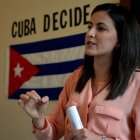
"Thanks to all the members of Congress who defend the memory of my father and recognize his struggle for freedom. Naming the street in front of the Cuban embassy in Washington after Oswaldo Payá is an act of justice and hope," the Cuban leader's daughter, Rosa María Payá, elected last month as commissioner of the Inter-American Commission on Human Rights (IACHR), wrote on X.
">Gracias a todos los congresistas que defienden la memoria de mi padre y reconocen su lucha por la libertad🇨🇺
— Rosa María Payá A. (@RosaMariaPaya) July 21, 2025
Nombrar la calle frente a la embajada cubana en Washington como Oswaldo Payá es un acto de justicia y esperanza.#PayáVivehttps://t.co/qwWIYmc6mN
Gracias @MarioDB… pic.twitter.com/QmalCP7iXK
Rosa María has dedicated her life to promoting freedom for the Cuban people and others suffering under authoritarian regimes in our hemisphere, keeping alive the memory of the sacrifice of so many, including that of her father, in the struggle for freedom.
The National Endowment for Democracy (NED) will also remember the island's freedom fighter on July 22, just on the anniversary of his death. According to an announcement on X, the NED "will posthumously award the 2025 [Democracy Service Medal] to Oswaldo Payá—one of Cuba’s most courageous advocates for peaceful democratic change." The award is the organization’s highest distinction.
How did Oswaldo Payá die?
According to a report released in 2023 by the Inter-American Commission on Human Rights (IACHR), the Cuban regime was responsible for the 2012 death of the prominent political activist who had organized a movement to demand the Castro authorities to grant greater freedom on the island.
Oswaldo Payá died in a suspicious car accident in eastern Cuba, an incident that his relatives always believed and claimed on multiple occasions was caused by the government.
At the time of his death, Payá was one of the most prominent members of the Cuban opposition and had attracted international attention for leading a grassroots campaign for a referendum that would give Cubans the right to choose the national political system.
Was it an accident?
Carromero was arrested and sentenced to four years in prison for vehicular reckless homicide. He finished serving his sentence with an electronic ankle bracelet in Madrid after six months in a prison on the island.
However, an independent investigation, which took a decade to complete and reviewed evidence and testimony from several witnesses, contradicts the dictatorship's official version of the events.
Payá's car was hit by an official government vehicle, which caused it to crash, according to the report by the commission, which observes and investigates human rights violations in the hemisphere and belongs to the Organization of American States (OAS).
The IACHR found "serious and sufficient evidence to reach the conclusion that state agents were involved in the death" of the two men.
Carromero: "The Cuban Secret Service assassinated Oswaldo"
Ángel Carromero, then a member of the Popular Party (PP) in Madrid, stated in an interview published by the Spanish newspaper El Mundo in 2013: "The Cuban secret services assassinated Oswaldo Payá." "It wasn't the first time they tried. Two months earlier, another car had overturned his vehicle," he added.
Regarding his time in prison, he revealed that the conditions were inhumane and that he only survived the six months he spent in a Cuban prison because he was in a special cell with another prisoner and not in a common cell. He also said that he was constantly sedated and interrogated because he was thought to be "a heavyweight of the P.P. or a CIA agent."
Swedish politician Aron Modig, who was also in the car at the time of the accident, claims not to remember anything about the incident. He left Cuba soon after and has never made any statements about it.
LATEST