Senate passes resolution condemning Brazil tariffs with Republican backing
Five Republicans joined Democrats in a vote seeking to overturn the legal basis for the 50% tariffs implemented by President Trump.

U.S. Senate

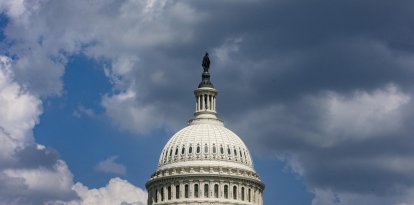
The U.S. Senate approved a resolution on Tuesday to end the 50% tariffs that President Donald Trump imposed on imports from Brazil, including coffee, oil, and orange juice. The vote, which ended 52-48, evidenced an unusual split within the Republican bloc.
The measure, introduced by Senators Tim Kaine (D-VA) and Rand Paul (R-KY), was backed by five Republicans—Mitch McConnell, Thom Tillis, Susan Collins, Lisa Murkowski, and Paul himself—who joined Democrats in reasserting congressional authority over tax and trade policy.
Although the resolution is largely symbolic, because the House, led by Mike Johnson (R-LA), does not plan to vote on it this year, and because Trump would veto any attempt to override his trade measures if it reached his desk, the initiative sends a clear signal about the internal Republican debate over the limits of presidential power.

Politics
Trump defends tariffs on livestock imports, but urges nation's cattle producers to lower beef prices
Agustina Blanco
Mixed positions on executive authority
Senator Rand Paul called the tariffs a tax on U.S. consumers and reminded that, under the Constitution, taxes must originate in the House of Representatives.
Republican leader Mitch McConnell also expressed concern about the impact of the tariffs on supply chains and agricultural production in his state. In a statement, he noted that the new trade barriers "have made it difficult to maintain the supply chains that allow thousands of Kentuckians to manufacture automobiles and appliances in the state."
For his part, Thom Tillis justified his vote in favor of the resolution by pointing out that the tariffs were applied for reasons unrelated to trade, which generates "uncertainty" among U.S. economic partners.

Politics
Trump and Lula da Silva seek to rebuild relationship after Bolsonaro trial tensions
Agustina Blanco
The Brazil controversy
Trump imposed the tariffs in July 2024, after invoking the International Emergency Economic Powers Act (IEEPA). He argued that the Brazilian government's actions posed an "unusual and extraordinary threat" to the United States, after former president Jair Bolsonaro was sentenced to prison for an attempted coup.
At the time, the White House claimed that the process against Bolsonaro had been unfair and called the sentence a case of political persecution by a leftist government. However, several senators expressed concern about the use of emergency powers to address a foreign political situation unrelated to trade or national security.
Impact on the U.S. market
A Republican debate
Although the majority of the Republican Party continues to support Trump's trade policy, the Senate vote reflects a debate over how to balance the president's authority with Congress's role in economic decision-making.
LATEST