Senate Republicans consolidate power in Washington by fast-tracking Trump's appointments
Nearly 60% of civilian nominees have already been approved as the president's agenda moves forward following a series of changes to legislative procedure that reduced the chances of parliamentary blockage by Democrats.
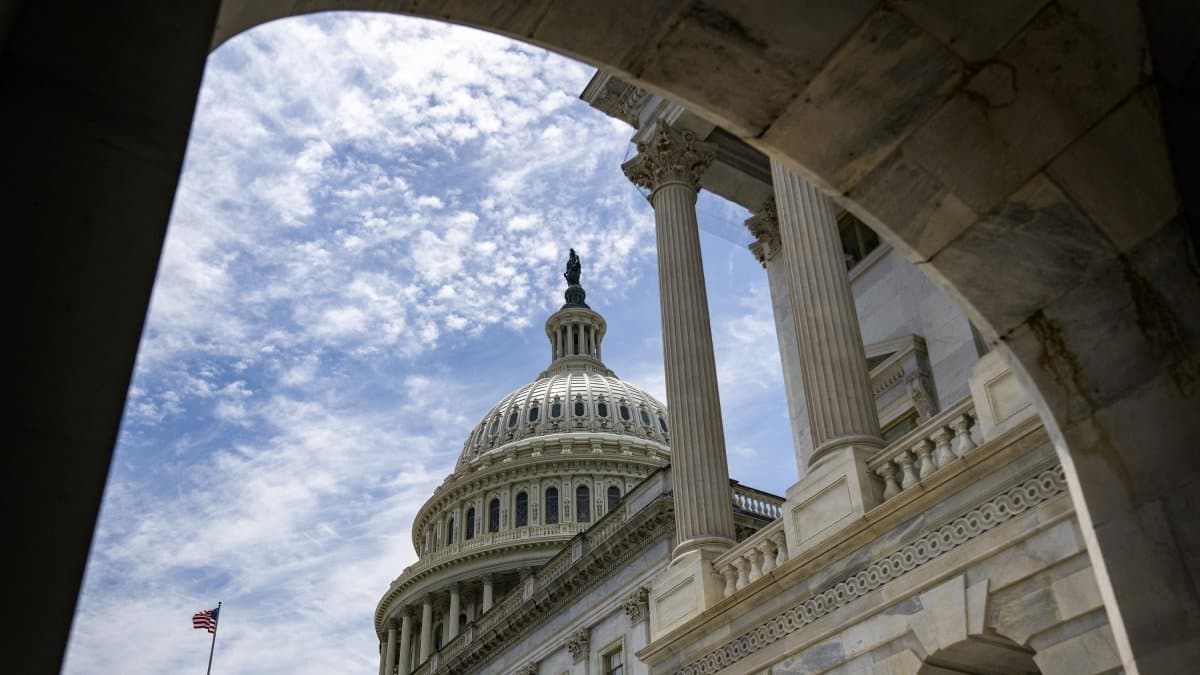

The Republicans in the Senate continue to fast-track approval of officials proposed by President Donald Trump, following a series of modifications to legislative procedure that reduced the chances of parliamentary gridlock by the opposition.
In a new round of voting, the Republican majority confirmed 49 additional candidates, a figure that brings to 60% the total number of civilian nominees pushed by the White House and that reflects a significantly higher approval rate than that recorded during previous stages of the administration.
The decision also represents the fourth occasion in which the Senate has used expedited mechanisms since the internal reform approved last year to speed up the confirmation processes.
Appointments for energy, justice and land management
Among the approved nominees are appointments spread across more than a score of federal positions, including:
- Federal prosecutors.
- U.S. Marshals.
- Ambassadors.
- Members of government agencies.
- Officials involved in transportation, energy and land administration.
Among the prominent names is Stevan Pearce, proposed to head the Bureau of Land Management, an entity with direct influence over energy policy, natural resources and federal land use.
The confirmations reinforce the government's ability to fill strategic positions related to the implementation of energy and resource management policies.
The source of the change: a longstanding confrontation between Republicans and Democrats
For much of the past year, Senate Democrats used parliamentary mechanisms to slow or block approval of numerous presidential nominees.
According to Republicans, that strategy was aimed at preventing Trump from reorganizing federal structures aligned with his political agenda. On the Democratic side, the objections were framed as an attempt to exert institutional control and further review certain appointments.
The confrontation was led politically by the Senate Democratic leader, Chuck Schumer.
Faced with gridlock, Republicans pushed through a rules change known informally as the "nuclear option," a parliamentary tool that lowers the requirements for approving certain nominations.

What exactly changed?
Traditionally, many nominations could be held up by the threat of a legislative obstruction or filibuster, a mechanism that usually requires a 60-vote threshold to move forward.
After the reform:
- Some nominations came to require only a simple majority.
- Debate times were reduced.
- Procedures that allowed the process to be extended were limited.
Republicans argue that these modifications avoid political roadblocks and streamline institutional functioning. Critics, on the other hand, argue that they diminish the spaces for bipartisan negotiation.
A higher rate of confirmations than in previous governments
The figures show a significant growth in the number of approved officials.
According to data released by Republican leaders:
- More than 400 Trump-driven nominees were confirmed over the past year.
- During a comparable period of his first term, the figure had been 323.
- In the same time frame, former President Joe Biden got about 365 confirmations.
Republicans tout that data as proof of the effectiveness of the regulatory changes.
The next front: immigration and border security
The Republican majority seeks to approve through budget reconciliation a package of approximately $72 billion to bolster ICE operations; expand Border Patrol resources and sustain immigration enforcement programs over the next several years.
However, the proposal faces technical and congressional hurdles.
Some provisions were already removed during the Senate's internal review process, including funds earmarked for security upgrades at Trump-linked facilities and items related to the Secret Service.
A change with long-term political impact
The acceleration of appointments could have effects beyond the immediate juncture. The confirmed federal officials occupy positions with the capacity to influence for years in sensitive areas such as justice, energy, territorial regulation and immigration.
In that context, the debate no longer revolves solely around how many nominees are approved, but to what extent the new Senate rules could permanently transform the political dynamic between majority and opposition.
🛠 Do you think there is an error in this article?
Recommendations








LATEST