PROFILE
Tedros Adhanom Ghebreyesus: Why is the WHO director so controversial? Cover-ups, bias and controversy
The WHO director-general is one of the most controversial figures in the organization's recent history. The first African and the first non-physician in office, his leadership has been marked by accusations of epidemic cover-ups, excessive proximity to China during the COVID-19 pandemic and bias in the Tigray conflict.

WHO Director-General Tedros Adhanom Ghebreyesus.

Tedros Adhanom Ghebreyesus, director-general of the World Health Organization (WHO) since 2017 and re-elected in 2022, is the first African person in the position and the first non-physician to lead the organization. His track record includes public health successes in Ethiopia, but also strong criticism for alleged cover-ups, excessive closeness to the Chinese communist regime during the COVID-19 pandemic and bias in the Tigray conflict.
Tedros had political ties to the Tigray People's Liberation Front, a Marxist-Leninist guerrilla movement founded in 1975 that ruled until 2018 as a political party with an authoritarian development model. The head of the Ethiopian military, General Berhanu Jula, publicly accused him in November 2020 of using his position to get weapons and military support for Tigrayan forces.
"He has worked to get them weapons, he has used his U.N. appointment as an opportunity to lobby and convince people to support the TPLF junta. He will not be successful," Berhanu asserted.
From Ethiopia to the WHO
Tedros Adhanom Ghebreyesus has a bachelor's degree in biology, a master's degree in infectious disease immunology and a doctorate in community health. According to his official WHO biography, he was Ethiopia's minister of health from 2005 to 2012 and minister of foreign affairs from 2012 to 2016. During his time as health minister, he led a reform of the health system with expansion of infrastructure and health personnel.
However, his management faced serious accusations. During his time as health minister, Ethiopia reported several outbreaks as "acute watery diarrhea" rather than cholera in the years 2006, 2009 and 2011.
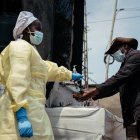
According to a report from The New York Times published in 2017, Tedros was accused of covering up at least three cholera epidemics in order to avoid international embarrassment and the possible loss of foreign aid. The allegation was made by Lawrence O. Gostin, director of the O'Neill Institute at Georgetown University and an informal adviser to Dr. David Nabarro, Tedros' rival in the election for WHO director-general.
Gostin argued that Ethiopia had a long history of denying cholera outbreaks, even as aid agencies tried to contain them, and that some of those outbreaks occurred under Tedros' direct responsibility. He felt that allowing someone with such a record to lead WHO could cause the organization to "lose its legitimacy."
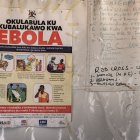
Tedros strongly denied the allegations and called them a "last-minute smear campaign." He claimed the outbreaks were just "acute watery diarrhea" in remote areas where laboratory testing was difficult, a version the Ethiopian government maintains to this day.
After being elected as WHO director-general in 2017, he appointed Robert Mugabe, Zimbabwe's former dictator, as WHO goodwill ambassador for Africa, a decision he had to revoke in the face of the international scandal over human rights violations. Such action raised doubts about his judgment.
COVID management: Praise for China and delays
During the early months of the COVID-19 pandemic, Tedros became a leading advocate of the Chinese response. In late January 2020, he met in Beijing with President Xi Jinping and, after the meeting, publicly praised China for "establishing a new standard for outbreak control" and for its "openness to share information" with WHO and the rest of the world.
Society
Public health shield: CDC and DHS implement immediate restrictions to slow the spread of Ebola
Alejandro Baños
However, while Tedros praised Chinese transparency, authorities in Wuhan were arresting citizens for "spreading rumors" about the disease and Internet censors were tightly controlling the flow of information. Despite mounting evidence of concealment and domestic outrage in China, Tedros maintained his stance.
In February 2020, at the Munich Security Conference, he insisted in his praise, "China has bought time for the world." In contrast, he harshly criticized other countries imposing travel restrictions toward China, warning against "recrimination or politicization" of the outbreak. His statements were widely highlighted by Chinese state-run media, which used them to legitimize Beijing's official narrative.
Tedros and Trump: The conflict that led to the U.S. withdrawal from the WHO
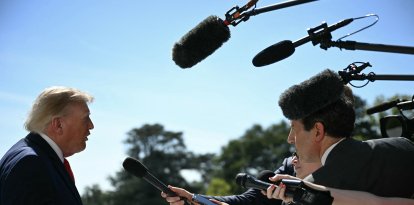
The president repeatedly accused Tedros and the WHO of being "too accommodating" to China and of having mismanaged the early months of the COVID-19 pandemic. In April 2020, Trump suspended U.S. funding to the organization, and in July 2020 he formally announced U.S. withdrawal from WHO, arguing that it had shown a "pro-China bias" and had failed in its response to the pandemic.
The official exit was scheduled for July 2021, but President Joe Biden reversed it on his first day in office, notifying the U.N. that the U.S. remained in the organization.
Tedros deeply regretted Trump's decision and defended WHO's independence in the face of political pressure.
In his second term, President Trump officially withdrew the United States from the WHO. He initiated the process on January 20, 2025, and completed the withdrawal on January 22, 2026, making the U.S. the first country to leave the organization since its founding in 1948.
LATEST