Trump defends tariffs on livestock imports, but urges nation's cattle producers to lower beef prices
“The Cattle Ranchers, who I love, don’t understand that the only reason they are doing so well, for the first time in decades, is because I put Tariffs on cattle coming into the United States, including a 50% Tariff on Brazil,” President Donald Trump tweeted.
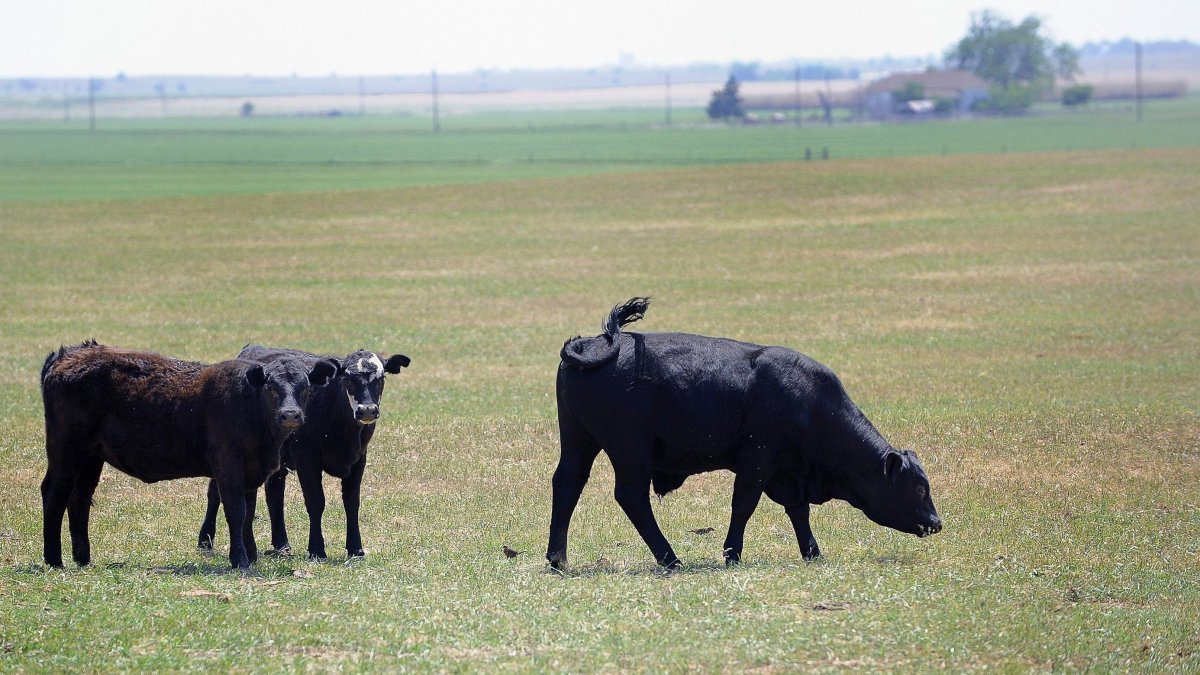
Cattle in a Texas field.

President Donald Trump defended his tariff policies to U.S. cattle ranchers on Wednesday, taking credit for the industry's recent success while urging producers to reduce their prices to ease the burden on consumers.
In a post on his Truth Social social network, Trump emphasized that without his measures, such as a 50% tariff on livestock imports from Brazil, cattle ranchers would be in a "terrible" situation, similar to the one they have faced over the last two decades.
“The Cattle Ranchers, who I love, don’t understand that the only reason they are doing so well, for the first time in decades, is because I put Tariffs on cattle coming into the United States, including a 50% Tariff on Brazil,” Trump wrote.
He noted, “If it weren’t for me, they would be doing just as they’ve done for the past 20 years — Terrible!” He added: “It would be nice if they would understand that, but they also have to get their prices down, because the consumer is a very big factor in my thinking, also!”
However, the president's message comes amid criticism of his proposal to import meat from Argentina in order to boost the South American country's economy and lower costs for U.S. consumers.

Criticism of the president's livestock decisions
Republican Senator Deb Fischer, from Nebraska—a key cattle-producing state—expressed her rejection of the idea. “Nebraska’s ranchers cannot afford to have the rug pulled out from under them when they’re just getting ahead or simply breaking even,” Fischer wrote on X on Tuesday. “I strongly encourage the Trump administration to focus on trade deals that benefit our [agricultural] producers—not imports that will do more harm than good.”
Since hearing the president’s comments suggesting the U.S. would buy beef from Argentina, I’ve been in touch with his administration and my colleagues to seek clarity and express my deep concerns.
— Senator Deb Fischer (@SenatorFischer) October 21, 2025
I’ve also been sounding the alarm on the bleak state of our ag economy and the…
Similarly, Fischer, a member of the Senate Agriculture Committee and a cattle rancher herself, has contacted the Republican administration to express her "deep concerns" about the plan, arguing that it is not the best way to reduce prices and that the country already has "safe and reliable meat."
In addition, Colin Woodall, the CEO of the National Cattlemen's Beef Association, issued a statement criticizing the import measure regarding Argentina, stating that it "only creates chaos at a critical time of the year for American cattle producers, while doing nothing to lower grocery store prices."
USDA announces plans to help farmers
- Rangeland expansion
- Improved disaster management
Improved tools will be implemented to support ranchers in recovering from natural disasters.
- Support for new producers
Programs will be promoted to facilitate the entry of young and new livestock farmers into the sector.
- Improve processing and transparency
- Cost reduction.
Small meat processors will see a reduction of up to 75% in inspection costs, making their operations easier.
- "Product of the USA" label
A campaign will be relaunched and strengthened to ensure that only meat born, raised and slaughtered in the U.S. carries this label, promoting transparency for consumers.
- Infrastructure expansion
In collaboration with the Small Business Administration (SBA) and Kelly, processing capacity and employment in rural areas will be boosted.
- Increase herd and demand
- School programs
- Promotion of high-protein diets
Meat purchases for school feeding programs will be increased, strengthening domestic demand.
Jointly with Health Secretary Robert F. Kennedy Jr., dietary guidelines will be updated to encourage meat consumption, stabilizing prices over the long term.
- Supply-demand balance
Will work to generate demand for U.S. beef while expanding the cattle herd, which is currently at its lowest level since 1951 at 94.2 million head.
LATEST