House gives final approval to Trump's multibillion-dollar cuts, which now only need the president's signature
The final vote ended with 216 in favor and 213 opposed. Only two Republicans joined Democrats in the opposition, Brian Fitzpatrick of Pennsylvania and Mike Turner of Ohio.
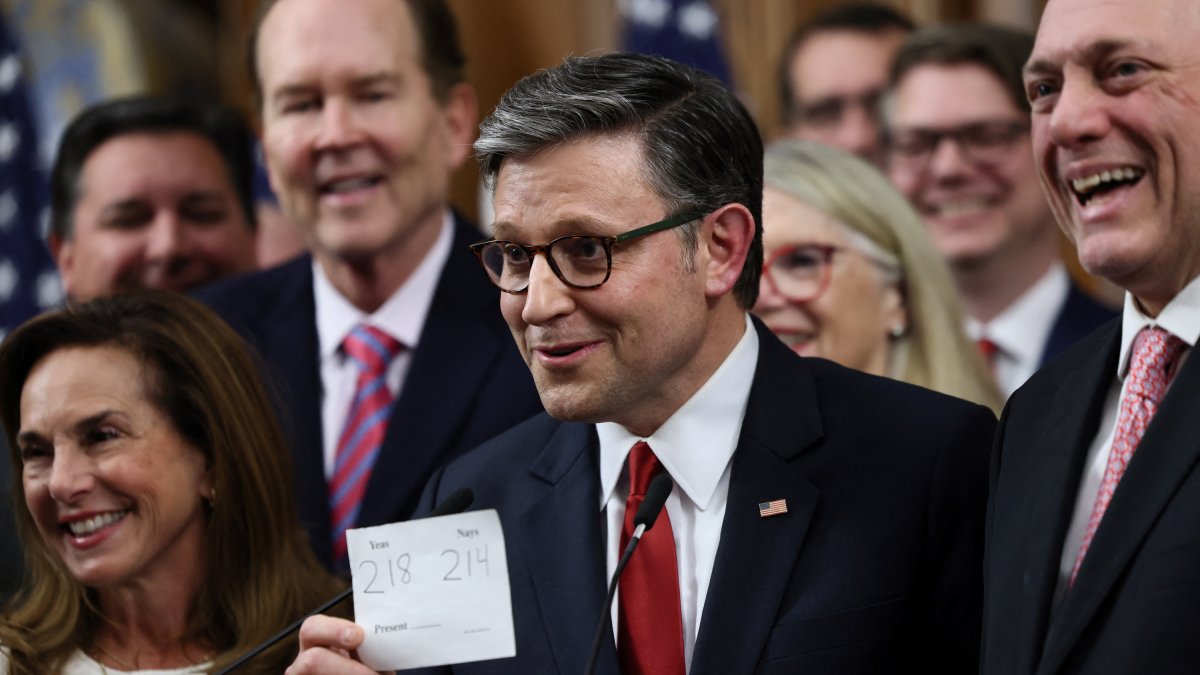
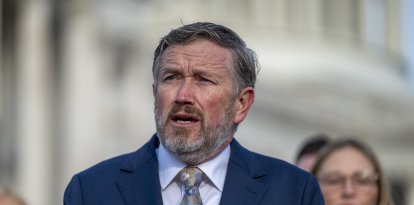
Mike Johnson on Capitol Hill/ Jemal Countess.

Congress passed the rescissions package, legislation that allows them to codify spending cuts made by the Department of Government Efficiency (DOGE). The House of Representatives approved the changes made by the Senate, sending the bill to the President's desk. In total, they approved cutting $9.4 billion.
The last vote in the House ended with 216 in favor and 213 opposed. Only two Republicans joined Democrats in the negative, Brian Fitzpatrick of Pennsylvania and Mike Turner of Ohio. Republicans worked against the clock, as they had until Friday to pass the cuts.
The package will rescind $8.3 billion earmarked for foreign aid programs, including funds from the USAID liquidation. In addition, it will cancel $1.1 billion allocated to the Corporation for Public Broadcasting (CPB), which affects funding for NPR and PBS.
How does the rescissions package work?
The legislation was passed at the time to prevent President Richard Nixon from unilaterally withholding previously authorized spending items.
However, it provides two exceptions to the rule: spending extensions and spending rescissions. In the latter case, the White House can ask Congress to approve the proposed cuts through a Funding Cancellation Package.
This process has a 45-day window from submission and is governed by a simple majority in both chambers, circumventing the 60-vote rule to break debate in the Senate. The White House can activate this process as many times as it likes, with no annual limits.
In addition, it can only be used to cut discretionary funds and spending pipelines, but not mandatory spending such as Medicaid, Social Security or interest on debt.
As for "spending pipeline" items, they are those that have already been approved by Congress but have not yet been activated. For example, if a $500 million expenditure is approved for an international aid program and the State Department signed a first contract for $200 million, the remaining $300 million is "on track" since it has been authorized but not yet activated. In other words, they are like checks approved but not yet cashed. Therefore, they are subject to being cut.
LATEST