Chief Justice John Roberts: 'Personally directed hostility [against judges] is dangerous and has got to stop'
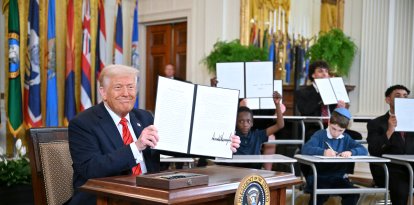
His remarks come days after Donald Trump criticized the court and described it as an "unjust political organization."
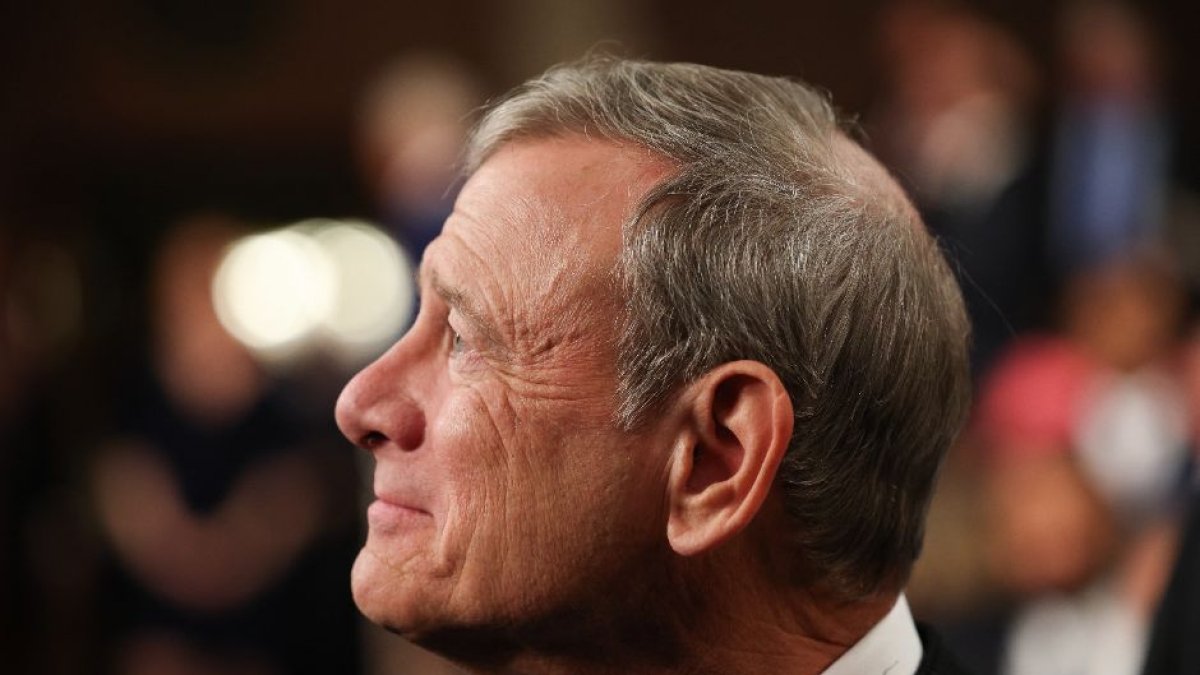
John Roberts, SCOTUS president

The president of the Supreme Court (SCOTUS), John Roberts, called for an end to personal criticism of the justices. Although he did not name any specific cases or name names, his remarks come just days after Donald Trump railed against the Supreme Court and "political judges."
Roberts asserted during an event at Rice University in Houston that criticism of rulings could "very much be healthy," because "we don't believe that we are flawless in any way." "The problem sometimes is that the criticism can move from a focus on legal analysis to personalities," he added.
"They are looked at from all sides ... not just from a particular political perspective," he also said during Tuesday's talk. "And you see from all over, not just any one political perspective on it, that it's more directed in a personal way," he argued before settling, "Personally directed hostility is dangerous and has got to stop."
It's not the first time Roberts has warned against rebuking judges. Last year he came out in defense of a federal judge whom Trump had asked to remove, asserting that "impeachment is not an appropriate response to disagreement concerning a judicial decision." "The normal appellate process exists for that purpose," he added in an unusual instance of SCOTUS president intervention.
Moreover, in his 2024 final report, he wrote that "In a democracy—especially in one like ours, with robust First Amendment protections—criticism comes with the territory. It can be healthy." In that text he also identified four types of "illegitimate" activities against the justices: violence, intimidation, disinformation, and threats to challenge lawfully issued rulings.
Four years earlier he had condemned the words of Senator Chuck Schumer against two supreme court justices, Brett Kavanaugh and Neil Gorsuch, in the context of a case over access to the abortion pill. "You have released the whirlwind, and you will pay the price," the Democrat said, "you will not know what hit you if you go forward with these awful decisions." That same year, in his final report, Roberts spoke of a "significant uptick" in violence against the various judicial strata.


Trump v. SCOTUS: "A weaponized and unjust political organization"
The president devoted several words to the Supreme Court this week in two publications critical of the Justice. Above all, he protested his ruling against the administration's tariffs, "the decision that mattered most to me."
Trump spared from his criticism conservatives Samuel Alito, Clarence Thomas and Brett Kavanaugh, who voted to uphold the tariffs. After thanking them for their "wisdom and courage," he wrote that they had understood that other countries should not "be reimbursed and rewarded for the decades of damage they have caused the United States of America."
Although he did not explicitly name them, his reproaches, therefore, would have been directed at the six justices who made up the majority: John Roberts himself, Neil Gorsuch, Amy Coney Barrett, Sonia Sotomayor, Elena Kagan and Ketanji Brown Jackson.
"Our country was unnecessarily RANSACKED by the United States Supreme Court, which has become little more than a weaponized and unjust political organization," he asserted. "The sad thing is, they will only get worse!"
"This completely inept and embarrassing court was not what the Supreme Court of the United States was set up by our wonderful Founders to be. They are hurting our country, and will continue to do so. All I can do, as President, is call them out for their bad behavior! This statement about the United States Supreme Court will cause me nothing but problems in the future, but I feel it is my obligation to speak the TRUTH," he also posted.
LATEST