"Crypto Week" slows down: Republican group rejects Trump's cryptocurrency bills over fears of risk of surveillance and state control
The president urged continued passage of three key pieces of legislation that have boosted the cryptocurrency market.
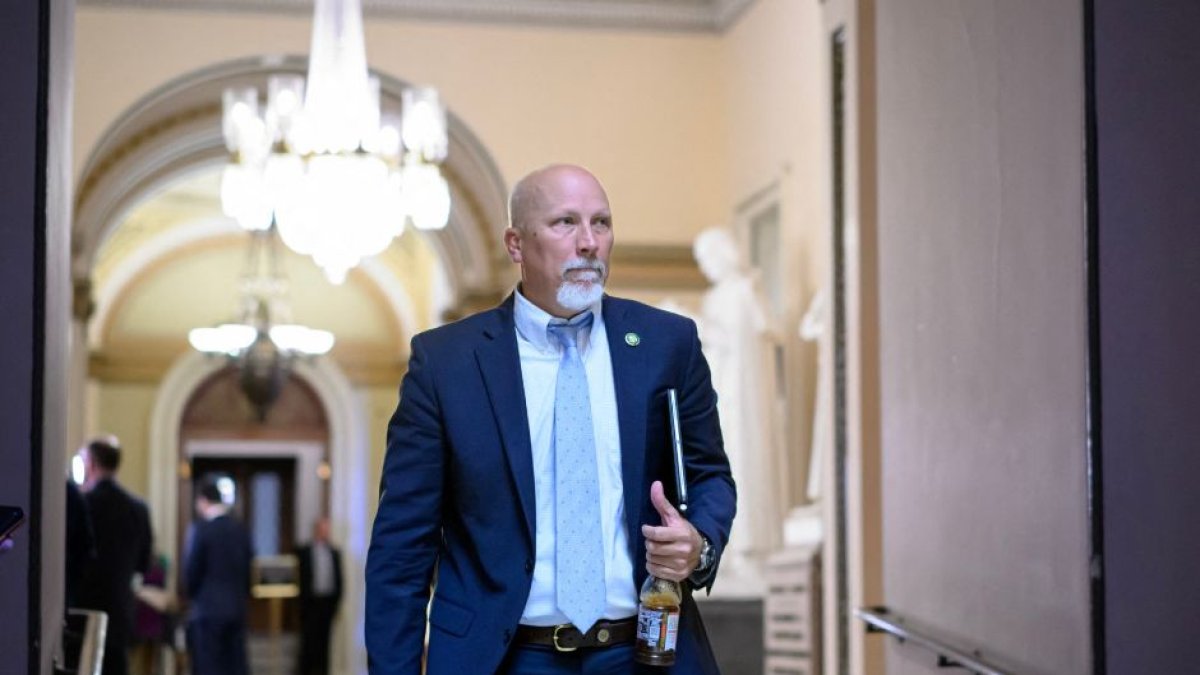
Rep. Chip Roy (R-TX) in a file image

The "Crypto Week" has just received an unexpected, though not definitive, blow in the House of Representatives. What should have been a simple step to consolidate the regulation of the crypto market and a political victory for President Donald Trump ended, for now, in a partial rejection by a dozen lawmakers from the most conservative wing of the Republican Party—the Freedom Caucus—who raised their voices, warning about risks of surveillance and state control, because of the way three key pieces of legislation were drafted.
It came to fruition Tuesday, when a procedural motion that would have allowed debate to move forward on three Trump-backed bills: the CLARITY Act, the Anti-CBDC Surveillance State Act, and the GENIUS Act, the latter already passed in the Senate.
What are the rebel Republicans saying?
While the bills have bipartisan support, the hard core of the Freedom Caucus expressed reservations, especially over the upper chamber's amendments to the GENIUS Act, which regulates the market for stablecoins-cryptocurrencies designed to maintain a stable value, usually pegged to the dollar.
Congresswoman Marjorie Taylor Greene (R-Ga.), again, was one of the most critical of the Republican agenda, again positioning herself against Trump's stance:
"The bill as written does not expressly ban a CBDC and does not protect self-custody. Self-custody means that you control your own money, not a third party."
This week, the House is voting on the GENIUS Act which lays the groundwork for a layered Central Bank Digital Currency (CBDC) where Americans interact with stablecoins but behind the scenes there are the functional surveillance capabilities of a CBDC.
— Rep. Marjorie Taylor Greene🇺🇸 (@RepMTG) July 15, 2025
The bill as written does… pic.twitter.com/GmdgX84SIE
Likewise, Rep. Chip Roy (R-Texas), one of the most powerful members of the House because of his status as leader of the conservative core, affirmed that accepting the current text would be tantamount to opening the door to state financial control mechanisms.

Politics
El Senado aprueba una histórica ley para regular las stablecoins en los Estados Unidos
Luis Francisco Orozco
“They have this stuff in the rule that we had some concerns with, like putting the bill on the floor the Senate version of the GENIUS Act that we think leaves some room for some concern with respect to the central bank digital currency and that there not be a hard ban on that.”
Some Republicans also rejected that the House had to vote directly on the version sent by the Senate, without adding amendments of its own. This comes after congressional Republicans were left without much say in the passage of the 'Big Beautiful Bill'.
Trump urges further votes
As the rebels raised their voices, Trump tried to contain the dissent with a call from his Truth Social network:
“The House will soon VOTE on a tremendous Bill to Make America the UNDISPUTED, NUMBER ONE LEADER in Digital Assets – Nobody does it better! The GENIUS Act is going to put our Great Nation lightyears ahead of China, Europe, and all others, who are trying endlessly to catch up, but they just can’t do it (...) Digital Assets are the FUTURE, and we are leading by a lot! Get the first Vote done this afternoon (ALL REPUBLICANS SHOULD VOTE YES!). This is our moment – Digital Assets, GENIUS, Clarity! It is all part of Making America Great Again, BIGGER AND BETTER THAN EVER BEFORE.”
However, the deciding power today was on the side of the Freedom Caucus, at least briefly halting the three bills.

Politics
JD Vance: ‘With President Trump, crypto finally has a champion and an ally in the White House’
Leandro Fleischer
What do the bills entail?
CLARITY Act: The legislation establishes a framework of regulatory powers between the SEC (Securities and Exchange Commission) and the CFTC (Futures Trading Commission), definitively agreeing on rules for cryptoasset issuers and exchanges.
Anti-CBDC Act: In favor of maintaining financial and market freedom, the main attraction of cryptos, the legislation seeks to prevent the Federal Reserve from creating a national digital currency, arguing that it could be used as a financial surveillance tool.
GENIUS Act: creates the legal structure for issuers of stablecoins, including requirements for 100% equivalent reserves and state or federal licenses, in addition to periodic audits. However, the Freedin Caucus raised suspicions because the text does not include an explicit prohibition on a future CBDC and also modified control elements that had not been established before.
What are stablecoins?
Stablecoins, unlike Bitcoin or Ethereum, are cryptocurrencies designed to maintain a stable value against traditional currencies, such as the dollar. Because stablecoins are backed by cash reserves or other liquid assets, they are not volatile like traditional cryptos or memecoins. They are mostly used for digital payments, remittances, and financial transactions within the crypto ecosystem.
Immediate market impact.
As Trump and Congress moved toward passing legislation, cryptocurrencies soared, with Bitcoin reaching a new all-time high of more than $120,000. Now, because of legislative uncertainty, the impact was also immediate: Bitcoin and Ethereum fell 0.5%, although they recovered ground hours later. The most affected of the day was Circle, issuer of the USDC stablecoin, which recorded a drop of close to 5%.
What do analysts say?
From the financial sector, there was moderate optimism: although there are concerns about rebellious Republicans, many believe there will be agreement and the legislative package will pass.
"This growing optimism suggests that clearer rules could restore trust and bring cautious investors back into the fold," said Adrian Fritz of 21Shares. "US crypto stocks and Bitcoin are rallying as traders position themselves ahead of next week's expected publicity."
"[The CLARITY Act] is incredibly important to help further institutionalize and onshore secondary market activity in the US. This should help improve counterparty risk, improve liquidity, and improve the ability for investors seeking risk-managed solutions to get them in well-regulated vehicles," said Tony Fenner-Leitão, president of Cambrian Asset Management.
What now?
House Speaker Mike Johnson said talks with the rebel group will continue, and another attempt will be made this Wednesday to reopen the vote. However, part of the dissent anticipated that they will not budge if clear guarantees against a future CBDC are not included.
"[This] won't change unless they're willing to kill central bank digital currency," said Rep. Andy Harris, chairman of the Freedom Caucus.
With this outlook, it is clear that "Crypto Week" slowed down, but there is still room for negotiation, and the most conservative Republicans have given clear signs that they want to pass the bills to ensure that the U.S. becomes the new global capital of digital assets.
LATEST