The US resumes attacks against Iran following the end of the diplomatic pause
"The strikes are a powerful response to yesterday's attempted Iranian attacks on U.S. forces based in the Middle East," the U.S. Central Command reported.
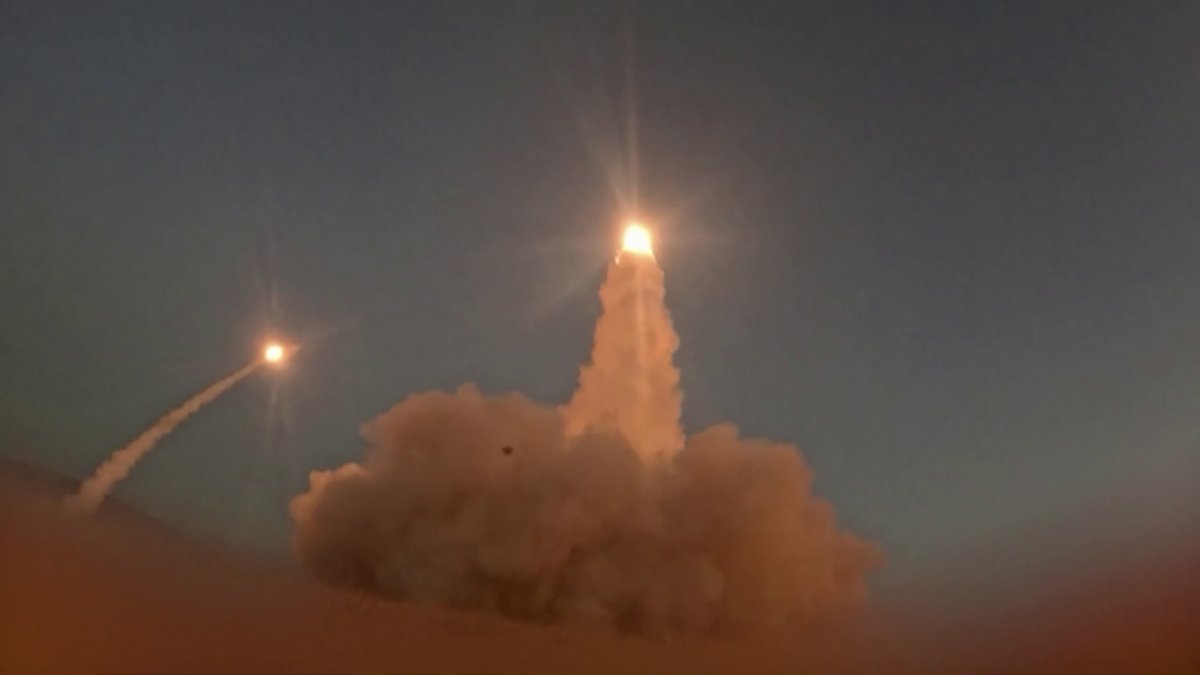
Wave of U.S. attacks on Iran on July 15, 2026

The United States resumed airstrikes against Iran late Wednesday night, in the first military offensive since President Donald Trump paused the bombing campaign last Friday to give diplomatic negotiations a chance.
U.S. Central Command (CENTCOM) confirmed the attacks in a statement on X: "The strikes are a powerful response to yesterday's attempted Iranian attacks on U.S. forces based in the Middle East." The offensive comes in retaliation for an Iranian missile attack on a U.S. base in Jordan the day before, all of which were intercepted, according to the U.S. military itself.
Trump foreshadowed the White House's response hours earlier. "It's our turn," the president told reporters, adding that Iran had acknowledged the missile launch was a mistake and had asked Washington not to retaliate. In his remarks to Fox News, the president was more forceful: "We're going to beat the f—ing sh—out of them," he said, before clarifying that the diplomatic channel remained open: "We're going to let them keep talking."
The lull that ended this week came after 13 consecutive nights of U.S. airstrikes against Iranian military targets, a streak that Trump decided to halt on Friday to open a window for negotiations. That truce lasted five days, until Tuesday's Iranian attack.


Just The News
Both Netanyahu and Zelensky say meetings with Trump were 'Excellent'
Just The News/ arah Roderick-Fitch | The Center Square
Behind Trump's decision regarding the scope of the new offensive is likely Admiral Brad Cooper, head of Central Command and in charge of directing the war from his headquarters in Tampa, Florida. As revealed in an exclusive report by The Wall Street Journal, Cooper prepared a 10- to 14-day air campaign option aimed at neutralizing Iran's missile capabilities, despite warnings about the U.S.'s low stockpile of air defense munitions.
This alternative contrasts with the more cautious stance of General Dan Caine, Chairman of the Joint Chiefs of Staff, who—according to the same source cited by the WSJ— has warned of the second- and third-order consequences of a major escalation, although he does not believe that the low stockpile of interceptors would prevent the resumption of large-scale combat operations.
The Pentagon spokesperson, Sean Parnell, sought to project unity of command over the decision, according to statements also reported by the newspaper.
"Secretary Hegseth, CENTCOM Commander Admiral Cooper, and Chairman Caine stand completely aligned and are united in mission, strategy, and resolve regarding overseas operations involving Iran," he stated in a press release. "The Department of War is locked and loaded, ready to execute the President's directives at a moment's notice."
U.S. intelligence estimates that Iran has between 21% and 22% of its missile arsenal remaining, even though Hegseth had stated after the previous ceasefire that the program had been "functionally destroyed." Some analysts' estimates suggest that the actual figure could be higher.
Wednesday's escalation comes amid an increasingly tense regional situation. Hours before the attacks on Iran, the U.S. and Saudi Arabia jointly bombed positions held by the Popular Mobilization Forces (PMF), Iraqi militias aligned with Iran, in response to attacks against U.S. forces and Saudi oil infrastructure. The PMF reported at least 20 dead and 32 wounded. At the same time, an Iranian official stated that four members of the Revolutionary Guard were killed in the bombings while allegedly protecting a religious pilgrimage. The Iraqi prime minister ordered his Foreign Ministry to take legal action against Washington and Riyadh.
Oil prices also reacted to the escalation, with Brent crude rising more than 7% to $90.66, while shipping traffic through the Strait of Hormuz and the Bab al-Mandeb Strait remains well below pre-war levels, amid threats from Iran-backed Houthis against Saudi ships seeking to reach the Indian Ocean.
LATEST