Bolivian court orders arrest of former President Evo Morales for inciting deadly roadblocks and terrorism
For nearly two months, the main highways in the western and central parts of the country were blockaded by groups aligned with Morales.
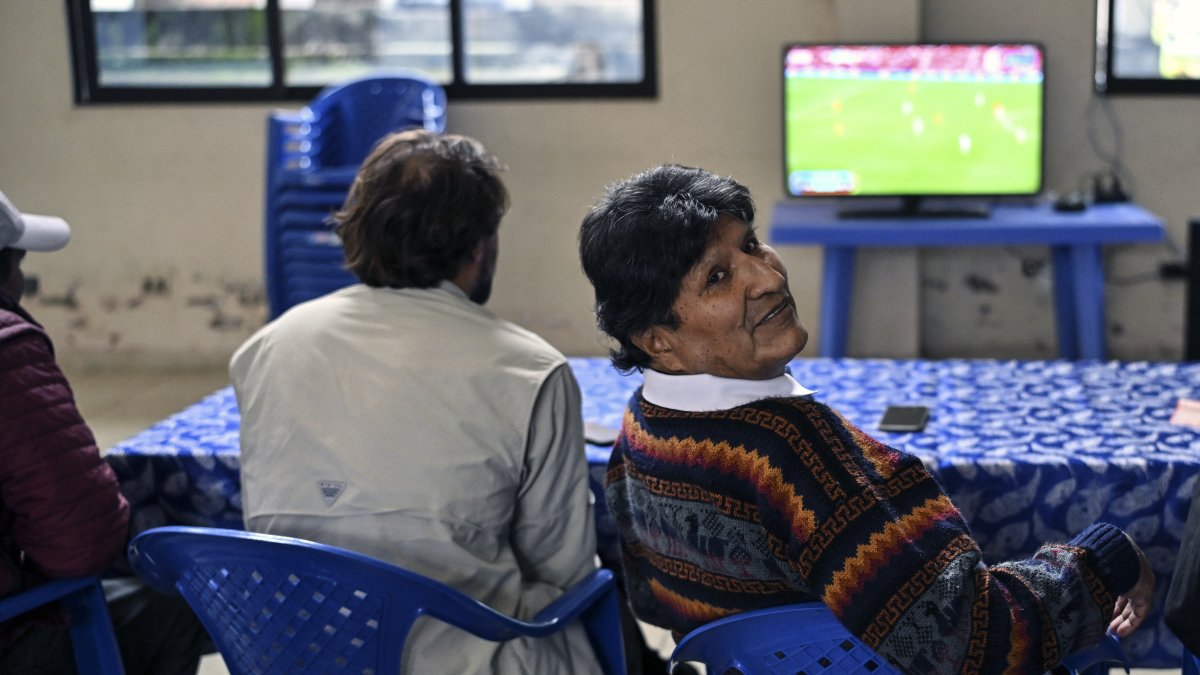
Evo Morales.

On Wednesday, the Bolivian Attorney General's Office issued an arrest warrant against former President Evo Morales. The courts accuse the former president of terrorism, armed insurrection against state security and sovereignty, criminal conspiracy, and public incitement to commit a crime, due to his direct involvement in the wave of road blockades that paralyzed the country last May and June.
The warrant, issued by Prosecutor Brayan Melgar, also includes charges of attacks against the security of public services and transportation systems. The legal proceedings stem from protests led by the Bolivian Workers' Confederation (COB) and peasant groups aligned with the former head of state, whose main demand was to force the resignation of the incumbent president, Rodrigo Paz.
Deadly roadblocks and massive economic losses
For nearly two months, the main highways in the western and central parts of the country remained blocked by groups aligned with Morales. The halt in traffic led to a severe shortage of food, fuel, and essential medical supplies in numerous Bolivian cities.
The death toll from the protests rose to 16, including 13 citizens who lost their lives because they were unable to receive timely medical care due to the roadblocks. Furthermore, private-sector analyses estimate that the roadblocks caused economic losses exceeding $3 billion.
The initial lawsuit against the former president was filed by civic leaders from the department of Santa Cruz—the country's economic engine—and was subsequently endorsed by Interior Minister Marco Antonio Oviedo.
The case also involves the head of the COB, Marco Argollo, and peasant leader Vicente Salazar, who is already in pretrial detention in connection with these charges.
Entrenched in his stronghold amid multiple criminal cases
Although Morales attempted to distance himself from the goal of ousting the incumbent president, his public statements exposed the nature of the pressure being exerted in the streets.
On May 24, the former president warned on social media that the Paz administration had only "two paths": to militarize the country or to call for early elections within 90 days. The protests subsided following the declaration of a state of emergency issued by the executive branch on June 20 to deploy the Armed Forces and restore free movement.
Currently, the former head of state remains holed up in the Cochabamba Tropics, his main political and union stronghold, protected by groups of supporters to prevent security forces from executing the court orders against him.
This new terrorism charge is in addition to the case already open against him for aggravated human trafficking, related to his alleged relationship with a minor in 2016. Morales had already been declared in contempt of court by a Tarija court after refusing to appear at his trial for that offense, while police authorities await the operational conditions necessary to carry out his arrest.


World
Bolivia: Congress approves law authorizing military to unblock roads during protests
Carlos Dominguez
World
The Shield of the Americas denounces a criminal coup attempt against the president of Bolivia.
Andrés Ignacio Henríquez
LATEST