Second Night of Bombings: The United States Expands Its Offensive in Iran and Destroys Radar and Missile Systems
Military intelligence reports indicate that the U.S. arsenal has struck a vast network of military infrastructure with surgical precision.
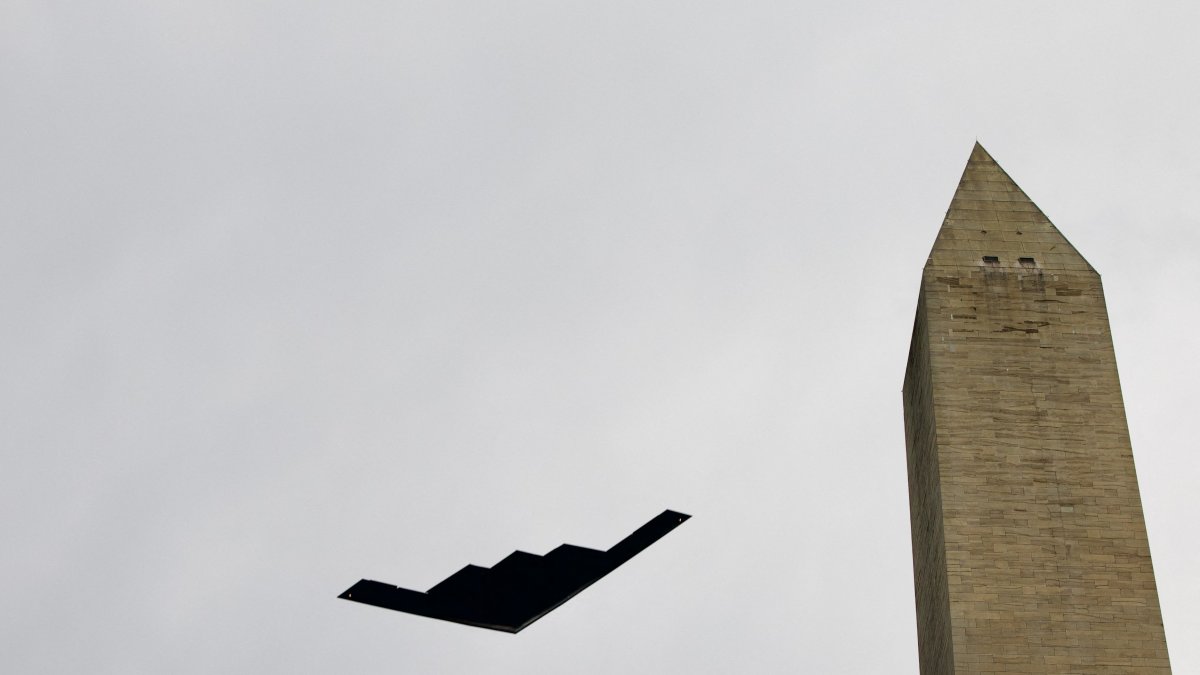
A U.S. B-2 bomber over Washington (file photo).

The United States carried out a series of airstrikes today within the territory of the Islamic Republic of Iran. The new military offensive, carried out on Wednesday, has the fundamental purpose of degrading the operational capabilities of the theocratic regime and neutralizing its constant threats against freedom of navigation in the Strait of Hormuz.
The show of force represents a direct response by the U.S. administration to hold Tehran accountable for its recent unprovoked attacks against merchant ships and civilian crews.
Axios correspondent Barak Ravid, citing testimony from a senior White House official, confirmed that the attacks carried out on Wednesday were significantly broader in scope and more far-reaching than Tuesday’s initial strikes.
Destruction of Assets and Disruption of the Revolutionary Guard
Military intelligence reports indicate that the U.S. arsenal has struck with surgical precision a broad network of military infrastructure.
The list of priority targets includes coastal surveillance radars belonging to the Islamic Revolutionary Guard Corps, anti-ship cruise missile sites, command-and-control logistics networks, as well as modern air defense systems.
At the same time, reports from Iranian propaganda outlets described multiple audible explosions on the island of Qeshm, in the coastal town of Sirik, and in the vicinity of the strategic port city of Bandar Abbas.
To date, CENTCOM has confirmed the destruction of more than 80 high-priority military targets in the Gulf region. The damage assessment reported by the military command includes the neutralization of more than 60 small fast-attack craft used by Iranian militias to intercept and intimidate merchant ships.
The trigger for the current crisis was the assault carried out by Iranian forces against three cargo ships, including a Saudi-flagged oil tanker and a gas carrier operated by Qatar—incidents that were formally classified by the Pentagon as flagrant violations of the cessation of hostilities.
Financial Consequences for the Iranian Economy
The escalation of hostilities has been accompanied by a forceful counteroffensive in the form of economic sanctions. The U.S. Department of the Treasury made effective the definitive revocation of “General License X,” a temporary relief measure enacted on June 21 as part of a bilateral understanding that allowed the Islamic Republic to produce and export crude oil to the global market.
The tariff relief, which was originally scheduled to remain in effect until August 21, was abruptly replaced by the restrictive “General License X1.”
This new order immediately revokes any authorization for new commercial transactions and mandates a supervised shutdown of remaining export operations.
A spokesperson for the U.S. Treasury confirmed to AFP that the hostile maneuvers in the Strait of Hormuz will have irreversible financial consequences for the regime.

LATEST