The United States bombs military targets in Iran following an armed attack in the Strait of Hormuz
The trigger for the U.S. counteroffensive occurred on Thursday, June 25, when Iranian forces launched drones against merchant ships.
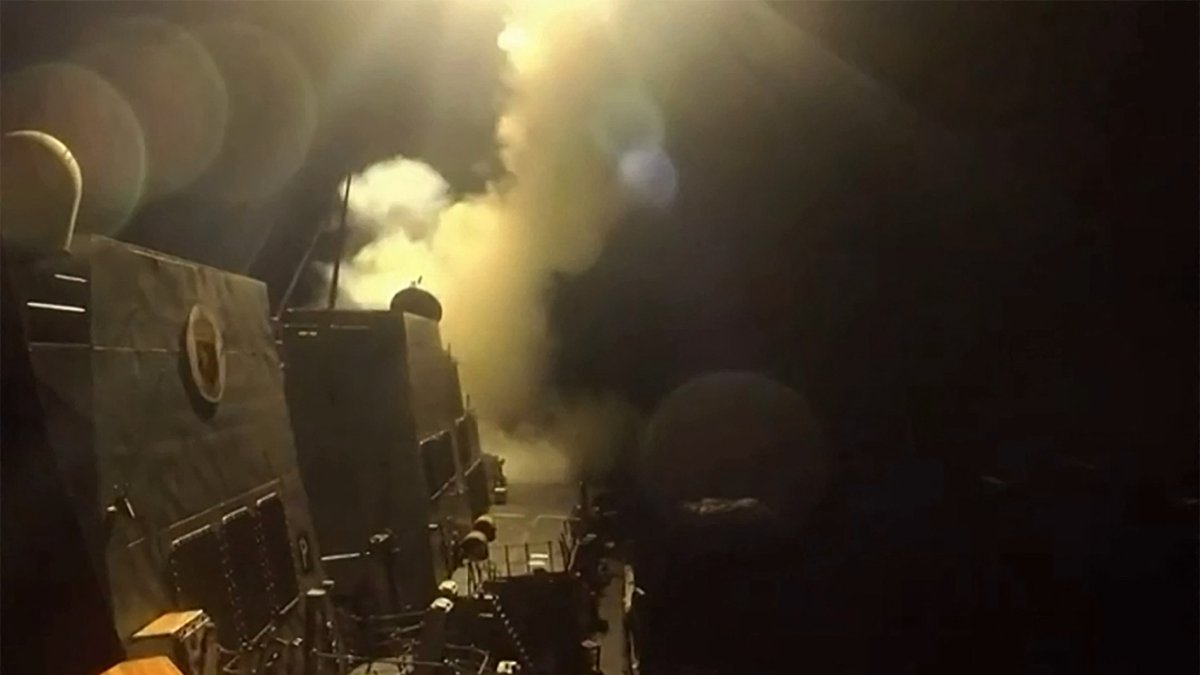
A still from a video released by CENTCOM showing U.S. missile strikes against Iranian military surveillance units on June 11, 2026.

On Friday, June 26, the U.S. Armed Forces carried out a series of precision airstrikes against military targets inside Iran. The operation represents a show of force and a direct warning in response to Tehran’s provocations.
According to information provided by the U.S. Central Command (CENTCOM), the military intervention constitutes a direct response to the aggression perpetrated the previous day against a commercial vessel sailing through the strategic Strait of Hormuz.
This military exchange undermines the initial stability achieved just a week ago, when both nations signed a memorandum of understanding aimed at ending hostilities.
The Pentagon’s airstrikes mark the first use of lethal force by the United States against positions of the Islamic regime since the aforementioned pact took effect, raising concerns about Tehran’s genuine willingness to comply.
Neutralization of Key Infrastructure and Radar Systems
The trigger for the U.S. counteroffensive occurred on Thursday, June 25, when Iranian forces launched unmanned aerial vehicles against merchant ships.
One of these one-way attack drones struck the cargo ship M/V Ever Lovely, a Singapore-flagged vessel that was sailing out of the Strait of Hormuz, skirting the coast of the Sultanate of Oman.
In response to this unprovoked aggression, CENTCOM fighter aircraft proceeded to destroy missile and drone storage depots operated by Iranian forces, as well as coastal radar outposts that monitor regional maritime traffic.
U.S. military authorities described the strike as a powerful response, intended to weaken the technical capabilities used by the regime to destabilize free navigation and disrupt global supply chains.
White House Warning Following the Breach of Agreements
The political reaction from Washington was swift. President Donald Trump condemned the events, describing the Iranian forces’ action as a reckless violation of the ceasefire agreement.
The presidential stance underscores the administration’s determination not to tolerate any backsliding on the agreed-upon terms or any attacks on the free market in critical maritime areas.
For its part, CENTCOM leadership emphasized that its naval and air divisions will maintain their operational deployment in the surrounding area to coordinate and ensure the safe passage of commercial fleets through the strait.
Military spokespeople confirmed that the U.S. military will remain vigilant and maintain an active presence in the area to ensure that every aspect of the bilateral agreements with Iran is strictly adhered to and remains in full force.
World
Iran strikes container ship in the Strait of Hormuz with drone: Attack halts shipping and drives up oil prices
Emmanuel Alejandro Rondón


LATEST