Trump signed an order to restructure childhood vaccinations and directed an investigation into the causes of autism
One of the most controversial aspects of the executive order involves changes to the administration of the measles, mumps, and rubella (MMR) vaccine.
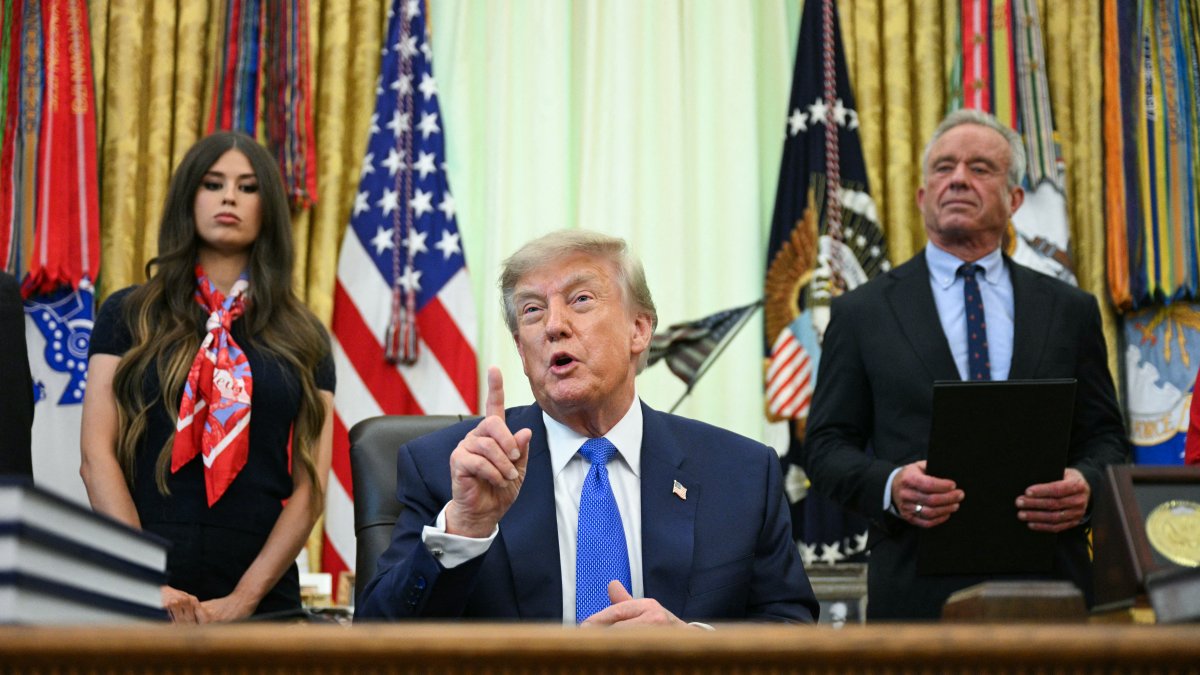
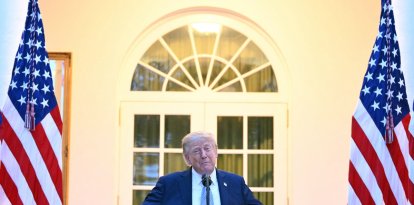
Donald Trump speaks after signing an executive order calling for more research and flexibility regarding vaccines on August 10.

President Donald Trump signed an executive order, reported by media outlets such as CBS News, aimed at establishing a new framework of recommendations for childhood vaccination and altering regulatory guidelines that have governed school enrollment for decades.
During the presentation of the document, the president explicitly linked the need for this reform to current autism diagnosis rates in the country. The measure reduces the number of recommended doses and classifies vaccines into categories.
Under this new framework, only a set of essential vaccines will remain widely available, while vaccinations against respiratory syncytial virus (RSV) and hepatitis A and B will be reserved exclusively for children in the high-risk population.
Dose allocation and medical autonomy
One of the most controversial aspects of the decree lies in the change to the administration of the measles, mumps, and rubella (MMR) vaccine.
The executive order proposes that this component no longer be administered as a single combined dose but instead be split into three separate injections, administered during separate medical visits over the course of a year or a year and a half. In his remarks, the president contrasted the current situation with past health policies.
"Decades ago, children received only a small fraction of the vaccines required today," the president stated. "Back then, people were much healthier, and, of course, the high rates of autism seen today did not exist. Therefore, there is a reason for these epidemic rates of autism. And we are going to bring them back much closer to what they used to be."
Trump acknowledged that the exact cause of the condition remains under investigation, but he defended the wisdom of spacing out the immunizations: "We're reducing them; we're changing it to visits spread out over a period of one year, a year and a half, so that they receive 20% of what they would have received in a single large injection."
Scientific offensive and regulatory tensions
To implement the executive order's objectives, the Department of Health and Human Services (HHS) will have 90 days to evaluate the timing and sequencing of the biological components.
HHS Secretary Robert F. Kennedy Jr. announced that the Agency for Advanced Health Research Projects will launch a line of research focused on the biology and root causes of autism. Kennedy stated that federal agencies will examine every biologically plausible hypothesis without leaving any legitimate scientific questions unexplored.
The presidential directive comes amid prior friction between government agencies and professional associations.
Earlier this year, the Centers for Disease Control and Prevention (CDC) suggested reducing the number of covered conditions to 11, a position rejected by the American Academy of Pediatrics, which insisted on maintaining protection for 18 conditions.
Subsequently, a federal court blocked the CDC's changes on procedural grounds, prompting the executive branch to intervene via executive order.
The paradigm shift has sparked strong opposition in traditional medical circles, including Republican Senator Bill Cassidy and spokespeople for the American Academy of Pediatrics, who argued that altering the vaccination schedules increases public mistrust and heightens the risk of infectious disease outbreaks.
However, the order argues that the adjustments aim to align U.S. protocols with peer nations' practices while safeguarding religious freedom and parental authority over medical decisions regarding their children.
LATEST