The jury found what the FBI missed: Unexpected discovery rocks federal trial
Jurors found a yuan bill and a white substance inside clothing submitted as evidence in the case against Shamell Naquan Joyner. The judge ordered that the items not be considered in reaching a verdict.
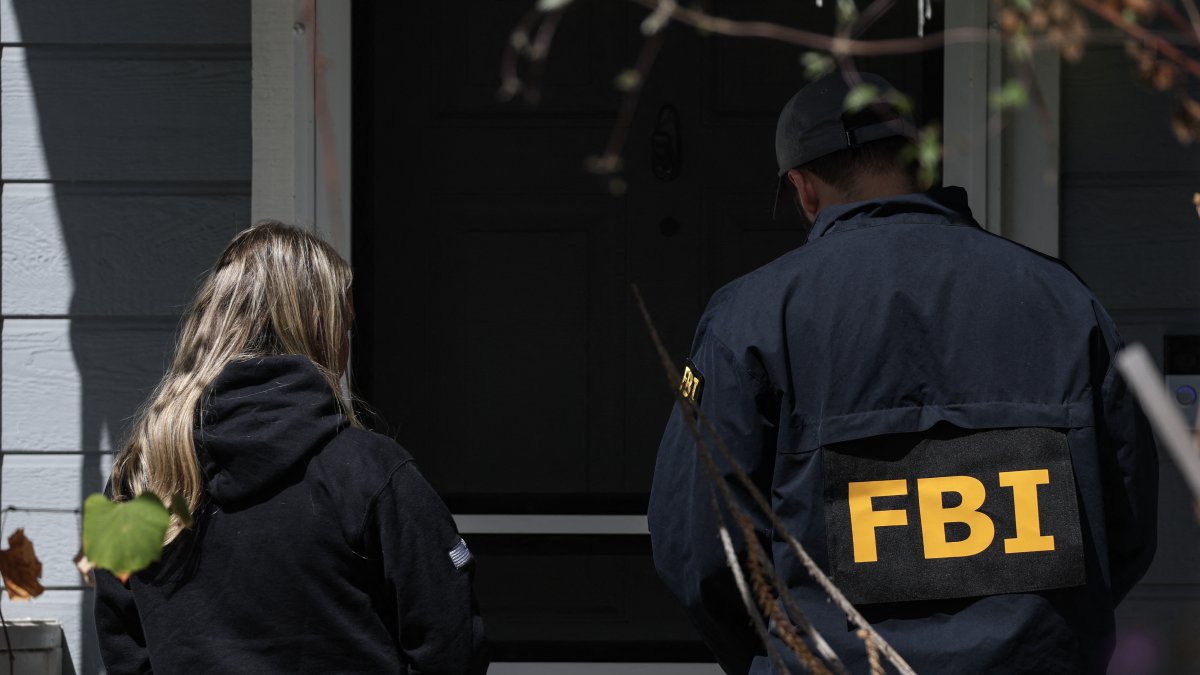
The FBI leading an operation. File photo

An unusual discovery during deliberations in a federal trial involving a series of armed robberies in Washington, D.C. brought the handling of evidence in the case under scrutiny, after members of the jury found items inside clothing that had apparently gone unnoticed by investigators, prosecutors, and defense attorneys.
The incident occurred during the trial of Shamell Naquan Joyner, who is accused of a series of robberies at convenience stores and gas stations, as well as car thefts, committed in Washington, D.C., Maryland, and Virginia during the spring of 2023.
According to CNN, information later reported by The Daily Beast and other media outlets, the jurors were examining the physical evidence during their deliberations when they found a Chinese yuan bill inside a sweatshirt and a folded piece of paper containing a white substance in a jacket pocket.
The items had not previously been identified as part of the evidence formally presented to the jury.
The judge expressed surprise at the verdict
The situation prompted an intervention by Federal Judge Rudolph Contreras, who was presiding over the case in the U.S. District Court for the District of Columbia.
Contreras expressed in writing his surprise that the authorities had not previously discovered the money, the piece of paper, and the substance during the review of the physical evidence.
According to a court transcript cited by CNN, the foreperson explained that one of the jurors reached into the pocket of a jacket and pulled out what initially appeared to be a receipt but contained a white substance. Some of the material even spilled out before it was placed back into the evidence bag. In another garment, the jurors found the Chinese banknote.
Neither the U.S. Attorney's Office in Washington, nor law enforcement, nor Joyner's attorneys were aware of the existence of these items until then, according to reports.
The garments were relevant to the case
The discovery was particularly sensitive because the garments in which the objects appeared were indeed linked to the theory presented by prosecutors.
According to court records, the sweatshirt and jacket had been recovered from a Toyota that investigators believed to be stolen. The prosecution argued that the perpetrator of two of the robberies committed on May 2, 2023, had worn those items.
Furthermore, during the trial, prosecutors had argued that a wallet containing Chinese yuan was stolen during one of the robberies at a 7-Eleven. According to that account, the owner had kept the money after a study abroad trip. Another witness had testified that Joyner paid him with drugs on the night of one of the incidents under investigation.
However, this background information does not mean that the items found by the jurors were legally established as the stolen money or as drugs linked to Joyner.
The white substance, in particular, had not been presented or analyzed before the jury as evidence in the trial, according to available reports.
The jury was instructed to disregard the discovery
Each juror assured him that they could set aside the discovery and continue deliberations based solely on the evidence authorized by the court.
The judge then allowed the trial to proceed.
This point is key: the court did not authorize the jury to use the newly discovered items as a basis for deciding Joyner's guilt.
Convicted on 13 counts; the jury was deadlocked on 15 others
After several days of deliberations, the jurors were unable to reach a unanimous verdict on 15 of the 28 charges being considered in the trial.
On the remaining charges, they found Joyner guilty on 13 counts related to five armed robberies and one carjacking, according to case reports.
Among the incidents for which he was convicted are an armed robbery that occurred in Washington in mid-April 2023, four robberies on May 2 in Washington and Maryland, and a carjacking that occurred on the same day.
A spokesperson for the U.S. Attorney's Office for the District of Columbia noted that the convictions carry a mandatory minimum sentence of 31 years in prison for Joyner. The final sentence will be determined by the court.

A case that began in 2023
Joyner had been arrested on May 2, 2023. Subsequently, a federal grand jury filed an amended indictment of 28 counts related to ten armed robberies of commercial establishments and two carjackings that occurred between April 12 and May 2 of that year in Washington, Maryland, and Virginia.
According to the Department of Justice, when Joyner was arrested, he was in the driver's seat of a Toyota RAV4 that authorities alleged had been stolen during one of the incidents. Investigators also recovered a firearm and clothing that, according to the prosecution, linked him to several of the crimes.
The indictment included charges of robbery under the Hobbs Act, carjacking, interstate transportation of stolen vehicles, offenses related to the use of firearms during violent crimes, and illegal possession of firearms and ammunition.
The jurors' unexpected discovery did not invalidate the proceedings nor was it admitted as new evidence in determining the verdict, but it exposed a flaw in the examination of materials that had remained in custody as part of a major federal case.
LATEST