Vance hails 'historic' moment as US-Iran talks start in Switzerland
The U.S. vice president arrived Sunday morning at Emmen Air Base, near Switzerland. Envoy Steve Witkoff and President Donald Trump’s son-in-law, Jared Kushner, were already in the Swiss city addressing “some of the technical details” of the negotiations.
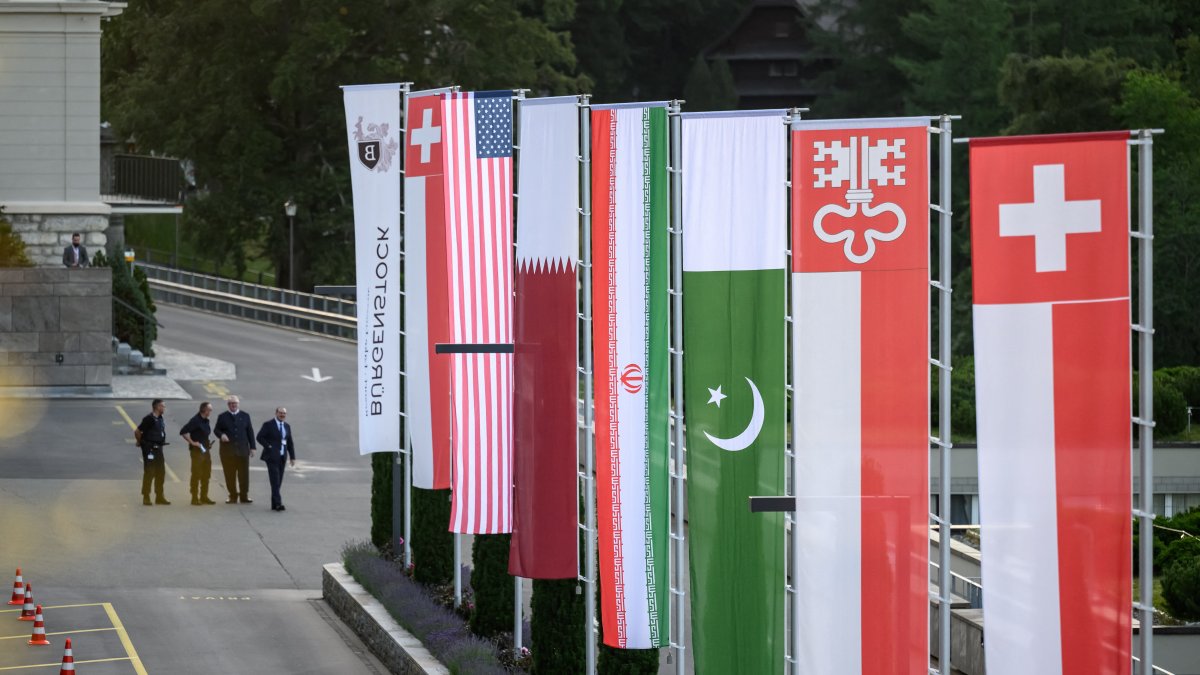
The flags of Switzerland, the United States, Qatar, Pakistan and the Swiss canton of Nidwalden

The United States and Iran are set to begin a round of talks in Switzerland on Sunday to end the war in the Middle East, following the arrival of U.S. Vice President J.D. Vance, despite Iran’s announcement that it would close the Strait of Hormuz.
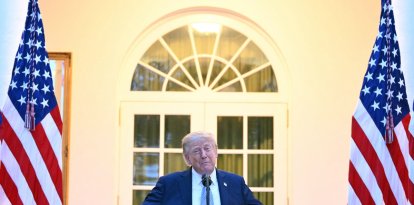
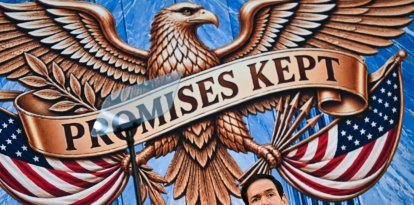
MVance said he hoped Washington and Tehran could reset their relationship, at the start of what he called "historic" face-to-face talks in Switzerland on Sunday.
"This is a historic meeting," Vance said at the Burgenstock resort, saying to goal was to "turn over a new leaf to transform our relationship with the people of Iran, and to extend an outstretched hand."
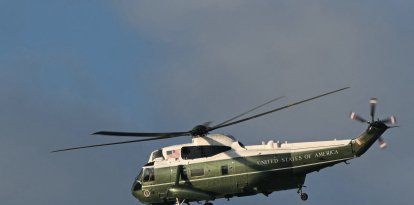
The U.S. vice president arrived Sunday morning at Emmen Air Base, near Switzerland.
Envoy Steve Witkoff and President Donald Trump’s son-in-law, Jared Kushner, were already in the Swiss city addressing “some of the technical details” of the negotiations.
According to AFP, Iran’s Ministry of Foreign Affairs announced technical negotiations on Sunday between Iranian and U.S. officials, with representatives from the mediating countries Qatar and Pakistan in attendance.
Earlier, Iran’s chief negotiator and Speaker of Parliament Mohammad Bagher Ghalibaf, as well as Foreign Minister Abbas Araghchi and Central Bank Governor Abdolnaser Hemmati, arrived in Switzerland, according to Iranian state television.
Pakistan announced on Sunday that Prime Minister Shehbaz Sharif had traveled to participate in the talks alongside his military chief, Asim Munir.
The memorandum of understanding signed on Wednesday calls for 60 days of talks to reach a final agreement focused on Iran’s nuclear program and the lifting of sanctions against its economy.
Tension in the Strait of Hormuz
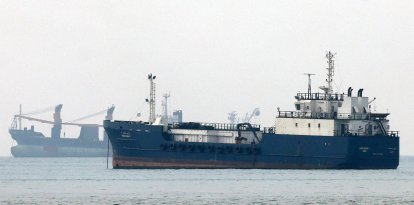
Tehran announced on Saturday a new closure of the strategic Strait of Hormuz due to Israel’s attacks in Lebanon, which it described as a violation of the protocol.
For his part, Trump threatened to impose a toll on the Strait of Hormuz if no agreement is reached.
The strait, a major route for the transport of oil and gas, was blocked for much of the war, which shook global energy markets.
Iran had agreed to reopen it as part of a memorandum of understanding with the United States, and in recent days, maritime traffic has gradually resumed.
An Israeli military official said Saturday that the armed forces had received orders from the country’s political leadership to halt fighting in southern Lebanon.
LATEST