US lifts blockade on Iran's ports, though it will keep warships in region
The goal is to “ensure” that the Islamist regime complies with all agreed-upon terms. If it fails to do so, the bombings will resume, according to the president.
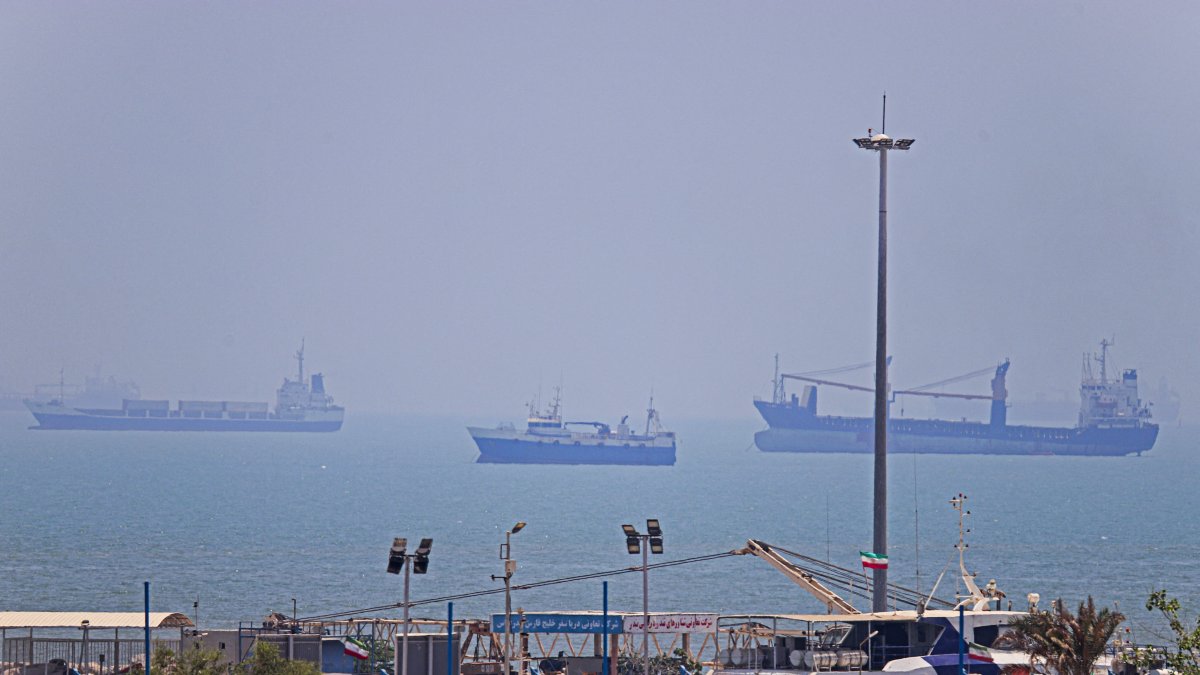
Ships sailing through the Strait of Hormuz. File archive

The Trump administration lifted the blockade on all Iranian ports located in both the Caspian and Arabian Seas, in addition to allowing the free passage of all ships entering or leaving them.
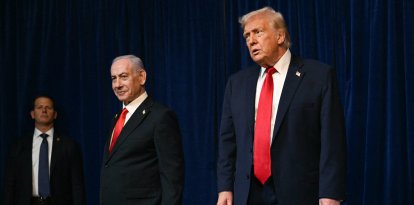
The U.S. Central Command (CENTCOM) announced the decision, following “instructions” given by President Donald Trump after signing the memorandum of understanding with the Islamist regime at the Palace of Versailles in France.
"Today, U.S. forces lifted the blockade on all maritime traffic entering and exiting Iranian ports and coastal areas, in accordance with the President's direction," CENTCOM said in a statement. "American forces are not impeding the transit of vessels to or from Iranian ports."
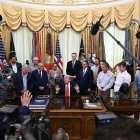
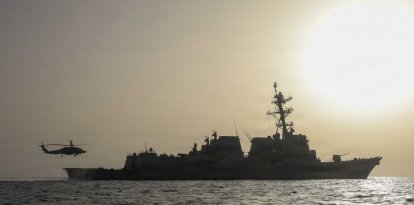
However, CENTCOM stated that the warships will not be withdrawn in order to "make sure" that all points agreed upon between Washington, D.C. and Tehran are fulfilled.
"All U.S. military blockade enforcement efforts have ceased. Our great Naval Ships will remain in the general area to make sure that all aspects of the agreement are adhered to, obeyed and in full force and effect," added Central Command.
On Wednesday, during a dinner hosted by French president Emmanuel Macron, Trump signed the memorandum of understanding with Iran, whose main goal is an end to the conflict. Initially, the signing was scheduled to take place at a ceremony in Geneva, Switzerland.
Despite taking this step, the president warned that he would resume his offensive against Iran if the Islamist regime violates any of the agreed-upon points. “If they don’t comply, we’ll probably bomb them again until they do,” he said.
LATEST