Trump changes his stance and will not authorize Ukraine to manufacture its own Patriot missiles
The U.S. president explained that transferring such technology carries risks he prefers to avoid.
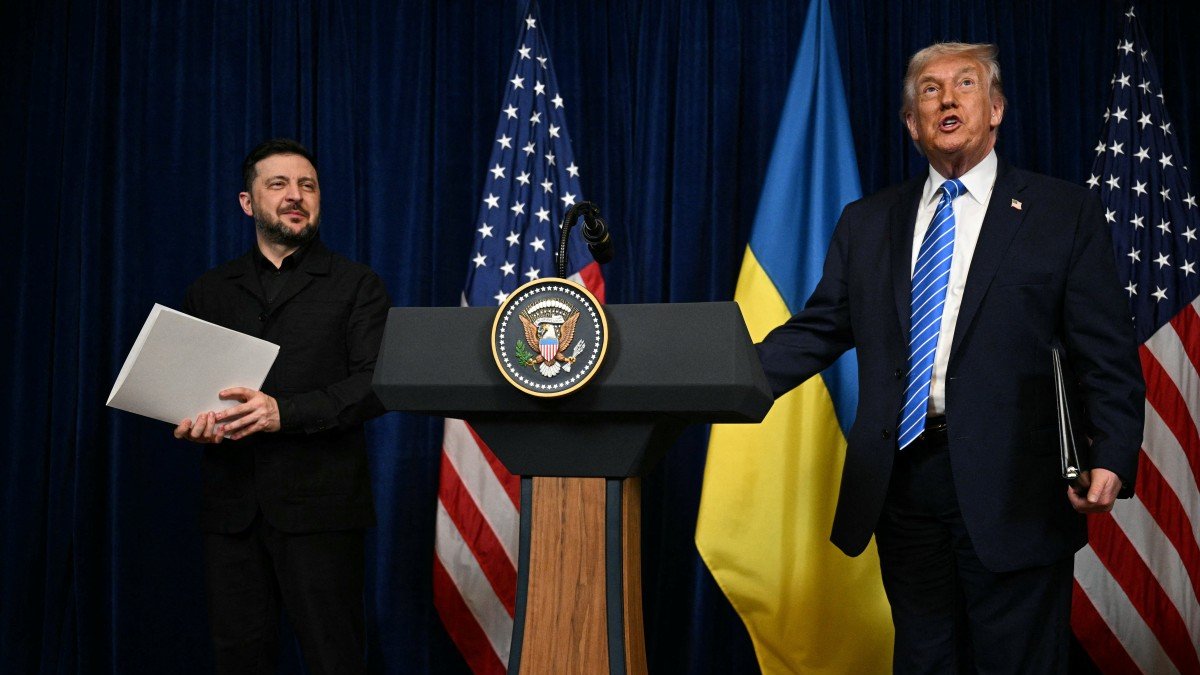
President Donald Trump and Volodymyr Zelensky in a file photo

"Those people you give the technology, they could someday turn on you," with that phrase, which offered little encouragement to Ukraine, President Donald Trump on Friday justified his decision to renege on the promise he had made to the European country to share the technology needed to manufacture its own Patriot missiles, Kiev's most reliable defense system against Russian ballistic missile attacks.
During a cabinet meeting at Camp David, Trump acknowledged that Washington has "not agreed to that" to grant the production license, as reported by The New York Times, thereby reversing the commitment he had made just three weeks earlier alongside Ukrainian President Volodymyr Zelensky, during the NATO summit in Ankara, Turkey.
The U.S. president explained that transferring this type of technology carries risks he prefers to avoid.
"Those people you give the technology, they could someday turn on you," he said, citing as an example the history of U.S. weapons that ended up in the hands of governments that later became adversaries of Washington. "You look at war, it has happened a couple of times over the years," he added. "So we have to be very careful. We guard that."


Just The News
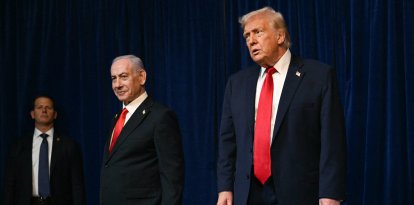
Both Netanyahu and Zelensky say meetings with Trump were 'Excellent'
Just The News/ arah Roderick-Fitch | The Center Square
This shift contrasts with his remarks on July 8, when Trump surprised observers by yielding to Ukraine's request during his meeting with Zelensky. On that occasion, he stated that "we'll give them the right to make Patriots" and promised that the United States would "show them how to do it."
Such an agreement would have required the U.S. government to share sensitive defense technology and manufacturers such as Raytheon and Lockheed Martin to work directly with Ukraine on the production of the interceptors. The process, had it gone through, would have taken months or even years, and any Ukrainian facility dedicated to that purpose would have immediately become a target for Russian attacks.
The shift in stance had already been hinted at a day earlier, when Trump told the Financial Times that he was "not sure" about allowing Kiev to proceed with the licensing plans, following a closed-door meeting with Zelensky earlier this week. The Ukrainian president confirmed that the two "discussed licenses for Patriot interceptor production and several other ideas that could help," without specifying whether the project is still on the table.
This back-and-forth is part of a pattern Trump has maintained throughout the war: at times he firmly supports Ukraine's war effort, and at others he shows more understanding for the position of Russian President Vladimir Putin. Just this past Friday, for example, he criticized former President Joe Biden regarding Ukraine, although he admitted that he himself had also authorized arms shipments to the country.
LATEST