Israel and Lebanon agree to renew cease-fire with a demand to redeploy Hezbollah
The new agreement sets stringent conditions aimed at neutralizing the operational capabilities of pro-Iranian militias.
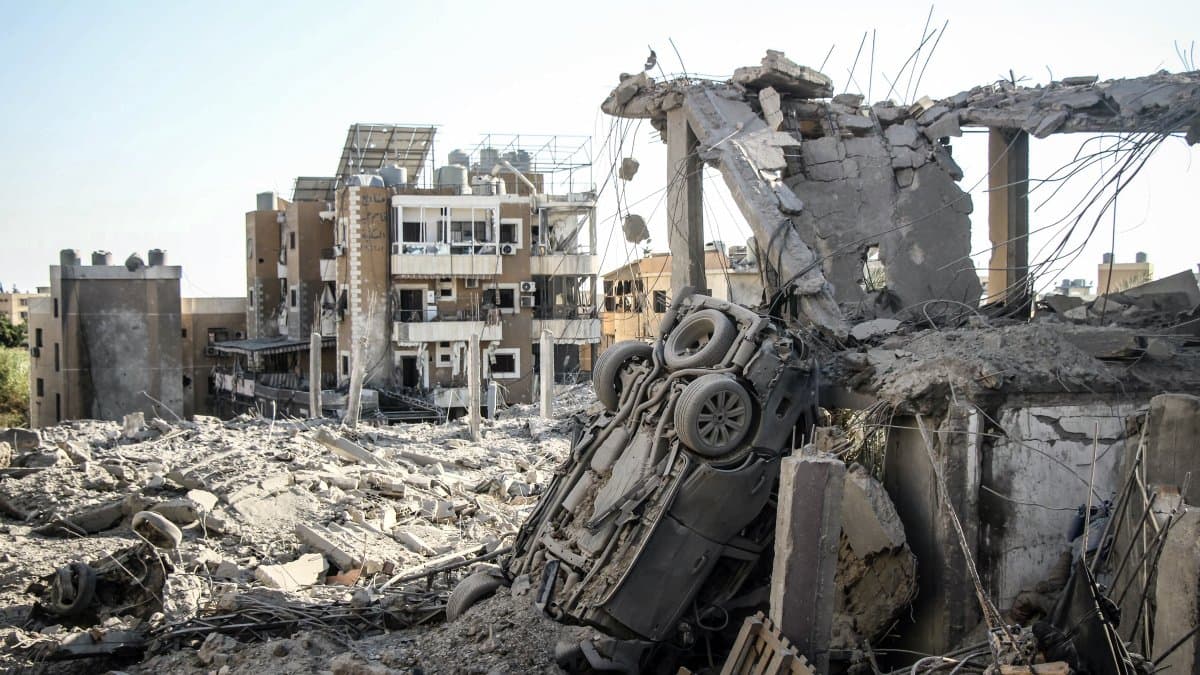

In a diplomatic effort aimed at stabilizing Israel's northern border and removing obstacles on the regional geopolitical chessboard, the governments of Israel and Lebanon formally announcedthe renewal of their cease-fire agreement.
The resolution was cemented Wednesday after the culmination of intense high-level bilateral meetings brokered by the U.S. government in Washington.
The new agreement establishes rigorous conditions aimed at neutralizing the operational capabilities of the pro-Iranian militias.
The document, ratified by the State Department, stipulates as a mandatory condition an absolute cessation of aggressions by the Hezbollah terrorist group,as well as the total evacuationof all its operatives deployed in the southern sector of Lebanon, bordering Israeli territory.
Creation of areas of exclusive institutional control
One of the pillars of the new security agreement consists of the design and implementation of "pilot zones" in the south of the country.
According to the officially published terms, the Lebanese Armed Forces will assume "exclusive control" of such perimeters, with the presence or mobilization of any "non-state actor" being strictly prohibited, a measure aimed directly at curbing clandestine operations by Tehran-linked factions.
The institutional development of this defensive framework will be supported technically and financially by the United States, aimed at strengthening the operational capabilities of the Lebanese regular army.
In the joint communiqué, both the Israeli and Lebanese delegations reaffirmed the non-existence of reciprocal hostile intentions and pledged to continue direct negotiations, setting a next bilateral meeting for June 22 to move toward a final treaty.
The administrations emphasized the absolute rejection of any external attemptto undermine the future of Lebanese stability.
The Iranian factor and the escalation in the Persian Gulf
The reactivation of the truce—which follows a previous cease-fire reached in April that was weakened by reciprocal retaliatory attacks—comes against a backdrop of extreme volatility in the region.
The Israel Defense Forces had intensified their operations against Hezbollah logistical targets in Lebanese territory since last March, coinciding with the joint U.S.-Israeli military offensive in the framework of the conflict with Iran. In response, the terrorist organization launched waves of cross-border rocket attacks in support of its financial backer in Tehran.
While diplomats deliberated in Washington, the Islamic Republic of Iran resorted to economic and military pressure tactics against Western allies in the Persian Gulf, launching a massive coordinated missile and drone attack that struck civilian infrastructure in Kuwait and Bahrain.
The aggression caused fires and severe damageat the main Kuwaiti international airport, where one worker of Indian nationality died.
The U.S. Central Command (CENTCOM) described the versions of the Iranian Revolutionary Guard—which sought to blame the Patriot defense systems for the destruction—as "totally FALSE," confirming that the attack deliberately targeted civilian environments and the headquarters of the U.S. Fifth Fleet.
Firmness in the face of a possible atomic threat
Faced with the persistence of indirect hostilities, President Donald Trump maticized the impact of the conflict on his country's finances, highlighting the record performance of the stock markets and stating that the Armed Forces are fully prepared for a prolonged deployment if the diplomatic route is exhausted.
However, the U.S. leader remarked that the central priority of any negotiations with Iranian delegates is the signing of a verifiable written commitment that would permanently prevent the development or acquisition of nuclear weapons by the Islamic theocracy.
Politics
Four Republicans break ranks, House votes to limit Trump's Iran war powers
Emmanuel Alejandro Rondón
Politics
FBI arrests dual US-Iranian citizen for supplying nuclear and military technology to Tehran
Carlos Dominguez
Politics
Trump to attend next NATO meeting to demand 'significant changes' in alliance
Alejandro Baños
🛠 Do you think there is an error in this article?
Recommendations



LATEST