We cannot leave Colombia alone: Violence and authoritarianism are on the verge of taking hold
We can expect Petro, their candidate, and the criminal orbit surrounding them to cling to power tooth and nail. Ultimately, for them, it is an existential matter. For that reason, they will do everything at their disposal, even if it means setting the country on fire before letting De la Espriella govern.
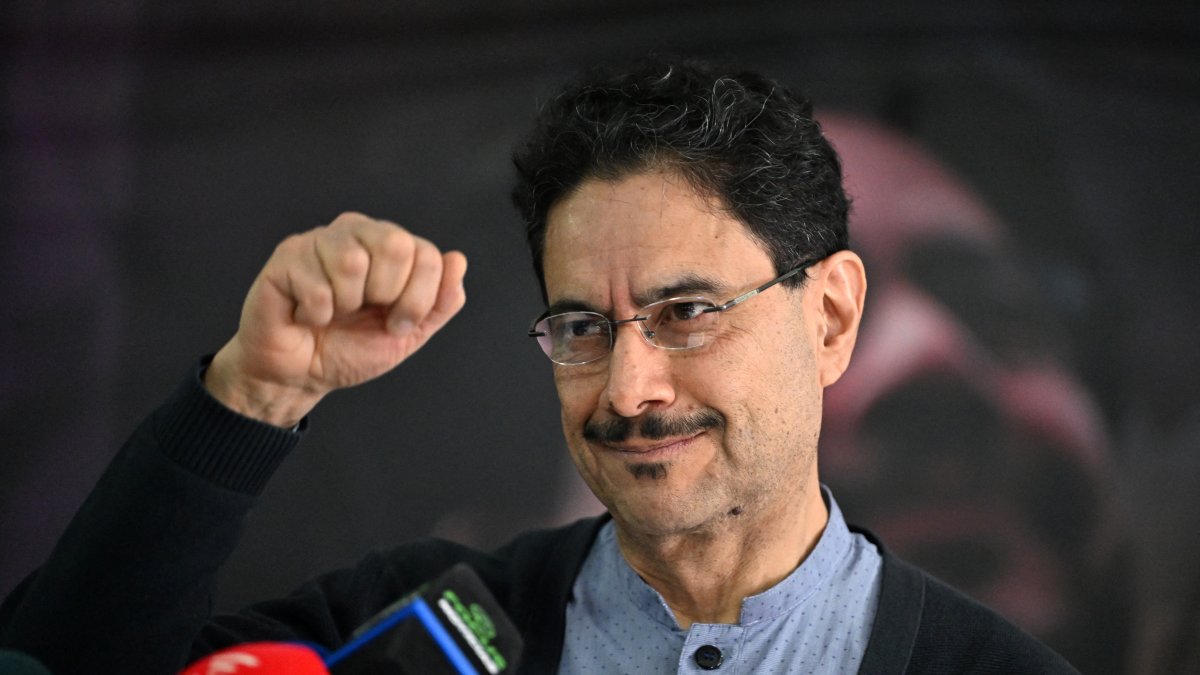
Iván Cepeda on June 1st.
After a surprising presidential election where, contrary to the conclusions of all polls, the right-wing candidate Abelardo de la Espriella won, the threat of violence and authoritarianism hangs over Colombia.
Even the most generous forecasts about the opposition to Gustavo Petro's extreme left-wing government did not foresee the scenario that unfolded. Before the first round of the presidential elections, all the polls agreed that the pro-government candidate Iván Cepeda and his opponent, the conservative De la Espriella, would go to the second round. However, none of them predicted that Abelardo de la Espriella would be the leader in the first round, which makes a very convenient scenario for the Colombian right wing in the next round on June 21.
In view of the first-round outcome, both Petro's government and his candidate, the extremist Iván Cepeda, reacted furiously. Petro was the first: he said he did not know the election results. Then, on Sunday night, in his speech after the elections, Iván Cepeda maintained the same stance as the president and said he would never allow "fascism" to rule Colombia, alluding to De la Espriella.
Cepeda invited his followers to prevent his opponent from winning in the second round. He insulted De la Espriella, calling him "the lawyer of drug traffickers" and calling on Colombians to organize.
De la Espriella reacted in proportion. In his speech as a winner from the Colombian coast, where he is from, he said he would defend popular sovereignty "by reason or by force." He vowed to lay down his life for Colombian democracy.
This Tuesday, June 2, Gustavo Petro insisted there was fraud in the first round. According to him, he has the evidence. This, even though both the Colombian Registrar's Office and all international observers, from the European Union to the Organization of American States, assured that the Colombian elections were carried out with total transparency and that there were no indications of irregularities.
The threat is clear. At this point, we cannot be naive: Petro wants to steal the elections and impose his heir, Ivan Cepeda. The danger is immense. And it cannot be taken lightly.
Gustavo Petro, a former guerrilla of the terrorist group M-19, came to power with the support of mobsters, criminal gangs and drug traffickers. This is not an opinion. His own son revealed it. The Petro government has been absolutely lax in the face of organized crime, and during his administration, criminal groups have grown stronger, and cocaine cultivation has increased.
His heir, Ivan Cepeda, is the candidate of both the guerrillas and the criminal gangs for the presidency. Alliances with groups such as the FARC or the ELN have marked his political career.
For these groups, the arrival of someone like Abelardo de la Espriella to power means the end of their reign. De la Espriella campaigned on the promise of justice, order and a firm hand. One of his most famed campaign proposals is the construction of ten Bukele-style mega-prisons. His rhetoric also emulates that of the Salvadoran leader: the human rights of the perpetrators are below those of the victims.
So, we can expect Petro, their candidate, and the criminal orbit that surrounds them to cling to power tooth and nail. In the end, for them, it is existential. Therefore, they will do everything at their disposal, even if it means setting the country on fire before letting De la Espriella govern.
Four years ago, many of us warned of the threat to democracy that a Petro government would pose. We did not exaggerate. Today, Petro casts a shadow over Colombia with the latent risk of authoritarianism. It looms on the horizon and demands a commitment from us all: we cannot leave the Colombian people to face this alone. Colombia is a country of immense importance on the continent, possessing a powerful economy, yet it is also home to criminal groups with a vast sphere of influence. If Colombia remains in the grip of narcoterrorism, now under the tutelage of a far more disciplined, orthodox communist like Iván Cepeda, the future for the entire region will be bleak. This cannot happen.
LATEST