






Presidential Records Act: Federal judge orders White House to continue to enforce it
"The original public meaning of the text of the Constitution, canons of interpretation, Supreme Court precedent, general principles of property law, and almost 50 years of practice confirm that Congress has the enumerated power to regulate presidential records under the [Constitution's] Property Clause," wrote John Bates.
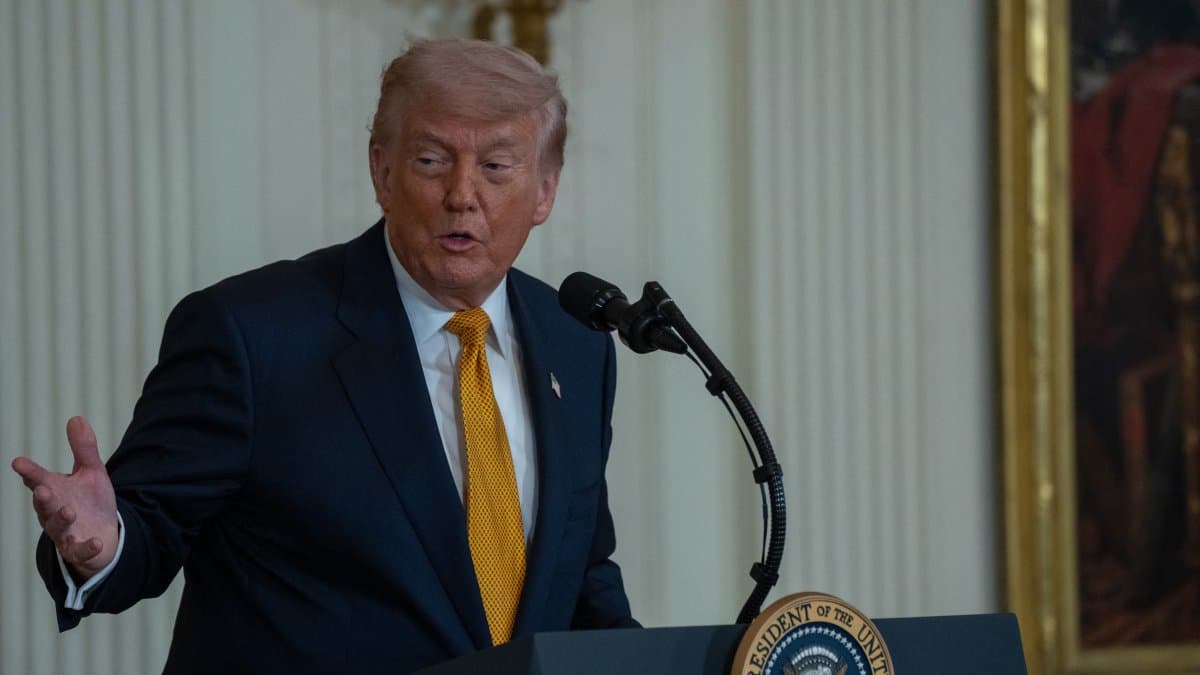

A federal judge formally ordered the White House to continue complying with the requirements of the Presidential Records Act. The decision halts an attempt by the administration to circumvent this law, even though the Department of Justice (DOJ) itself had previously concluded that the law unconstitutionally encroaches on the president's powers.
What happened to the Presidential Records Act and the White House?
The conflict escalated when the DOJ's Office of Legal Counsel (OLC) issued an opinion last month asserting that the White House did not have to strictly follow the law.
However, in a ruling issued Wednesday, U.S. District Judge John Bates concluded that the 1978 law is likely constitutional. With this decision, the judge granted a preliminary injunction that effectively overrules and vacates the Justice Department's opinion.
What did the Justice Department argue?
Therefore, according to the DOJ, forcing the president to turn over or preserve certain records under congressional rules was an illegal intrusion.
Judge John Bates' decision and the Property Clause
Judge John Bates, who was appointed by former President George W. Bush, completely rejected the government's arguments. Bates sharply questioned the Office of Legal Counsel opinion, stating that it was based on an "extreme misinterpretation" of established Supreme Court precedent.
To justify why Congress does have the power to regulate White House records, the judge relied directly on the U.S. Constitution:
“The original public meaning of the text of the Constitution, canons of interpretation, Supreme Court precedent, general principles of property law, and almost 50 years of practice confirm that Congress has the enumerated power to regulate presidential records under the [Constitution's] Property Clause,” Bates wrote.
🛠 Do you think there is an error in this article?
Recommendations





LATEST