Rubio on the future of Cuba: 'Things can get better' but not with the current people in charge
For Washington, the Cuban crisis is no longer a domestic problem but a regional security and management challenge.
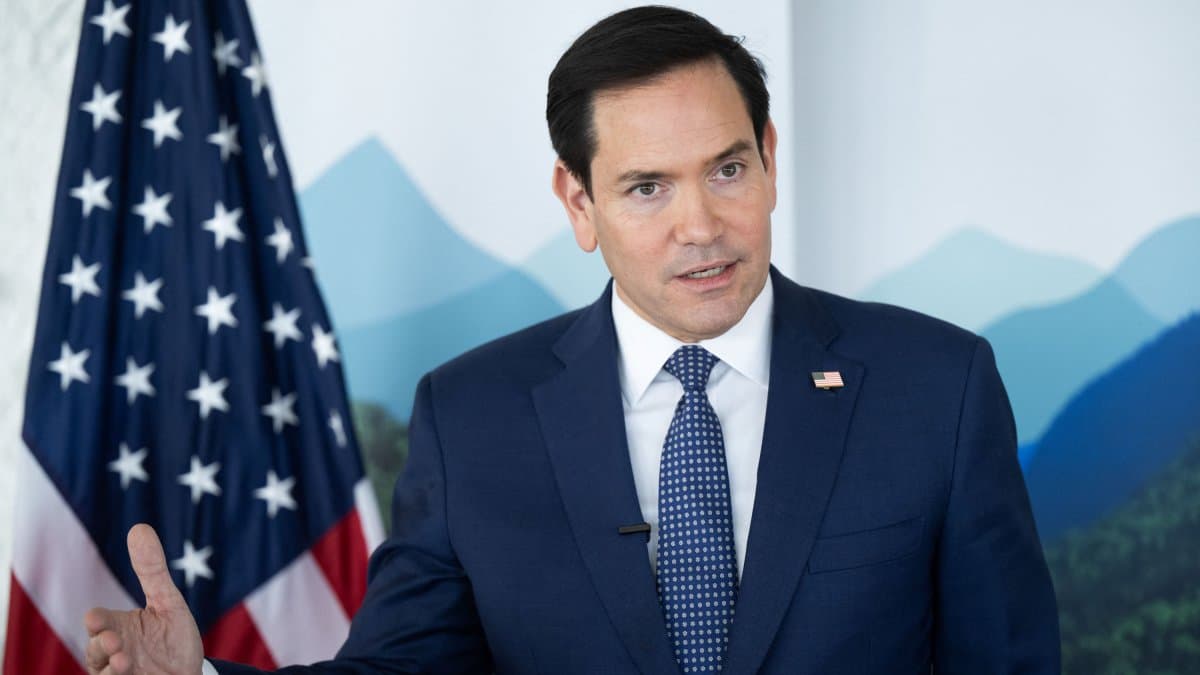

Secretary of State Marco Rubio reflected on Cuba's future by analyzing the technical and political incapacity of those who today hold power in Havana. According to the head of U.S. diplomacy, although there is a road to recovery, it is incompatible with the permanence of the current regime.
In exclusive statements to Fox News, Rubio was blunt in pointing out that the island's stagnation is not a coincidence but a direct consequence of the leadership's management. "Things can improve in Cuba with serious economic reforms, but not with the current people at the helm. They are economically incompetent," he said.
For Washington, the Cuban crisis has ceased to be an internal problem and has become a regional challenge in management and security. Rubio emphasized that Marxist ideology, coupled with the lack of expertise of its implementers, has condemned the population to an unsustainable situation.
The secretary outlined the reasons he considers the regime's current leadership the primary impediment to any attempt at modernization. The objective of the Cuban leaders, he asserted, is not the prosperity of the citizenry, but rather the preservation of power at all costs, even at the expense of basic economic logic.
"The reason why the Cuban economy has long been collapsing is because Marxism in general does not work, and even less so when those who try to apply it are incompetent, know nothing about economics and do not care at all. They only care about control," Rubio said.
Under this premise, the Department of State maintains that the substantial reforms the island needs are "impossible" under the current command structure.
The Trump administration believes that the current system prioritizes a model of social control that stifles any private initiative or real market reform, resulting in the extreme misery that today defines the island's reality.
A 90-mile threat
Beyond the economy, the angle that most worries the U.S. administration is the regime's military and intelligence cooperation with hostile foreign powers. Rubio denounced that the Cuban leadership has instrumentalized its sovereignty to serve as a base for interests contrary to those of the United States.
"They have opened the doors to adversaries of the United States to operate in Cuban territory against our national interests with total impunity," the secretary warned before the Department of State.
This open-door policy to countries like China and Russia is what, according to Rubio, gives Cuba a critical relevance in Washington's security agenda.
The island's proximity makes the presence of foreign intelligence agencies a "red line" that President Donald Trump is unwilling to ignore.
"That will not happen under a Trump presidency," Rubio concluded, reaffirming that the presence of adversarial military assets in the hemisphere will not be tolerated.
In the interview, the secretary also addressed other foreign policy and domestic stability fronts. He affirmed that Iran shows a "serious" attitude toward the possibility of an agreement, although he identified the main obstacles that keep dialogue with Tehran blocked and warned that control of the Strait of Hormuz is tantamount to possessing an "economic nuclear weapon."
Likewise, Rubio defended President Trump's decision to release the video of the suspected attacker at the correspondents' dinner, calling it an act of "transparency" necessary to curb conspiracy theories.
Finally, the secretary discussed security lapses at the Washington Hilton and reiterated the administration's commitment to the protection of senior state officials.
Politics
Senate Republicans block Democratic attempt to stop Trump's military action against Cuba
Luis Francisco Orozco

Society
Immigration policy toward Cuba tightens: more detentions and fewer green cards
Diane Hernández

🛠 Do you think there is an error in this article?
Recommendations




LATEST