ANALYSIS
Hungary: Orbán denies accusation that his foreign minister leaked EU information to Kremlin
"The interception of communications of a member of the government is a serious attack against Hungary," the prime minister said on Facebook, adding that he has asked the justice chief to immediately investigate the information related to the alleged surveillance of the head of Hungarian diplomacy.

Hungarian Prime Minister Viktor Orbán

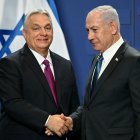
Hungarian Prime Minister Viktor Orbán has strongly rejected accusations that his foreign minister, Péter Szijjártó, has been regularly informing his Russian counterpart, Sergey Lavrov, about confidential European Union (E.U.) discussions, calling these claims politically motivated interference ahead of the Hungarian parliamentary elections in April.
"The interception of communications of a member of the government is a serious attack against Hungary," Orbán said on Facebook, adding that he has asked the justice chief to immediately investigate the information related to the alleged surveillance of the head of Hungarian diplomacy.

On Saturday, The Washington Post quoted several serving or retired European security services officials who claimed that Szijjártó regularly called Lavrov during breaks in E.U. ministerial meetings to give him "live reports on what’s been discussed."
Through those calls, "every single E.U. meeting for years has basically had Moscow behind the table," one of the officials said.
Szijjártó claims accusations are part of defamation campaign and foreign espionage
Szijjártó dismissed the Post's allegations, calling them "fake news" and "lies" on X, and accused the media outlet of trying to prop up the opposition Tisza Party, led by Péter Magyar, and install a "pro-war puppet government."
The foreign minister said on Facebook that the newspaper's accusations were "meaningless conspiracy theories" and accused "one or more foreign intelligence agencies" of conducting "surveillance, with the active cooperation of a Hungarian journalist," whose name he did not mention.

An alleged Russian plot to simulate an attempt on Orbán's life.
The Post story also alleged broader links, including a proposal by Russian intelligence services (SVR) to stage an "assassassination attempt" against Orbán in order to boost his support, although this was separate from the allegations about the confidential reports.
According to The Washington Post, the operatives proposed a way to "fundamentally alter the entire paradigm of the election campaign": "the staging of an assassination attempt on Viktor Orbán."
E.U.: "Greatly concerning" report
Polish Prime Minister Donald Tusk affirmed in a post on X on Sunday that the report "shouldn’t come as a surprise to anyone. ... We’ve had our suspicions about that for a long time."
"That’s one reason why I take the floor only when strictly necessary and say just as much as necessary," he added.
A spokeswoman for the European Union, Anitta Hipper, said the reports were "greatly concerning." She added: "[A] relationship of trust between member states, and between them and the institution, is fundamental for the work of the E.U. ... We expect the Hungarian government to provide the clarifications."
Russiagate in Hungary?
Sounds familiar, right? According to an article published in Compact by Thomas Fazi, "In the run-up to every significant election in which populist candidates stand a chance of winning, the E.U. establishment begins raising the specter of Russian 'disinformation' and social media manipulation."
Fazi argues that, since the DSA came into force in 2023, the European Commission has pressured digital platforms to tighten content moderation ahead of several national elections, including those in Slovakia, the Netherlands, France, Moldova, Romania and Ireland, and also during the 2024 European elections.
"E.U. elites have largely dismissed such concerns as conspiracy theories, insisting that online speech regulation is merely about protecting vulnerable groups from 'hate speech' and safeguarding democracy from 'disinformation' and foreign influence operations—with Russia typically cast as the culprit," the author points out.
LATEST