Hantavirus in the MV Hondius: evacuations, quarantines and an investigation spanning continents
The agency concludes that the first case would have been infected before embarking in Ushuaia; Spain prepares evacuations from Tenerife while investigations on the Andes strain continue.
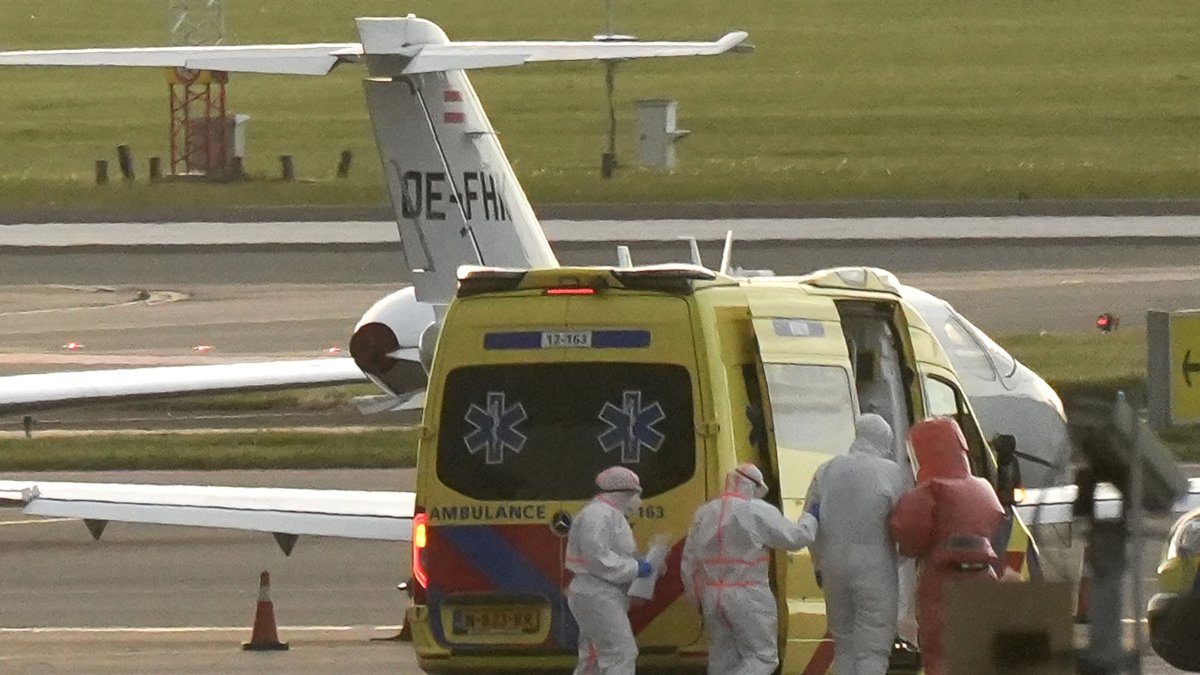
A person wearing a protective suit allegedly infected with hantavirus (File).

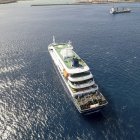
The Hantavirus outbreak detected on the MV Hondius cruise ship continues to be monitored internationally as the World Health Organization (WHO) advances in the epidemiological reconstruction of the cases and Spain is coordinating the future evacuation of passengers from the Canary Islands.
The WHO confirmed Wednesday that the first recorded contagion on board could not have occurred either during the trip or during the stops made by the ship in the Atlantic, due to the incubation period of the virus. As Anais Legand, a WHO expert on viral hemorrhagic fevers, told AFP, the 70-year-old Dutch passenger considered an index case "clearly had exposure before boarding," probably linked to contact with infected rodents.
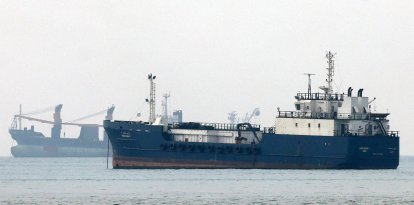
The MV Hondius departed April 1 from Ushuaia, at the southern tip of Argentina, bound for Cape Verde with 88 passengers and 59 crew members of 23 nationalities. The man began showing symptoms on April 6 and died on board five days later, on April 11.
So far there are eight confirmed and suspected cases linked to the outbreak. Three people have died: the Dutch passenger, his 69-year-old wife—confirmed with hantavirus—and a German passenger whose death remains under investigation.
The WHO noted that both confirmed cases correspond to the Andes strain, the only hantavirus variant with documented evidence of person-to-person transmission. However, the agency insisted that human-to-human transmission requires close contact and that the overall risk remains low.
International investigation and pathway reconstruction
Argentine health authorities reported that the Dutch couple had traveled through Chile, Uruguay and Argentina before embarking. According to the Argentine Ministry of Health, the itinerary included passes through Patagonian regions where the Andes strain does circulate, especially in Chubut, Río Negro and Neuquén, as well as southern Chile.
On the other hand, since 1996 there have been no cases of circulation of the Andes strain in Tierra del Fuego, a province whose capital is Ushuaia.
The Argentine government also announced operations for the capture and analysis of rodents in areas linked to the tourist routes and the shipment of genetic material of the virus to Spain, South Africa, the Netherlands, Senegal and the United Kingdom to reinforce the detection of cases.
For its part, the Chilean Ministry of Health indicated that, so far, it has no record that the confirmed cases have transited through Chilean territory.
Spain organizes evacuation from the Canary Islands
The cruise ship is currently on its route to Tenerife after anchoring off Cape Verde. The Spanish government confirmed that the ship will arrive in Granadilla, Tenerife, "within three days" and that the evacuation of passengers will begin on May 11.
The Health Minister of that country, Mónica García, indicated that all passengers will remain on board until the arrival of the repatriation flights organized by their respective countries. The Spanish citizens—13 tourists and one crew member—will be subsequently transferred to the Gómez Ulla Hospital in Madrid, where they will undergo quarantine.
The operation will be coordinated with European authorities and international health organizations. The European Commission will intervene in those cases in which a country cannot take care of its nationals.
Suspected cases and WHO deployment
WHO spokesman Christian Lindmeier said talks are continuing between health authorities, governments and ship officials to define the disembarkation protocol and ensure a safe evacuation.
The bodies of the three deceased remain in different locations: one in St. Helena, one in Johannesburg and the third in a cold room on the MV Hondius itself.
Washington minimizes health risk
Meanwhile, the Centers for Disease Control and Prevention (CDC) said the risk to the U.S. population is "extremely low," despite the presence of U.S. passengers on board.
The agency asked its citizens to follow the indications of the health authorities while diplomatic and medical coordinations for repatriation continue.
In the same vein, the WHO director general, Tedros Adhanom Ghebreyesus, assured that the situation "is not comparable to the beginning of the covid-19 pandemic" and reiterated that the international risk remains limited.
LATEST