EU pushes the return of nuclear energy with new investments and political backing
European Commission President Ursula von der Leyen said Tuesday that Europe's move away from nuclear power was a "strategic mistake" and announced a new funding mechanism to boost innovative nuclear technologies.
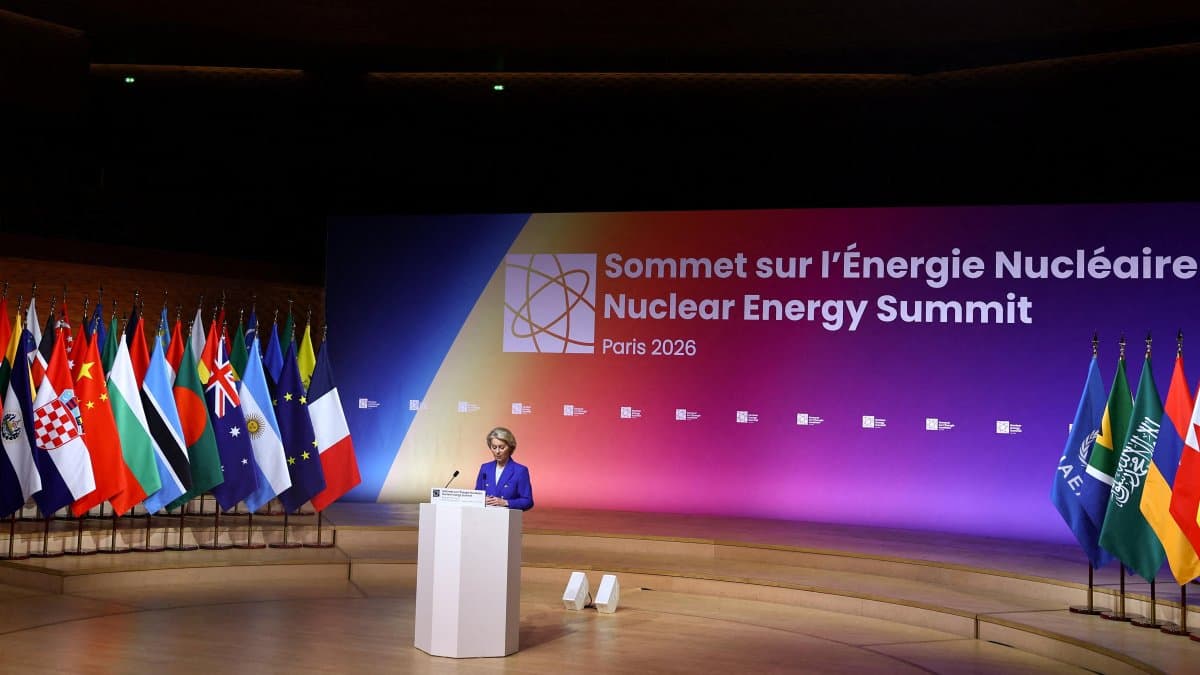

The European Union seeks to relaunch nuclear energy as a pillar of its energy and climate strategy, with new investments and renewed political backing for the sector, in a context marked by the quest for energy independence and decarbonization.
The president of the European Commission, Ursula von der Leyen, said Tuesday that Europe's move away from nuclear power was a "strategic mistake," and announced a new funding mechanism to boost innovative atomic technologies.
"It was a strategic mistake for Europe to reject a reliable and affordable source of energy with low emissions," Von der Leyen said, according to AFP, during the opening of an international summit on nuclear energy held on the outskirts of Paris.
The European leader advanced that Brussels will allocate a guarantee of 200 million euros to support investments in innovative nuclear technologies, in a bid to revitalize the sector after years of stagnation.
Investments and new technologies
The announcement is part of a broader effort to mobilize public and private capital toward the development of atomic energy, seen by some European governments as a key tool for reducing emissions without compromising energy security.
The summit, organized by France and the International Atomic Energy Agency (IAEA), brings together representatives of some 40 countries and international organizations, including the United States and China, two of the main historical players in the sector.
The meeting seeks to define a roadmap for the development of nuclear energy until 2050, at a time when the sector is experiencing renewed global interest.
Currently, nuclear power generates about 10% of the world's electricity, with some 450 reactors in about 30 countries. However, 40 other countries have expressed interest in developing this technology, according to IAEA Director General Rafael Grossi, quoted by the agency.
Macron calls for mobilization of capital
French President Emmanuel Macron, one of the main advocates of nuclear revival in Europe, urged to mobilize both public and private investments to strengthen the sector.
"The nuclear sector is key to reconciling energy independence and competitiveness," Macron said at the start of the meeting.
The leader also called on banks and investment funds to become more involved in the sector's development, including venture capital for more innovative and risky projects.
Energy security and environmental debate
For the executive director of the International Energy Agency (IEA), Fatih Birol, the development of nuclear energy can help strengthen European energy sovereignty alongside renewable energies.
The summit is also being held in a symbolic year for the sector, marking the 15th anniversary of the Fukushima nuclear accident and the 40th anniversary of the Chernobyl disaster, two episodes that profoundly marked the global debate on nuclear energy.
🛠 Do you think there is an error in this article?
Recommendations
LATEST