ANALYSIS
Colombia's left dominated Congress in the legislative elections, but Parliament will remain divided
According to official data from the National Registry of Civil Status, the pro-government Historic Pact led the vote for the Senate with approximately 22.8% of the votes, while the opposition Democratic Center obtained around 15.6%.
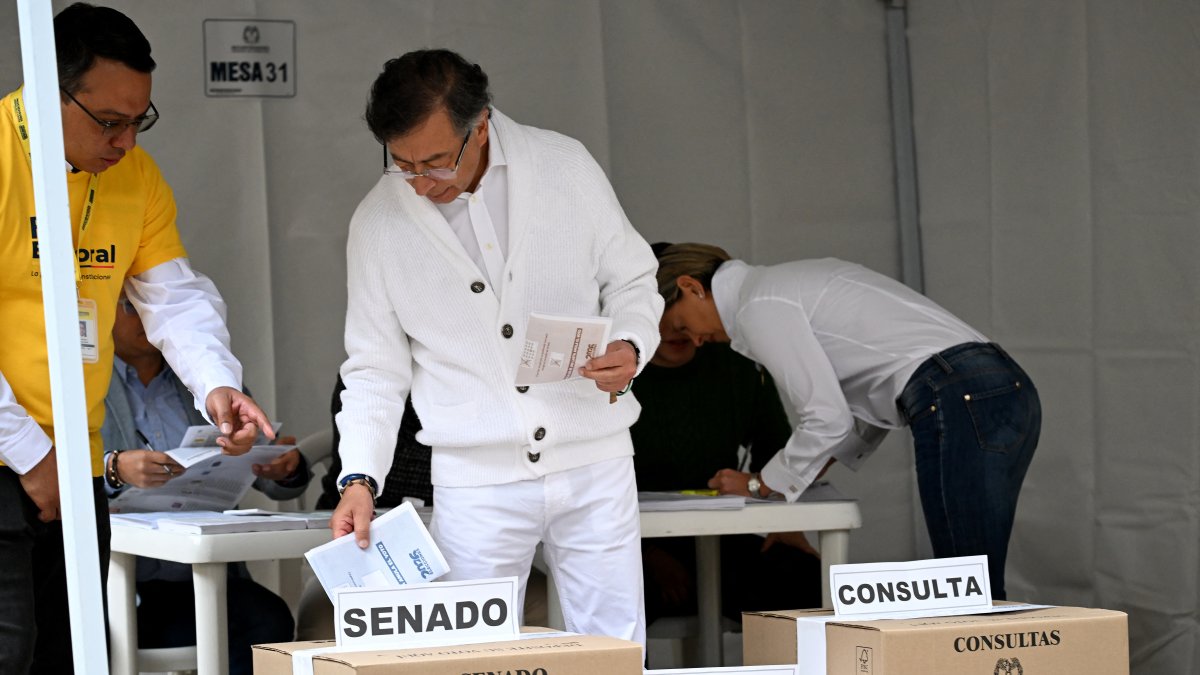
Colombia's President Gustavo Petro during the legislative elections.

The legislative elections held this Sunday in Colombia left a fragmented Congress, although with an advantage for the leftist bloc close to President Gustavo Petro, according to preliminary results and electoral authorities.
According to official data from the National Registry of Civil Status, the ruling Historical Pact led the Senate vote with approximately 22.8% of the vote, while the opposing Democratic Center obtained around 15.6%.
Other traditional parties also obtained relevant representation, such as the Colombian Liberal Party (11.7%), the Green Alliance (9.8%) and the Colombian Conservative Party (9.6%).
A Congress without clear majorities
Although the leftist bloc is emerging as the largest force in the Senate and one of the main ones in the House of Representatives, analysts expect no party to obtain an absolute majority, which will force the next government to build coalitions to pass laws.
"Congress will remain fragmented," political analyst Sergio Guzman explained to Reuters. "The left showed that it is here to stay; the right is divided, but not weak."
The current president, Gustavo Petro, the first leftist president in the recent history of Colombia after winning the 2022 elections, cannot seek re-election, as the Constitution prohibits it. The next presidential elections will be held on May 31, with a possible runoff in June.

World
Another attack in Colombia against an opponent: A congressman's vehicle is attacked
Sabrina Martin
Political climate
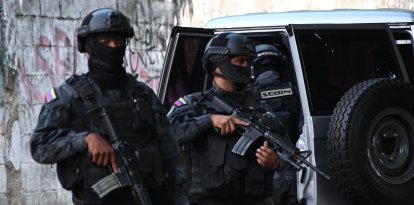
Defense Minister Pedro Sanchez reported that more than 240,000 members of the security forces were deployed to guarantee the election day. The U.N. verification mission indicated that, despite the risks, voting took place without widespread serious incidents.
The voter turnout was around 48%, a figure similar to previous legislative elections.
Presidential primaries and new figures
In addition to electing the new Congress, voters participated in inter-party consultations to define presidential candidates of the main political blocs.
Among the aspirants who stand out for the presidential race are left-wing senator Iván Cepeda, right-wing lawyer Abelardo de la Espriella and conservative senator Paloma Valencia, a figure close to former president Álvaro Uribe.

In the consultation of the center bloc, former Bogotá mayor Claudia López also won, while former senator Roy Barreras won the primary of the progressive bloc.
Setback for Álvaro Uribe
One of the most striking results was the failure of former president Álvaro Uribe, who tried to return to the Senate but failed to win a seat in the preliminary projections.
Although his party, the Democratic Center, did get relevant representation, with about 17 projected seats, Uribe's placement on the electoral list left him out of the Senate.

World
Colombian government and Clan del Golfo resume peace talks after weeks-long standoff
Diane Hernández
A country in political dispute
The elections reflect a deep political polarization in Colombia. Petro's government came to power with a broad progressive coalition, but over the years has faced internal divisions and difficulties in passing its legislative agenda.
While the ruling party aspires to consolidate its influence in Congress to continue its reforms, conservative sectors seek to regain ground in the presidential elections.
With a fragmented Parliament and a country still marked by decades of armed conflict and violence linked to narco-trafficking, the outcome of the presidential elections could define Colombia's political course in the coming years.
LATEST