ANALYSIS
The Trumpeldor roar that still beats in Israel’s heart
“Operation Roaring Lion” was named after the Jewish state’s national hero, who fell in the Battle of Tel Hai in 1920.

VOZ / Christian Camacho.

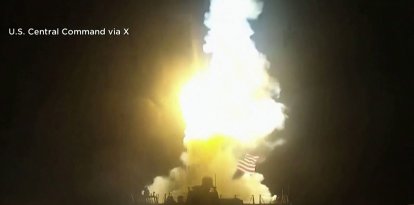
The Jewish state commemorated Tel Hai Day at the end of February, just hours after it launched “Operation Roaring Lion,” and slayed its archenemy, Iran’s dictator Ayatollah Ali Khamenei.
The codename for the military campaign was no accident.
Addressing the nation on the night of the outbreak of the war, Israeli Prime Minister Benjamin Netanyahu stated, “One hundred and six years ago, national hero Joseph Trumpeldor fell in the Battle of Tel Hai. His legacy and bravery still pulse within us.”
He continued, “At the memorial in his honor, at the summit of the Upper Galilee, where he fell together with his seven comrades, the statue of the Roaring Lion was erected. Many times throughout my life, I have visited there. When I looked at the statue, that is how I always saw you, that is how I always saw us: the people of Israel. With God’s help, the lion’s roar of our soldiers, of our pilots, of our citizens is now being heard throughout the world. And today more than ever, the entire world knows: Am Yisrael Chai! [The People of Israel Lives].”
The Battle of Tel Hai
On the week before the war against Iran started, a small group of mostly pensioners congregated at a local club in the town of Kamon in the Northern Galilee to hear a lecture about the Battle of Tel Hai.
The peaceful atmosphere on top of the lush Mount Kamon, some 25 miles southwest of Tel Hai, was a stark contrast to the bloody event that unfolded in the embattled Jewish farm in the Upper Galilee on March 1, 1920.
The deeds of that day never ceased to shape the national ethos of modern Israel.
The nascent Zionist leadership of the Yishuv (state-in-making) had dispatched Russian-born Jewish commander Joseph Trumpeldor, who had made aliyah only a few months earlier, to organize the defense of four isolated Jewish settlements in the north.
The tiny Jewish community of the Upper Galilee was in dire straits. The British forces had recently withdrawn from the area amidst border adjustments with France, leading to anarchy.
The Jewish residents of Metula, Tel Hai, the adjacent Kfar Giladi and Hamara were caught in the crossfire between Arab militias and French forces. By early February, only a small Jewish contingent remained in Tel Hai and Kfar Giladi.
Motta Har-Lev, 82, an author and military historian, told the audience in Kamon what happened next. Dozens of armed Arabs arrived at Tel Hai on the first of March and demanded to enter the enclosed parameters of the settlement’s courtyard to search for French soldiers.
Trumpeldor obliged and accompanied three Arab officers in their search inside. They gave him their word that they were not looking for a skirmish.
It remains unknown what led to the first gunshot, but at one point, the officers went up to the attic while Trumpeldor stayed in the courtyard. The Arab commander encountered two Jewish female residents, Deborah Drukler and Sarah Chizik, who were likely frightened to see an armed Bedouin in the village.
Har-Lev noted that Trumpeldor reacted immediately to the ensuing gunfight, darting to lock the gates to prevent the Arabs outside from storming in. On his way to the gates, he was shot in the stomach and lay wounded in the middle of the court.
A ceasefire was declared so Trumpeldor could be tended to while the officers—barricaded in the attic—would be allowed to retreat.
Six Jews, including Trumpeldor, who later succumbed to his wounds, and five Arabs died. Two more Jews were killed days before the battle by marauding bands. Tel Hai was abandoned, and the Arabs set fire to it.
Trumpeldor’s heroics were immortalized soon after the news hit the Yishuv. His last words were canonized in the ripening Jewish national home: “It is good to die for our country.”
The spirit of Tel Hai
Yair Belachovsky, chairman of the nonprofit Tel-Hai Trustees, spoke with JNS over the phone ahead of the annual commemoration of the Tel Hai battle. The 42-year-old is the grandson of Zalman Belachovsky, who treated Trumpeldor at the farm until his final moments.
Belachovsky said that the battle of Tel Hai may be the only historic event that remains firmly within the Israeli consensus to this day. Anyone can find a relatable value, whether it is Trumpeldor’s heroism, the settling on the frontier, or the socialist ideal of working the land in a communal farm, he stressed.
He went on to compare the 1920 battle to Israel’s ongoing wars, saying that “The story of Tel Hai is the spirit of Tel Hai. My grandfather, [19 at the time], was a young man who made history. These are people who understood they were serving something greater than themselves. And I think this spirit beats in every one of us today when you witness the generation of victory, the sacrifice made in the present-day War of Redemption.”
The legacy of Tel Hai is “national unity, conviction in your cause, and serving something greater than you,” Belachovsky stated. “It also represents the heroism of women… The women of Kfar Giladi said, ‘If you put us in the kitchen, we’re leaving.’ They took up arms and fought. [These young Zionists] upheld ideals, they built the state, they made sacrifices for the future,” he added.
The inclusion of the Upper Galilee in the future Jewish state in the Partition Plan of 1947 was thanks to the Battle of Tel Hai, Belachovsky asserted.
Israel recently approved upgrading Tel-Hai Academic College, near the site of the Battle of Tel Hai, to the University of Kiryat Shmona in the Galilee, the country’s newest university.
Between myth and realism
Berl Katznelson, one of the intellectual founders of Labor Zionism, wrote two days after Trumpeldor’s fall, “The whole land is to us Tel Hai,” Har-Lev said. “This is a central, political and ideological slogan that still accompanies us,” the military historian noted.
However, he struck down the premise that settlement “equals” national sovereignty. “Contrary to the opinion that remains prevalent until this day, borders are not determined by settlements; not by Tower and Stockade [Zionist settlement method during the later British Mandate period], nor by the heroes of Tel Hai,” Har-Lev said.
“Borders are determined by the results of military events,” he stressed.
He further argued that the notion that Jewish communities along the border can defend themselves against invading armies is a myth that has been disproven by the events of the last century.
The four Jewish settlements of Gush Etzion south of Jerusalem were conquered and razed during the War of Independence, he pointed out as an example. Other towns that fought valiantly, were significantly reinforced with fighters by the provisional Israeli government, Har-Lev added.
Trumpeldor is a personal hero of his, he continued, but it is the role of the state and the army to protect its citizens, not the residents of the kibbutz or moshav.
He concluded by saying that the Jews in Israel are not a temporary phenomenon—in every generation the Jews encounter an evil enemy, from Haman the Persian to former Egyptian President Gamal Abdel Nasser to Palestinian terror master Yasser Arafat, yet the Jewish people prevail.
Asked about the connection between settlement and sovereignty, Belachovsky told JNS, “Is territory conquered through war? Yes. But look at Gush Etzion [today]. Thirty or forty years ago, no one would have talked about it as an integral part of the State of Israel. Today it is inconceivable [to think otherwise]. Ariel and its university [in Samaria] didn’t change the state’s borders? Tel Hai is the proof of this.
“People always ask what the big deal of Tel Hai is. It did not end in military glory. Tel Hai was razed. Tel Hai was rebuilt. A handful of individuals set national aspirations and shaped the future state,” he said.
© JNS
LATEST