Colombia: Conservative candidate Paloma Valencia consolidates her position in a crowded primary of the opposition to Petro
After her victory, the senator is positioned as one of the main contenders within the conservative camp, where lawyer Abelardo de la Espriella is also seeking support.
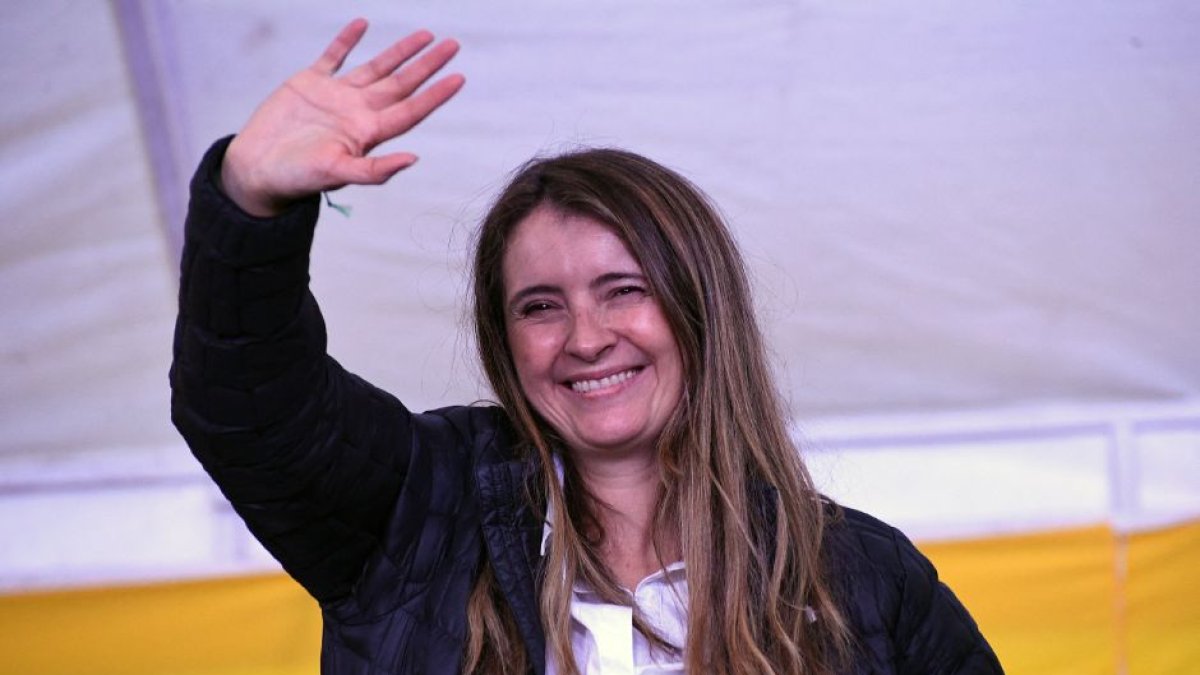
Colombian Senator Paloma Valencia

Colombian Senator Paloma Valencia is emerging as the clear winner of the primaries organized by conservative movements in Colombia. This result strengthens her position in the race for the May 31 presidential elections.
With 77% of the votes counted, Valencia has 46% of the support among nine contenders, far surpassing second place, the former director of the national statistics agency, Juan Daniel Oviedo, who registered around 18%.
The result places Valencia as one of the strongest candidates within the Colombian conservative bloc, at a time when the country is preparing for a presidential contest marked by debate over security, the economy and the political course after the government of leftist President Gustavo Petro.
A figure of the Colombian right wing
During the campaign for the primaries, the senator advocated for strengthening the army and the police to launch an offensive against gangs linked to cocaine trafficking, in a context in which Colombia faces record levels of cocaine production.
On the economic front, she proposed eliminating the wealth tax and reducing the tax burden on companies, measures her campaign said would stimulate investment and growth.

World
Colombian government and Clan del Golfo resume peace talks after weeks-long standoff
Diane Hernández
Conservative leadership contest
Following her victory in the primaries, Valencia is positioned as one of the main contenders within the conservative camp, where lawyer Abelardo de la Espriella, who has advocated hard-line security proposals, including the construction of mega-prisons and measures to "neutralize" members of criminal gangs who refuse to surrender, is also seeking support.
According to analyst Sergio Guzman, director of Colombia Risk Analysis, the result of the consultation strengthens Valencia's position in the presidential race and places her as an important rival to Senator Ivan Cepeda, Petro's ally, who is leading in some polls.
Other primaries and legislative elections
The internal consultations held on the same day showed a majority participation in the conservative primary, which concentrated 83% of the votes cast, compared to 9% of the centrist consultation and 8% of the left-wing one.
In the leftist bloc, former senator Roy Barreras was on his way to a narrow victory in his primary, while in the centrist sector, former Bogotá mayor Claudia López was the winner.
The elections also included the election of 103 senators and 186 representatives to the Chamber of Deputies. With close to 15% of the legislative vote, the pro-government movement Pacto Histórico was emerging as the largest bloc in the Senate, followed by the Centro Democrático.
If no candidate obtains an absolute majority in the first presidential round on May 31, Colombia will hold a second round on June 21.
LATEST