LIVE: US and Israel unleash full force on Iranian oil facilities
With attacks in several countries and new fronts opening in the region, the war enters its ninth day with signs of a widening regional escalation.
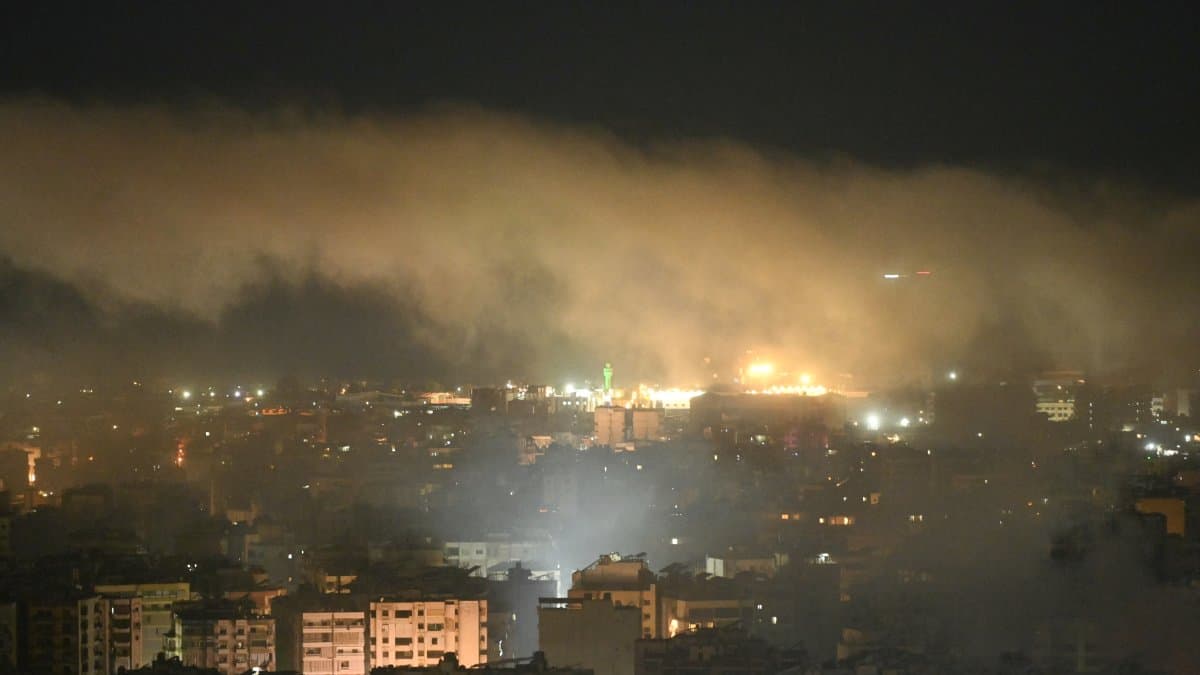

The ninth day of the U.S.-Israel-Iran war kicked off marked by new escalation of attacks at several points in the Middle East. During the early hours of Sunday morning, Iran claimed to have launched missiles and drones against U.S. bases in Kuwait and Bahrain, actions that caused fires in strategic infrastructure and have been described by the Gulf countries as a dangerous escalation of the conflict.
In parallel, Israel carried out a new wave of bombing raids on Iran, hitting oil facilities in Tehran and attacking military targets such as hangars and fighter planes at Isfahan Airport.
With attacks in several countries and new fronts opening in the region, the war enters its ninth day with signs of a widening regional escalation.
Times are Eastern Standard Time (EST).
11:41 am · Israel says it struck headquarters of Revolutionary Guards “space force” in Iran
The Israeli military said Sunday that it struck in Tehran the headquarters of the “space force” of Iran’s Revolutionary Guard Corps.
“As part of the strikes, the Israel Defense Forces (IDF) attacked and dismantled the headquarters of the space force of Iran’s Revolutionary Guards,” the IDF said.
“The headquarters serves as a center for receiving, transmitting and researching activities of the Iranian Space Agency,” it added.
Israel says it struck more than 600 targets in Lebanon and killed over 190 terrorists
According to the Israel Defense Forces (IDF), the Northern Command carried out strikes against positions in Lebanese territory using approximately 820 munitions from the air, sea and land.
The IDF said the bombings killed more than 190 terrorists, including Abu Hamza Rami, identified by Israel as a commander of Palestinian Islamic Jihad in Lebanon. According to the Israeli military, five other commanders were also killed in the attacks.
The IDF added that on Saturday it targeted rocket launchers in Lebanon that had fired missiles toward Israel. In addition, an Israeli Air Force aircraft eliminated a Hezbollah terrorist in an area where Israeli troops were operating in an advanced defensive position.
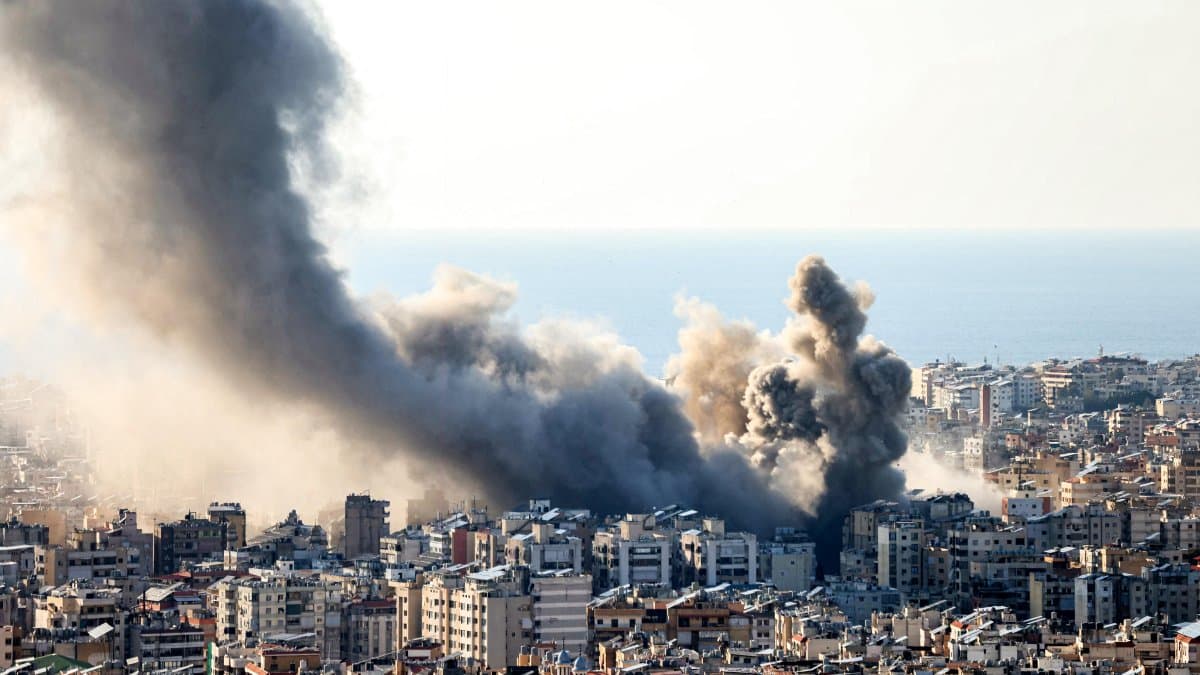
Over the past week, the IDF said 27 waves of strikes were carried out in the Beirut region, including five in the Dahieh area, a Hezbollah stronghold in the Lebanese capital, said the media.
The Israel Defense Forces added that in recent days they have taken “advanced defensive positions” aimed at strengthening protection for residents of northern Israel.
10:35 am · More than 32,000 Americans have returned from the Middle East, State Department says
More than 32,000 U.S. citizens have safely returned from the Middle East since Feb. 28, according to new figures released Sunday by the United States Department of State.
Assistant Secretary of State for Global Public Affairs Dylan Johnson said the department has arranged nearly two dozen charter flights to evacuate Americans and that air and ground transport operations continue to expand as security conditions allow.
Johnson added that the availability of commercial flights in the region is gradually improving, which is also helping U.S. citizens return home through private travel options.
According to the official statement, the State Department has provided direct assistance to more than 19,000 Americans overseas since the start of the operations. However, more than half of the U.S. citizens who requested help ultimately declined the transportation offered by the U.S. government when they were contacted, the official said.
The updated figures come as the U.S. administration has faced criticism from some Americans over its efforts to facilitate their return from the region amid the escalating conflict.
Politics
Poll: 61% of Americans believe that Iran is a 'real threat to national security'
Emmanuel Alejandro Rondón
10:01 am · Norwegian police point to a possible terrorist motive in explosion at the U.S. embassy
The explosion that occurred early Sunday morning at the United States embassy in Oslo—which caused no injuries but did result in minor material damage—may have been caused by “an act of terrorism,” according to police, who did not rule out other hypotheses.
The blast struck the entrance to the embassy’s consular section at around 1 a.m. local time, police said.
“One of the hypotheses is that this is an act of terrorism,” Frode Larsen, head of the police’s joint investigation and intelligence unit, told the public broadcaster NRK.
“But we are not completely focused on that hypothesis. We have to remain open to the possibility that there are other causes,” he added.
Images released by the media showed fragments of glass scattered over the snow in front of the entrance, as well as cracks in a thick glass door and black marks on the ground at the base of the door, likely caused by the explosion.
Investigators were combing the area and deployed dogs, drones and helicopters to search for “one or more suspected perpetrators” of the explosion, Oslo police said in a statement.
Norwegian Minister of Foreign Affairs Espen Barth Eide described the incident as “unacceptable” and said he and Minister of Justice and Public Security Astri Aas-Hansen had contacted the U.S. embassy’s chargé d’affaires, Eric Meyer.
Several hours after the explosion, police said the area around the building was “safe” for residents and passersby.
U.S. embassies are on maximum alert in the Middle East following Israeli-U.S. military operations against Iran that have triggered a regional war.
Tehran has launched retaliatory strikes against multiple industrial and diplomatic targets
07:21 am · Israel warns: “We will attack those who appoint Khamenei’s successor”
Israel warned Iran on Sunday that it “will not hesitate to attack” anyone who takes part in the meeting intended to choose the successor to supreme leader Ayatollah Ali Khamenei, who died on Feb. 28 in a joint U.S.-Israeli attack.
Colonel Avichay Adraee, the Arabic-language spokesperson for the Israel Defense Forces (IDF), delivered the message on X. According to him, the Iranian regime is attempting to reorganize after Khamenei’s death and prepare the appointment of a new leader.
According to Adraee, the Assembly of Experts, the body responsible for appointing the supreme leader, could meet soon in the city of Qom to begin the process.
“The State of Israel will continue to pursue the Caliph and everyone who attempts to appoint him,” the spokesperson said, also warning those planning to take part in the session to elect the new leader: “We will not hesitate to target you as well.”
06:53 am · Iran has appointed a new supreme leader but has not revealed the name
Iran’s Assembly of Experts has appointed a new supreme leader to succeed Ayatollah Ali Khamenei, who was killed on Feb. 28 in Israeli-U.S. attacks, members of the clerical body said this Sunday without revealing the name of the chosen successor.
“The vote to appoint the leader took place and the leader was chosen,” said Ahmad Alamolhoda, a member of the Assembly of Experts, as quoted by the Mehr news agency.
His name will be revealed later, he added.
“The most suitable candidate, approved by the majority of the Assembly of Experts, has been appointed,” said Mohsen Heydari, representative of Khuzestan province in the body, according to the Isna news agency.
One of the members, according to AFP, suggested that the son of the late Ali Khamenei could take the position.
The name of Mojtaba Khamenei has circulated among the possible successors to his father, who became supreme leader in 1989.
It is the highest political and religious authority in Iran and has the final say on all matters of state.
06:41 am · The Only Brave Leaders Standing Against Iran's Reign of Terror
For 47 years, the world has endured a regime that has consistently inflicted terror, suffering, and violence both within its own borders and across the globe. The Islamic Republic of Iran, since its inception in 1979, has built its identity around repression, brutality, and the export of radical ideology. Tens of thousands of its own citizens have been killed, tortured, or imprisoned simply for voicing dissent or seeking the simple freedoms we take for granted. The regime has crushed protests, silenced journalists, and employed fear and intimidation to maintain its grip on power.
Entire generations of Iranians have lived under a state apparatus that treats humanity as expendable; yet for decades, the international community has not only turned a blind eye; instead, it has actively funded and enabled this half-century horror show. This is a regime that embodies terror at every level, a regime whose brutality is unmatched in modern history, and for far too long, its evil has gone unchecked.
Beyond its borders, Iran has relentlessly exported its ideology of terror.
Read the full analysis by political scientist and analyst Majid Rafizadeh on the importance of supporting the United States and Israel in their fight against Iran’s regime of terror.
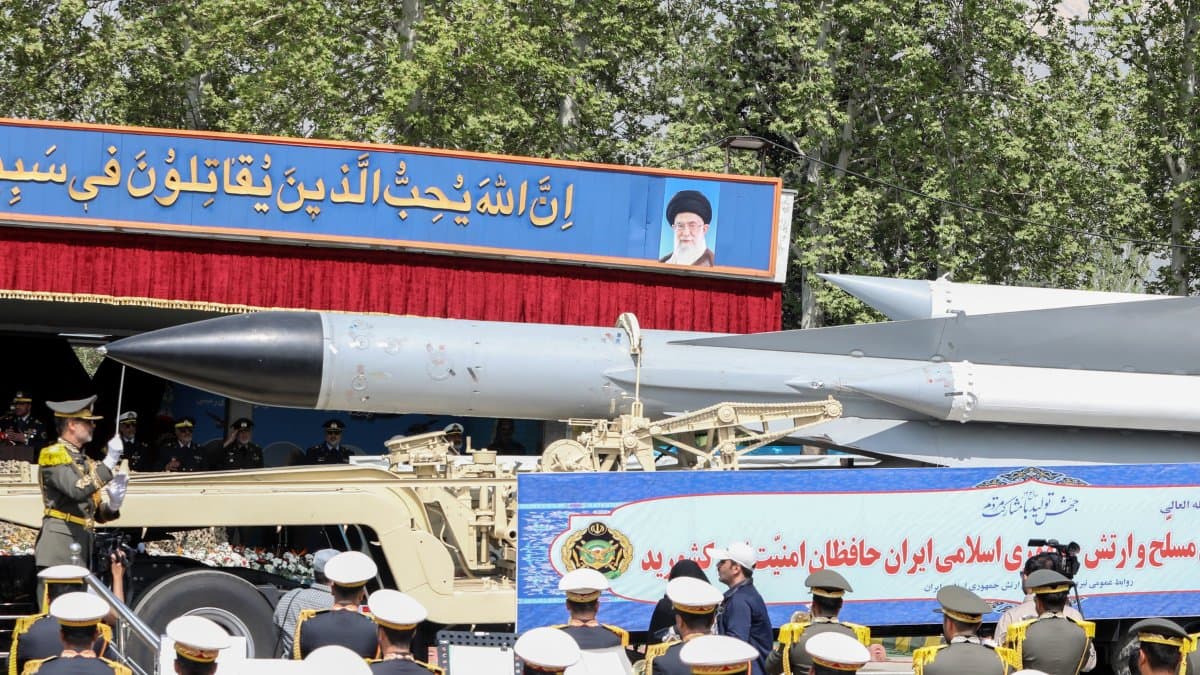
05:31 am · Fuel distribution “temporarily” halted in Tehran after attacks
Fuel distribution in Tehran has been “temporarily halted” following U.S. and Israeli attacks on oil depots in the capital and its surrounding areas, the city’s governor, Mohammad Sadegh Motamedian, reported this Sunday.
“Due to damage to the fuel supply network, distribution has been temporarily interrupted,” the official said, as quoted by the state news agency Irna.
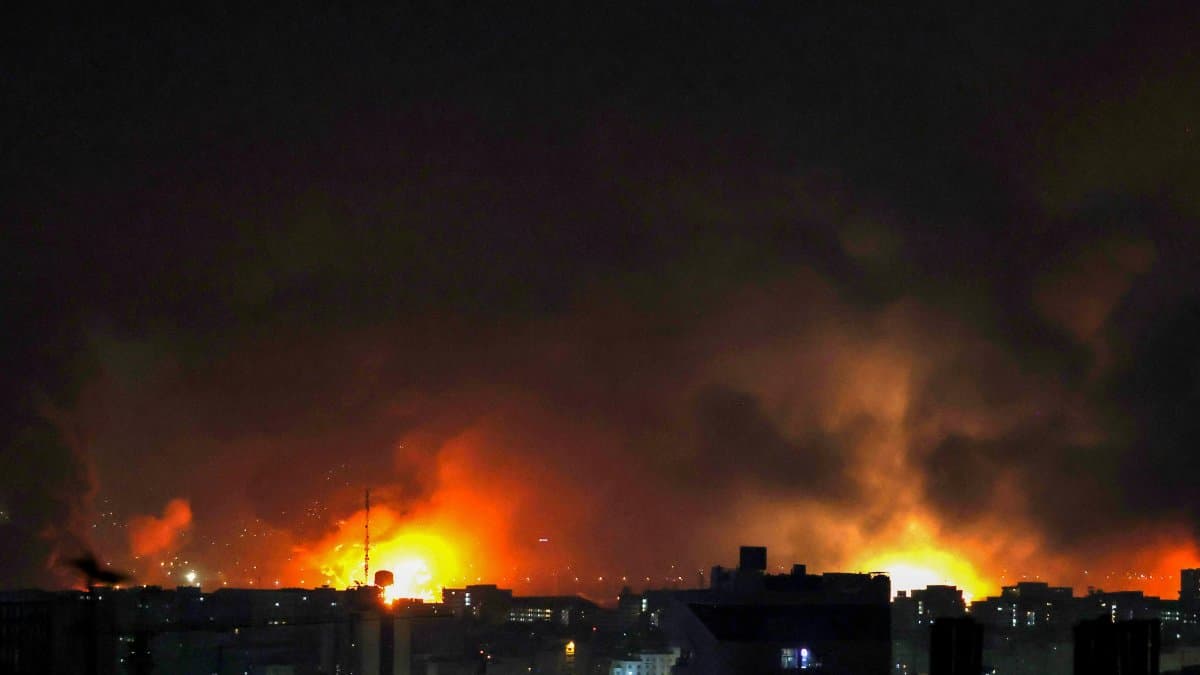
05:15 am. · U.S. and Israel bombed five oil facilities in Tehran and nearby areas
The United States and Israel bombed five oil facilities Saturday night in Iran's capital, an industry official told state television Sunday.
"Last night, four oil depots and an oil products transportation center, in Tehran and in [the province of] Alborz were attacked by enemy aircraft," said Keramat Veyskarami, executive chairman of Iran's national oil products distribution company.
According to him, the five facilities "were damaged" but "the fire was under control," AFP reported.
🛠 Do you think there is an error in this article?
Recommendations





LATEST