The issue for war opponents is Trump, not Israel or Iran’s regime of terror
The effort to delegitimize the decision to strike Tehran is primarily about partisan politics. The president’s critics are focusing more on him than on America’s Islamist foes.
Published
Ten days after the beginning of the U.S.-Israeli air offensive against Iran’s terrorist regime, the ultimate outcome of the joint campaign remains uncertain. Iran’s government and military have largely been decapitated, with the country’s ability to inflict terror on the region drastically reduced. Further damage has been done to its ballistic-missile and nuclear programs. Yet it’s still unclear if the theocratic tyranny in Tehran will fall, as both America and Israel want and expect.
What is clear is the focus of the opposition. Its campaign primarily revolves around one issue—and it isn’t the Jewish state.
Just the News
Group of Democratic senators plan to shut down Senate business unless they get hearings on Iran
Just The News
That comes despite attempts by right-wing and left-wing antisemites to advance the big lie that the United States was forced or led into the conflict by Jerusalem. Many of the war’s critics from both ends of the political spectrum are united by their antipathy for Israel, plain and simple. Common threads also tie the opposition when it comes to their disinclination to holding the Islamic Republic accountable for its behavior to arguments attempting to delegitimize Israel’s war on Hamas after the Palestinian Arab terror attacks in southern Israel on Oct. 7, 2023.
But as critiques of the Iran war start to harden, it’s obvious that Israel’s role as America’s partner in the conflict is not the main factor driving the opposition.
A partisan divide
Opinion polls taken during the war’s first week made one thing obvious. The decision to strike Iran appears to be opposed by a majority of Americans.
A deep dive into the numbers finds that the main driver of opinion on the conflict is partisanship. An overwhelming majority of Republicans, as high as 84% in an NPR/Marist poll, are in favor of military action against Tehran, while 86% of Democrats and 61% of independents are against it. That led to an overall result of 56% against the war and 44% in favor of it. When asked what they think about Iran, 70% of Republicans perceive Iran to be a major threat to the United States; however, only 27% of Democrats see it that way.
The roots of that disagreement can be traced back to the debate over former President Barack Obama’s appeasement of Iran that culminated in the 2015 nuclear deal. As late as 2013, most congressional Democrats were quite hawkish when it came to efforts to stop Iran from acquiring nuclear weapons and punishing it for being the world’s leading state sponsor of terror. But once Obama made support for the nuclear accord a litmus test of personal loyalty to him, his party dutifully fell in line. That also materially contributed to the decline in Democratic support for Israel. The people and government of the Jewish state were, for good reasons, appalled by a document that would have guaranteed that a country committed to their destruction would have eventually acquired a nuclear weapon.

World
France is sending 10 warships to the Middle East in an 'unprecedented' mobilization
Emmanuel Alejandro Rondón
As much as that decade-old argument about a failed diplomatic attempt, as Obama put it, to allow Iran “to get right with the world,” set up the current divide about how to deal with Iran, that isn’t what is determining opinion about the conflict. And while the post-Oct. 7 surge in antisemitism and hostility to Israel is connected to the debate about Trump’s decision, it doesn’t entirely explain it.
It’s really all about Trump.
Disapproval of the war is different from the debate about Israel that has been simmering for the last 30 months.
The willful refusal to acknowledge reality with respect to the genocidal Palestinian war to wipe out the Jewish state isn’t the same thing as the critique about battling Iran. Many around the world bought into the gaslighting in which Hamas and its allies were depicted as the victims, rather than the Israelis who were attacked. The fact that they had started a war with unspeakable atrocities and the largest mass slaughter of Jews since the Holocaust wasn’t so much rationalized as simply disbelieved. It was soon followed by a willingness to buy into Hamas propaganda that claimed Israel’s war of self-defense was a “genocide.” A lot of that had to do with the influence of toxic ideologies that falsely claimed that Israelis and Jews were “white” oppressors who were always in the wrong, and that Palestinians were “people of color” who were always their victims.
World
Trump avoids assigning responsibility for Iran school attack: 'Whatever the report shows, I'm willing to live with that'
Emmanuel Alejandro Rondón
While there is some superficial comparison of attitudes about the war against Iran to the one against Hamas, outside of the extreme left, the anti-war argument isn’t centered on a disingenuous attempt to transform the ayatollahs and their minions into Third World victims of racism, as is the case with the “pro-Palestine” crowd.
What it all boils down to is a belief that anything done by this president has got to be misguided and manipulative.
The Putin comparison
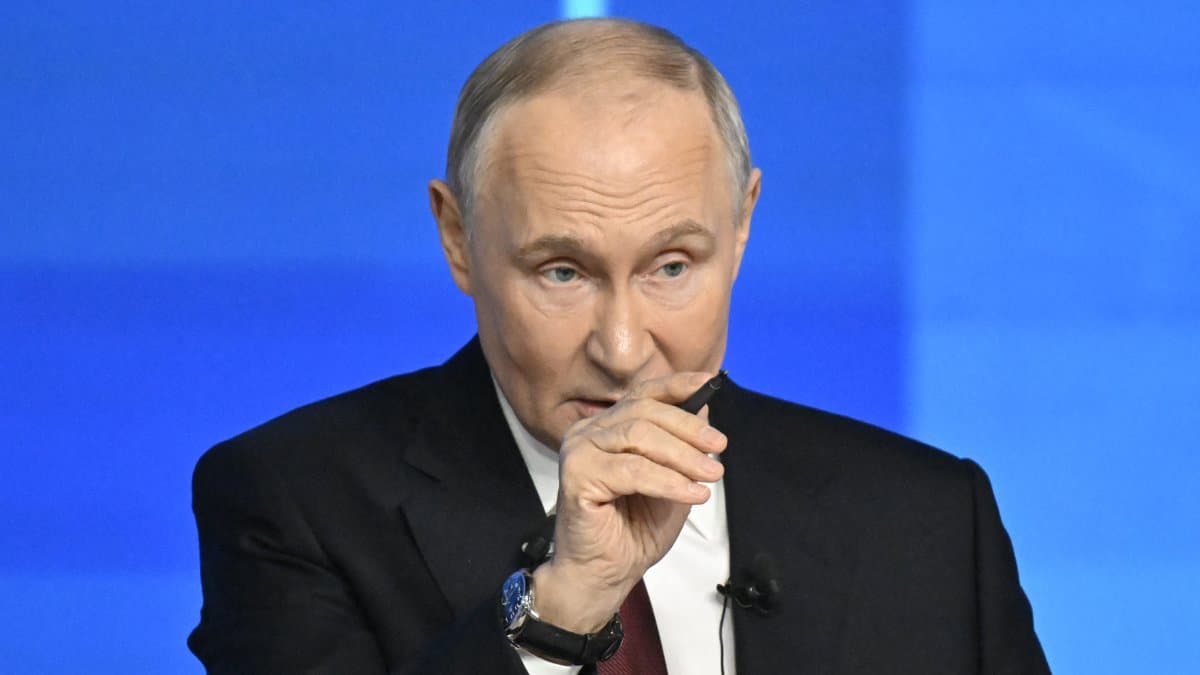
A classic example of how this works was a so-called “news analysis” published by The New York Times on March 8, which tried to make the argument that the U.S.-Israel strikes on Iran were analogous to Russian President Vladimir Putin’s 2022 invasion of Ukraine. Even if the article by former Times Moscow bureau chief Anton Troianovski had been framed as an opinion piece (which it is, despite the “analysis” label and its layout in the newspaper’s news section), it was absurdly argued and devoid of context or sense. Its only point was to paint Trump as no different from Putin.
Whatever one thinks about the Russia-Ukraine battle or the U.S.-Israel operation against Tehran, simply put, there is no comparison between these two events. A longstanding dispute between Ukrainian nationalism and Russian imperial ambitions dates back to the tsarist era. Ukraine was not a nuclear or terror threat to Russia—or any other country. Its government was not driven by a messianic belief in its right to impose a particular religion on the world. It was also not building missiles and seeking to acquire nuclear weapons to destroy another nation, as was the case with Iran’s attempts to eliminate Israel.
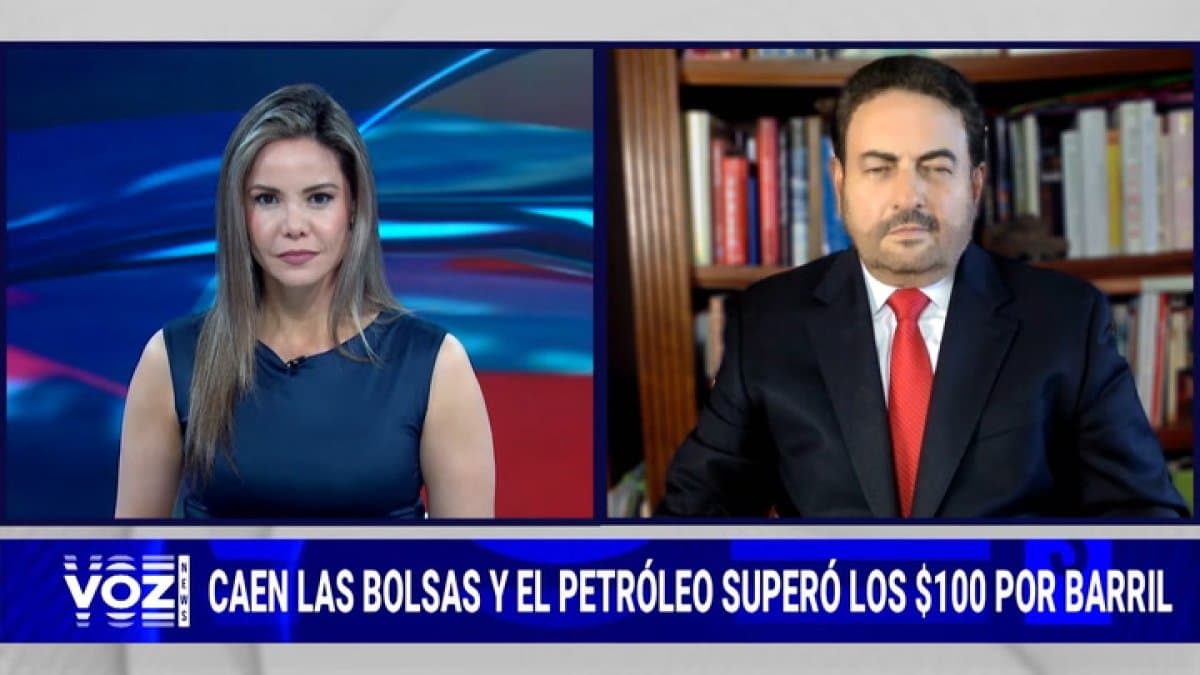
Having relentlessly promoted the Russian collusion hoax for years, only to see it eventually exposed as a partisan conspiracy theory, the Times is still seeking to revive belief in the notion that Trump is a fascist thug, not unlike Putin.
This article is a particularly egregious example of journalists having no shame about letting their Trump Derangement Syndrome affect their work. But even a dispassionate look at most of the liberal mainstream media’s war coverage shows that it has more in common with how they treated the Russia collusion hoax than their coverage of Oct. 7, and the multipronged war that followed.
The consistent theme that colors arguments about Trump’s right to authorize U.S. airstrikes, America’s relations with allies, his statements about the war and uncertainty about its outcome is the belief that the specifics about the threat from Iran are not as important as the liberal detestation for the president. The point being: If you’ve spent the last decade believing that he is a fascist, neo-Nazi authoritarian, then it doesn’t really matter if the position he’s taken is one that all of his 21st-century predecessors have essentially endorsed, though he is the first to act on it.

Interestingly, even many of Trump’s most vociferous critics at outlets like the Times and elsewhere aren’t trying to whitewash the Iranian regime, even though many of them were cheerleading for appeasement of them during the Obama and Biden presidencies. Most agree that the government that slaughtered tens of thousands of its own people in January and that engages in international terrorism is awful and at least a potential threat to the United States.
And so, even if the war is being waged in defense of American interests and global peace—and Iran’s leaders are murderers who have been waging an Islamist terrorist war on the West for the past 47 years—they simply cannot get behind any initiative undertaken by the Trump administration.
Let’s concede that reasonable arguments can be made about the limits of presidential power and the fact that wars are no longer preceded by declarations passed by Congress. There are also reasons to doubt whether an American push for regime change will work in even the worst of countries. Nor can anyone be sure that a change would lead to an improvement over the current situation, though it’s hard to imagine anything worse than the Islamic tyranny that has existed in Iran since 1979.
The ‘fascist’ argument
The debate about the war isn’t so much about those concerns as it is one rooted in the belief that Trump is simply beyond the pale and must be opposed at all times and at all costs.
His opponents relentlessly doubled down on the “fascist” argument throughout his first term and during his time out of office—and continue to do so, despite his triumphant return to the White House after winning the popular vote and the Electoral College in 2024. While the anti-Trump “resistance” narrative was quiet for a while after the resounding defeat of former Vice President Kamala Harris, it has returned with a vengeance. Discussion of the war on Iran is only the latest manifestation of it.
Some of it can be understood as an automatic backlash to a president who is unlike any of the men who preceded him. As one Washington Post article conceded, Trump’s conduct as a war leader isn’t very different from the way he operates at other times, so it’s hardly surprising that reactions to his Iran policy would change.
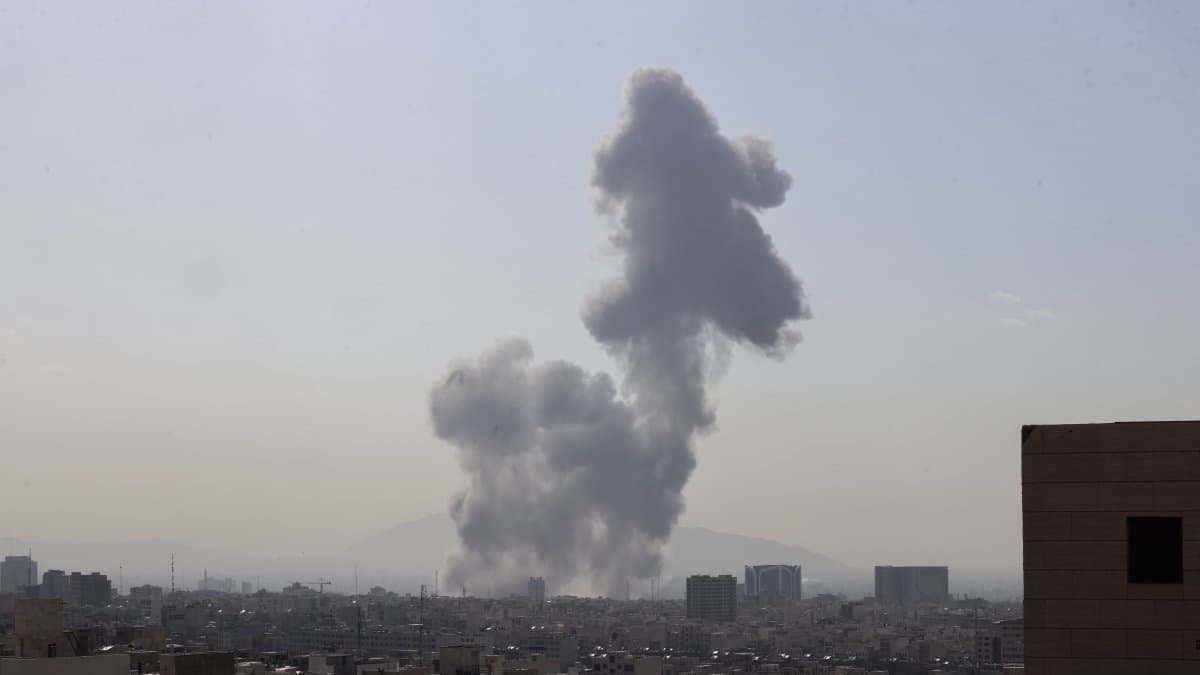
Like the situation in Israel and many other democracies, 21st-century democracy in America is the function of a bifurcated society in which left and right no longer read, listen or watch the same media. They essentially avoid each other on social media or in any other places where public discourse takes place. And with politics now playing the role that religion used to have in most people’s lives, it’s no wonder that partisan divisions have hardened into inflexible beliefs on which no compromise is possible.
Trump’s unorthodox style still grates on his opponents and delights his supporters. The former still seems unable to grasp that his political rise was powered by the failures of both Republican and Democratic Party leaders to cope with new challenges, and by the arrogance and contempt of Obama and the credentialed elites he led toward much of the American electorate.
On Iran, as on other issues, such as illegal immigration and the deindustrialization of America, Trump is merely confronting a longstanding problem that his predecessors helped create and then ignored. The same was true of his approach to Israel, where he swept aside establishment thinking with respect to decisions like moving the U.S. embassy from Tel Aviv to Jerusalem, and declining to let Palestinian intransigence get in the way of his 2020 Abraham Accords.
No credit given
The refusal to give him credit for that diplomatic achievement was proof of the belief among his supporters that even if he cured cancer, his opponents wouldn’t applaud. Ending the appeasement of Iran and taking decisive action to ensure that it can no longer threaten America and the West is not quite the same thing as curing cancer. Still, the tone of critiques of his decision is not dissimilar to the way his peacemaking efforts have been dismissed by those who now oppose the war.
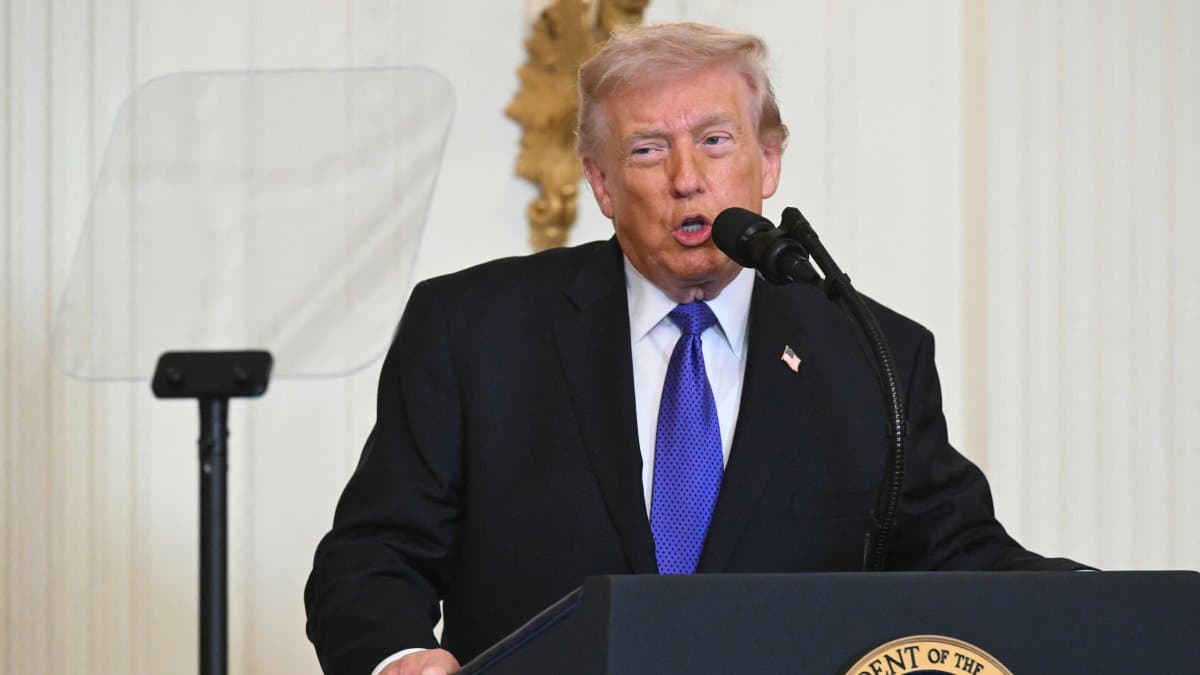
They blame him for not making the case for war while simultaneously refusing to acknowledge the arguments he has made justifying military action. They accuse him of acting on an authoritarian whim. However, the long buildup to the offensive, along with the last attempts the administration made to get Iran to come to a diplomatic agreement, makes it obvious that the decision was the result of a long, deeply considered process. Faulting him for failing to build bipartisan support for his policy ignores the fact that his opponents have no interest in playing the role of loyal opposition; instead, they forge ahead as a “resistance” to a presidency they believe is inherently illegitimate.
Just the News
Iranian official behind Trump assassination plot killed as U.S. prosecutes would-be assassin in NYC
Just The News
They’re also ignoring the clear evidence, as retired U.S. Army officer and military expert John Spencer points out, that the doom-and-gloom predictions of Trump opponents about the war are misguided. While nothing is certain, to date, the strategy employed by both the United States and its Israeli ally seems to be working, and those of the Iranian government are failing. Success isn’t guaranteed, but there is no reason to think it is another Iraq or anything like the disaster Trump-haters are sure is in the works.
Both left-wing hysteria about alleged Trumpian authoritarianism and the antisemitic conspiracy mongering of right-wing opponents of the war, such as far-right podcaster Tucker Carlson, should be seen for what they are. Most of what passes for anti-Iran war arguments aren’t about the actual situation on the ground and are fundamentally unserious.

That arguments about Iran, Islamist terror and the war to destroy Israel have been largely overridden by those about Trump is frustrating to those who see these issues as transcending politics. The struggle to resist Iran’s Islamist terror shouldn’t be bound up with the derangement that Trump inspires in his opponents.
Israelis are dodging missiles shot by the Islamist regime and its terrorist auxiliaries, while Iranian civilians weigh whether a renewed struggle to overthrow their tyrants is worth the risk. While that is happening, we in the United States ought to be able to have an open conversation about these subjects. That dialogue should not be determined by feelings toward the president; rather, it should focus on the clear threat the Islamist regime poses to the West and the United States.
At the moment, that doesn’t seem possible. Yet Iran-war critics need to take a breath. They need to stop thinking about whether U.S. failure in the war will help the Democrats in the midterms and start focusing on a subject that ought to unite Americans, rather than divide them.
🛠 Do you think there is an error in this article?
Recommendations
LATEST