Cuban security personnel reportedly leaving Venezuela after pressure from Washington
For years, intelligence and defense cooperation was a pillar of the Caracas-Havana link. Cuban advisors were integrated in different Venezuelan military bodies since the late 2000s, in the framework of a broader agreement that included the shipment of subsidized oil to the island in exchange for professional and security services.
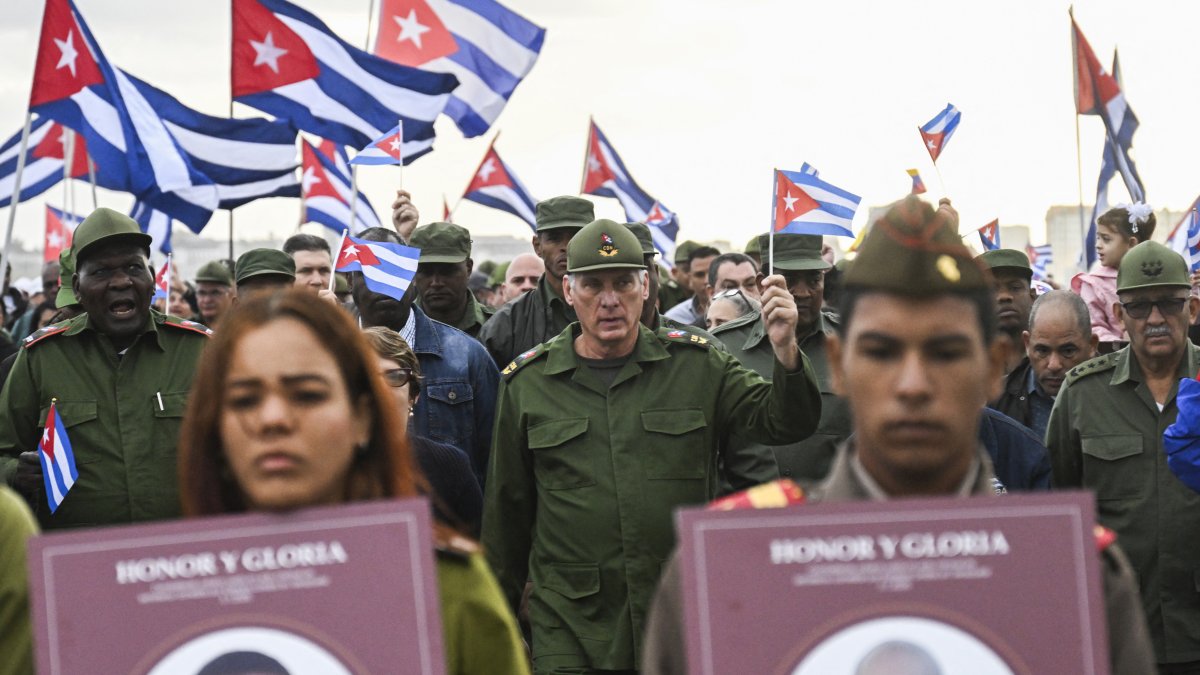
Cuban security forces reportedly leaving Venezuela.

Part of the contingent of Cuban security advisors and doctors deployed in Venezuela has begun to leave the country, amid strong pressure from the United States for the interim government of Delcy Rodríguez to end close cooperation with the Havana regime, according to an investigation published by Reuters.
The report cites 11 sources with knowledge of the matter and notes that Rodríguez has substituted Cuban troops for Venezuelan personnel in her security scheme. The move contrasts with the practice during the terms of dictators Nicolás Maduro and the late Hugo Chávez, who entrusted their protection to elite teams from Cuba.
Likewise, some Cuban advisors have been removed from their functions within the Dirección General de Contrainteligencia Militar (DGCIM), a key agency in the security structure of the Venezuelan state. According to sources, several professionals—among them medics and security consultants—have returned to the island on recent flights.
Impact of Jan. 3 operation
The withdrawal comes in the wake of the Jan. 3 U.S. military operation that culminated in the capture of Maduro. The Cuban regime reported that 32 of its nationals were killed during the raid.
For years, intelligence and defense cooperation was a pillar of the Caracas-Havana link. Cuban advisors were integrated into various Venezuelan military bodies since the late 2000s, as part of a broader agreement that included sending subsidized oil to the island in exchange for professional and security services.
"The Cuban influence was absolutely essential" to the Venezuelan regime’s ability to stay in power, historian Alejandro Velasco, a professor at New York University, told Reuters.
It is unclear whether the departure responds to a strategic decision by Rodríguez, to a direct order from Havana or to voluntary departures. A source close to the government quoted by the agency attributed the move to pressure from Washington.
All this comes after decades of denial by the Castro dictatorship about the presence of Cuban intelligence and security personnel in other countries in the region, including Venezuela.

The U.S. strategy
President Donald Trump has publicly declared his intention to disarticulate the alliance between Venezuela and Cuba. On Jan. 11 he stated on social media that the supply of Venezuelan oil and financial support to the island should end, as well as the "security services" provided by Havana.
According to Reuters, since mid-December the United States has prevented shipments of Venezuelan crude oil to Cuba, which has increased economic pressure on the regime led by Miguel Díaz-Canel.
A White House official told the agency that Washington maintains "a very good relationship" with Venezuelan transitional authorities and suggested that Rodríguez's interests coincide with U.S. objectives.
Neither Caracas nor Havana have issued statements on this issue, although in recent public statements they have reiterated the validity of their bilateral ties.
A relationship in transition
In January, Cuban pro-government Foreign Minister Bruno Rodríguez Parrilla participated in Caracas in an act together with Delcy Rodríguez in homage to Venezuelan and Cuban military personnel killed in the U.S. operation. Subsequently, the interim president had a telephone conversation with Díaz-Canel, and both publicly reaffirmed the cooperation between their countries.
However, the supply of fuel to the island, something that kept the regime alive for years, has been radically cut off. The Caribbean nation is enduring one of the worst crises in its recent history.
Analysts quoted by Reuters believe that the interim government is trying to handle the situation cautiously. Former American ambassador to the OAS Frank Mora said Rodríguez is seeking to maintain some operational distance without completely breaking off relations with Havana.
The evolution of these moves could mark a turning point in an alliance that for more than two decades was one of the region's strongest political and strategic axes.
LATEST