Brazil and India agree to strengthen cooperation on critical minerals and rare earths
The agreement as reported by AFP, seeks to boost investments, exploration, processing and development of resilient supply chains in a context of increasing global competition for these resources.
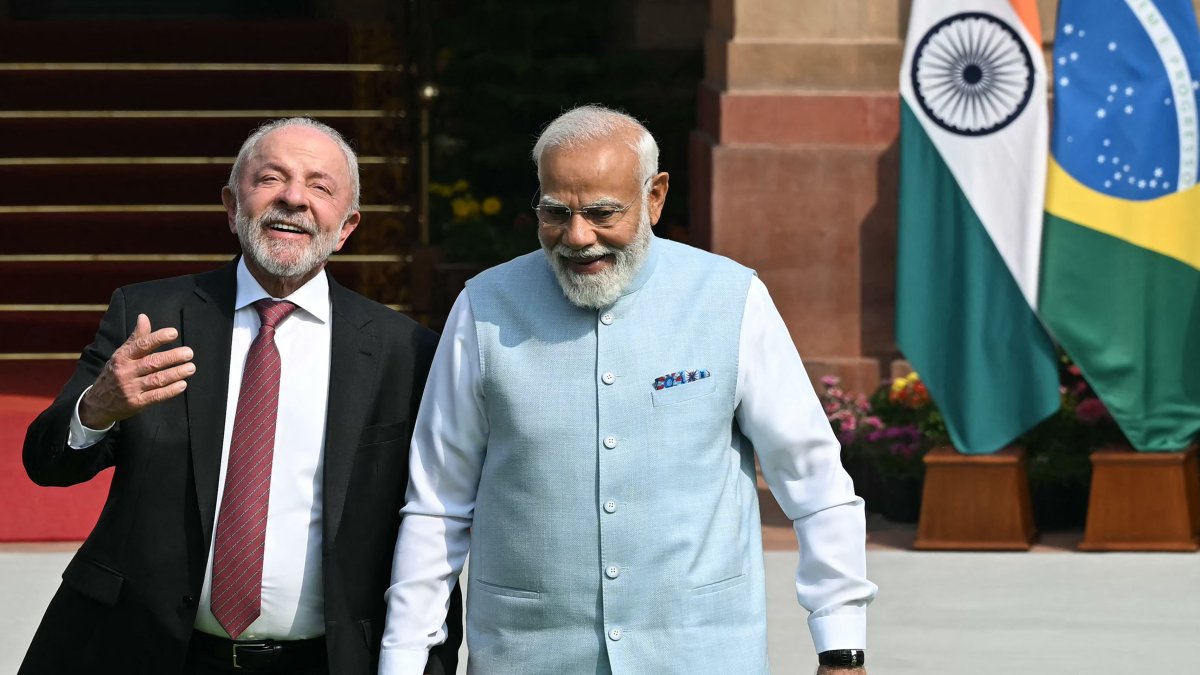
India's Prime Minister Narendra Modi holds hands with Brazil's President Luiz Inácio Lula da Silva.

The leftist president of Brazil, Luiz Inácio Lula da Silva, and the prime minister of India, Narendra Modi, signed on Saturday in New Delhi an agreement described as "pioneering" to strengthen cooperation in critical minerals and rare earths, strategic inputs for technology and energy industries.
The understanding as reported by AFP, seeks to boost investment, exploration, processing and development of resilient supply chains in a context of growing global competition for these resources.
"The agreement is an important step towards building resilient supply chains," Modi said after the signing. For his part, Lula pointed out that "expanding investments and cooperation in renewable energy and critical minerals is at the core of the groundbreaking agreement we have signed today," although he indicated that technical details of the text would not be disclosed at this time.
Politics
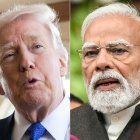
Trump announces trade deal with India after conversation with Narendra Modi
Diane Hernández
Brazil has the world's second-largest reserves of rare earths, essential materials for the manufacture of electric vehicles, solar panels, smartphones, aircraft engines and defense systems. India, which is seeking to reduce its dependence on China, major exporter and dominant player in the global supply chain, has in recent years stepped up its domestic production and recycling, while diversifying suppliers.
In addition to the minerals pact, the two governments signed nine other agreements and memoranda in areas such as digital cooperation and equal access to medicines.
"Brazil is India's largest trading partner in Latin America, and we are committed to taking our bilateral trade above $20 billion in the next five years," Modi said. "Our trade is not numbers, it is a symbol of our mutual trust," he added.
">Our talks focussed on ways to deepen the India-Brazil trade partnership. We are committed to taking bilateral trade much beyond $20 billion in the next five years. Our nations will also work closely in areas such as technology, innovation, Digital Public Infrastructure, AI,… pic.twitter.com/o3sWSJoR9H
— Narendra Modi (@narendramodi) February 21, 2026
Trade and strategic projection
India is currently the 10th largest market for Brazilian exports. Bilateral trade exceeded $15 billion in 2025, according to official data cited by the news agency.
Among the main products that Brazil exports to India are cotton, sugar, petroleum, vegetable oils and iron ore, whose demand has increased due to the accelerated infrastructure development and industrial growth of the Asian country, which aspires to consolidate itself as the world's fourth largest economy.
Brazilian companies have also expanded their presence in India. In January, Indian conglomerate Adani Group and Brazilian aeronautics manufacturer Embraer signed an agreement for the manufacture of helicopters.
Lula arrived in India on Wednesday at the head of a delegation made up of more than a dozen ministers and numerous businessmen, on the occasion of the international summit on A.I. impact. At that forum, he advocated the creation of a multilateral and inclusive global governance framework for A.I.
After his visit to India, the Brazilian president will travel to South Korea, where he plans to meet with President Lee Jae-myung and participate in a bilateral business forum.
International context and trade tensions
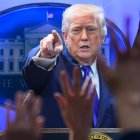
The meeting between Lula and Modi took place a day after the U.S. Supreme Court ruled that the president cannot impose tariffs invoking national emergency powers. Trump responded by criticizing the justices and subsequently signing an order establishing a new 10% across-the-board tariff.
LATEST