Chavismo approves a reform that opens the oil sector to private companies in the midst of the Trump-driven transition
What is even more surprising is that, in terms of royalties and taxes, the reform approved by Chavismo would materialize a reduction of more than 50%.
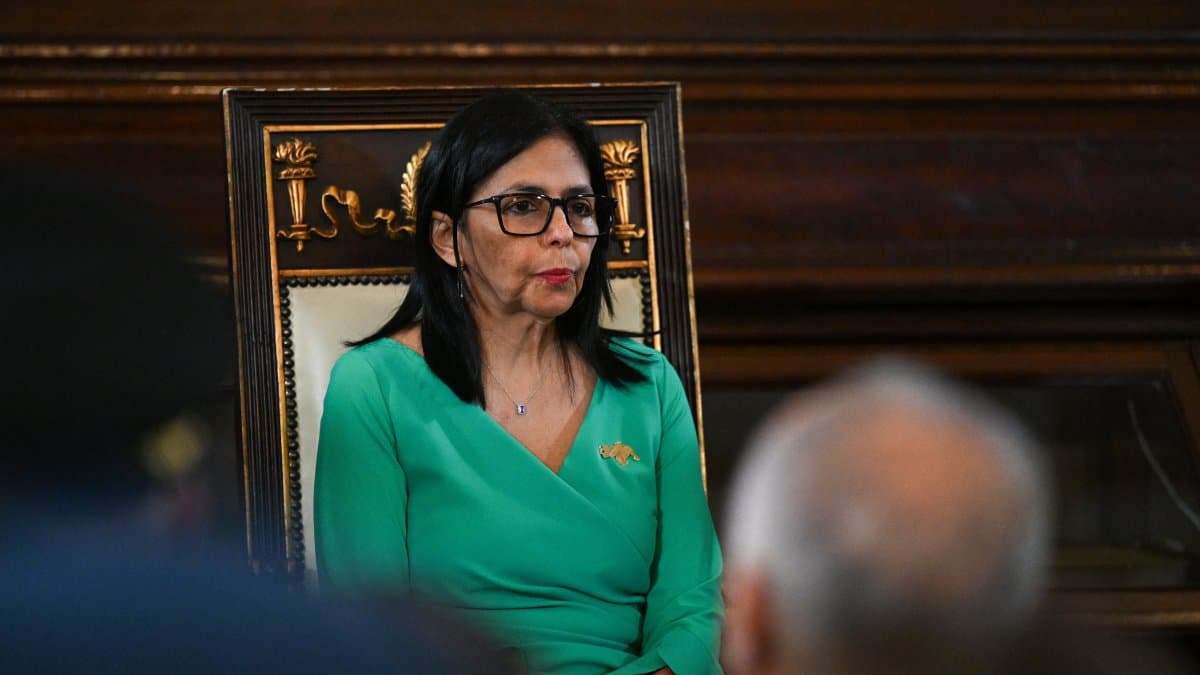
Venezuela's National Assembly approved on Thursday, in first discussion, a partial reform to the Hydrocarbons Law after reaching a majority of votes, evidencing the way in which the administration of President Donald Trump has managed to reduce Chavismo to a docile position after the capture of dictator Nicolás Maduro last January 3, as this reform would clearly be beneficial for several U.S. oil companies. In spite of this, the regime of his replacement, Delcy Rodriguez, has stated, through several important figures, that such measure is necessary. One of these was her brother Jorge Rodriguez -who presides the Chavist-controlled Assembly-, who explained after the approval that the reform would achieve a substantial increase in Venezuelan oil production, which has been falling sharply since the arrival of Hugo Chavez in 1999.
The project was presented by the deputy of the Movimiento Somos Venezuela party, Omar Camacho, who highlighted that it has several "areas of modification" of the law. The most outstanding was the way in which the regime would be willing to grant "flexibility in royalties" to attract greater foreign capital investments, and the increase of "legal guarantees" to guarantee investment, among which would include "mediation through independent mechanisms for the resolution of conflicts".
Relaxation of oil control
The partial reform of the Hydrocarbons Law, approved by the pro-Chavez assembly, would allow both national and foreign companies to operate oil fields independently, commercialize oil and even receive directly the income from sales, regardless of the fact that they act as minority partners of the state-owned company PDVSA. Such initiative represents a blow not only to the ideological and political component of chavismo at the economic level, but also to its narrative. After all, Chavismo today is promoting openness to private capital and fiscal flexibility, these two elements being antonyms to several of the pillars that both Chávez and Maduro came to impose: the absolute power of the State to control all oil activity.
What is even more surprising is that, in terms of royalties and taxes, the reform approved by chavismo would materialize a reduction of more than 50%, going from 33% to 15% in those considered strategic projects. Far from being limited to these details, the truth is that the project is also a blow against the legal aspect that chavismo has been imposing arbitrarily in the last two decades, considering that its application would require changing numerous laws that were approved by the regime.
Trump and María Corina Machado
🛠 Do you think there is an error in this article?
Recommendations

LATEST