Maduro and Erdogan talk about US military escalation in Caribbean and possible exile in Turkey
The conversation, confirmed by the foreign ministries of both countries, took place several days after a report revealed that Turkey could be a possible exile destination for the Venezuelan dictator.

Recep Tayyip Erdogan shakes hands with his Venezuelan counterpart, Nicolás Maduro

Venezuelan dictator Nicolás Maduro held a phone call Saturday with his Turkish counterpart, Recep Tayyip Erdogan, at a time of mounting international pressure against his regime, with the United States deploying one of its largest naval operations in the Caribbean in decades.
The conversation, confirmed by the foreign ministries of both countries, comes several days after a report by The Washington Post revealed that Turkey could be an eventual exile destination for the Venezuelan dictator given the military, judicial and geopolitical siege he faces. It also comes 12 days after President Donald Trump spoke directly with the Venezuelan dictator, to whom he gave an ultimatum to leave power.
According to the foreign ministries, Maduro and Erdogan "agreed on the importance of reestablishing, as soon as possible, the Caracas-Istanbul-Caracas air connection through Turkish Airlines, which will allow to continue transporting thousands of tourists and investors who weekly use this route to strengthen ties between the two nations."

Politics
Maduro's requirements to Trump to leave power: $200 million and amnesty for his network of officials
Virginia Martínez
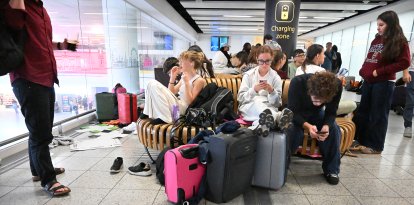
International airlines stopped operating to Venezuela after the United States recommended, for military and security reasons, not to fly in Venezuelan airspace.
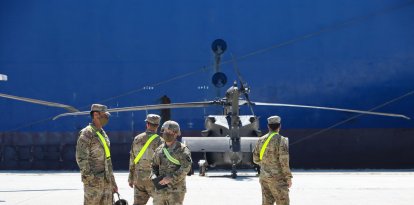
According to the statement released by Caracas, Erdogan expressed his "deep concern" over the deployment of warships, combat aircraft and a U.S. aircraft carrier a few miles off the Venezuelan coast. Meanwhile, according to the statement from the Turkish president, Erdogan stressed that "it is important to keep the channels of dialogue open between the United States and Venezuela" and expressed his hope that "the tension will be reduced as soon as possible."
For months now, the Trump administration has insisted that the military operation in the Caribbean and the Pacific is aimed at dismantling drug trafficking networks linked, according to the White House, to the Maduro regime and the cartels operating under its umbrella: Cartel de los Soles and the Tren de Aragua.


According to the Pentagon, more than 80 people have died in the attacks against the drug boats, while the White House assures that Venezuelan armed groups are waging direct conflict against the United States.
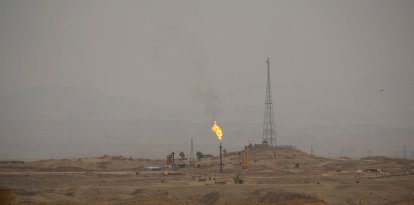
Maduro's response was to accuse Washington of preparing a "regime change" to seize Venezuelan crude oil reserves. The regime, accused of committing crimes against humanity, also claimed that the United States' actions in the Caribbean are "extravagant" and "illegal."
Meanwhile, Turkey's interest in Venezuela is not new: Erdogan has been one of Maduro's staunchest allies since 2018, when he traveled to Caracas to back him after election considered fraudulent by more than 50 countries. The ties between the two leaders were again evident last year, when the Venezuelan leader traveled to Ankara to attend Erdogan's third presidential inauguration.
Now, the latest call between the two leaders comes amidst a shifting geopolitical context. The Washington Post revealed on Nov. 27 that senior U.S. officials consider it plausible that Maduro will seek refuge in Turkey if military and judicial pressure intensifies. Under this scenario, Ankara could offer "guarantees" to avoid his extradition to the United States, where he faces drug trafficking, corruption and narco-terrorism charges, with a $50 million reward for his capture, the highest in U.S. history.
LATEST