ANALYSIS
Trump turns his gaze to the south: Latin America becomes his new geopolitical front
China has gained ground in the Americas through loans, co-investments and monetary agreements, building infrastructure that ensures the flow of raw materials to Asia. In contrast, the United States lost presence for decades and now the president seeks to reverse that trend with tougher policies, focused on sanctions, tariffs and immigration control.

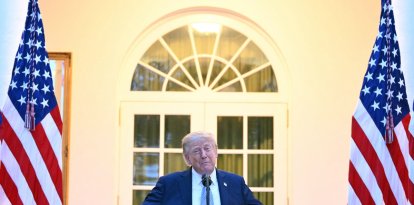
President Donald Trump during an event at the Kaseya Center in Miami.

The return of Donald Trump to the White House marks the beginning of a new geopolitical competition in the Americas. His strategy seeks to regain U.S. influence in a region that, after two decades of neglect, has been conquered economically and strategically by China from silence.
Today Beijing is South America's main trading partner and an actor with a strong financial and technological presence. In this way it also ensures its geostrategic presence in the region, something that undoubtedly worries Washington.
It is no secret that Trump has placed Latin America back at the center of U.S. foreign policy, with a strategy that mixes security, trade, migration and geopolitics. His main goal: to rebuild leadership in a region he considers vital to U.S. economic and national security interests.
Trump's new doctrine seeks to strengthen the U.S. presence in Canada, Panama, Latin America and even Greenland. His administration is promoting an agenda that combines:
- Selective tariffs and trade sanctions on countries that favor agreements with Beijing.
- Incentives for U.S. companies to invest in Latin America, reducing dependence on China.
- Security and defense alliances in the Caribbean and Central America to control migration and drug trafficking routes.
- Support for regional infrastructure projects, such as the Interoceanic Corridor of the Isthmus of Tehuantepec (Mexico), intended as a counterweight to the Panama Canal, where China already controls several ports.
What is the outlook for the U.S. in the region?
Brazil: the jewel in China's crown in South America.
China is Brazil's top trading partner, displacing the U.S. years ago. In 2024, Chinese investment in the country doubled, reaching record levels according to Reuters. Relations between the two governments intensified under leftist President Luiz Inácio Lula da Silva, who seeks to reduce dependence on the dollar and encourage trade in renminbi (China's official currency).
In addition, Chinese companies such as State Grid and China Three Gorges dominate a large part of the Brazilian energy sector, while BYD announced the construction of an electric vehicle mega-factory in Bahia. The link is not only economic, but political: Beijing sees Brazil as its regional strategic partner and an allied voice within the BRICS bloc.

World
Marco Rubio warns that the US will 'respond' to the 'unjust' conviction of former Brazilian president Jair Bolsonaro
Emmanuel Alejandro Rondón

Argentina: energy, lithium and financial dependence.
In Argentina, China has woven a network of key investments. It finances 85% of the Atucha III nuclear project, a plant valued at more than $8.3 billion, and controls important mining concessions in the lithium triangle shared with Bolivia and Chile.
Despite the country's turnaround with President Javier Milei, negotiations with Xi Jinping continued at the G20 in Rio de Janeiro, where both leaders agreed to deepen economic cooperation. In addition, the Argentine Central Bank maintains a currency swap with the People's Bank of China, which allowed it to hold reserves during recent financial crises. In practice, Beijing has become the country's main lender and trading partner.
Chinese influence in other countries in the South American region.
- Chile was the first South American country to sign a free trade agreement with China, in 2005, and one of the most active within the Belt and Road Initiative, Belt and Road Initiative or BRI, a global development project driven by Beijing since 2013. The Andean country is an essential supplier of copper and lithium, and China has invested billions of dollars in mining, energy and technology. In addition, Huawei has one of its main regional data centers in Chile, and Chinese banks operate in Santiago facilitating transactions in renminbi.
- Peru is another pillar of Chinese progress. The port of Chancay, financed and operated by Cosco Shipping Ports, is emerging as the main logistics hub in the South American Pacific, with the capacity to move millions of tons of minerals and goods to Asia. In addition, Chinese companies are involved in railway, energy and telecommunications projects. The country has also signed a free trade agreement with Beijing and joined the Asian Infrastructure Investment Bank (AIIB), reinforcing China's institutional presence in its economy.
- Although closer to the United States, Mexico has also received a growing wave of Chinese investment, which in 2023 exceeded $5.3 billion U.S. dollar. Chinese companies are involved in telecommunications, energy and rail infrastructure sectors, taking advantage of the T-MEC to manufacture and export from Mexican territory to North America. Digital platforms such as TikTok, with more than 77 million Mexican users, also strengthen China's technological and cultural influence.
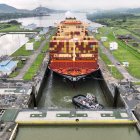
- Since Panama broke off relations with Taiwan in 2017 to join the New Silk Road, China's presence in the country has skyrocketed. Chinese companies control two, formerly three, of the five main ports on the canal and have financed bridges, roads and logistics projects. This control worries Washington, as the canal remains a vital artery for global trade, and Chinese dominance could have geostrategic implications.

How has the United States managed to reposition itself in months across the continent?
The Panama Case:.
Last April, and following a visit by the U.S. Secretary of War, at the time Secretary of Defense, Pete Hegseth to Panama, it was announced a memorandum of understanding on security cooperation signed by the governments of President Donald Trump and Panamanian President José Raúl Mulino, advancing details of a document that would guarantee U.S. auxiliary and warships not only free passage through the canal, but also priority passage.
The Panamanian government also confirmed that the U.S. military would increase its presence in the Central American country, and in areas adjacent to the Canal.
Politics
Panama to allow US military deployment in Canal-adjacent areas and other security zones
Diane Hernández
At that time the Central American nation pledged in a joint statement to abandon the famed 'Silk Road' and to reduce China's presence in the country.
The Argentine miracle:.
Argentina made official in late October a $20 billion financing line with the United Statesas part of an exchange rate stabilization agreement days before a crucial legislative session for President Javier Milei.
The announcement of a currency swap with President Donald Trump's government comes amid a run against the Argentine peso, and adds to other measures by the U.S. Treasury in support of Milei before the Oct. 26 elections, in which he won with a wide lead.
Trump also promised his ally Milei another 20 billion dollars in public and private funds to face the market turbulences as long as he achieved a good electoral result, something that clearly materialized. The Argentine presidential agenda includes visits to Washington at least every two months, according to the media, which evidences a rapprochement between the countries and the door to possible regional cooperation beyond economic bailouts.

Mexico, the gateway with special attention from Washington: Mexico, the gateway with special attention from Washington:
The United States and Mexico have established a new security cooperation strategy to combat the trafficking of arms, drugs and illicit money. In trade and economics, both countries are working to strengthen their supply chains, technology, infrastructure and employment through high-level dialogues.
Specific agreements on water, borders and immigration control have also been reached that reinforce the strategic nature of the relationship.
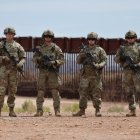
From the U.S. perspective, Mexico is key to curb the flow of drugs, weapons and irregular migration into its territory, as well as to secure its productive chains. For Mexico, cooperation with its neighbor opens up opportunities for investment, technology and employment, in addition to strengthening its security against organized crime.
Despite the collaboration, Mexico insists that any agreement respects its sovereignty and autonomy.
A clear message to the region
This includes sending warships, submarines, F-35 fighters and thousands of troops to Caribbean waters, around Venezuela, which has some 600 cooperation projects with China for 2025, and its surroundings.
At the same time, Washington has its sights set on the regime of Nicolás Maduro, whom it accuses of collaborating with drug cartels and maintains that the country constitutes a state with narco-terrorist links.
Recently Donald Trump stated that Nicolas Maduro's days as Venezuela's dictator are numbered.
World
Trump thanks Bukele for welcoming more than 200 Tren de Aragua gang members to El Salvador
Emmanuel Alejandro Rondón
U.S. seeks to set up security offices in Ecuador
The United States is exploring the possibility of establishing Department of Homeland Security (DHS) offices in Ecuador, with the aim of strengthening bilateral cooperation in the fight against organized crime and drug trafficking. The DHS Secretary, Kristi Noem, arrived in the South American country this week to evaluate military installations considered strategic, such as the Manta and Salinas bases, on the Pacific coast.
The project depends on the outcome of the referendum on Nov. 16, in which Ecuadorians will decide whether to allow the installation of bases or foreign personnel, something currently prohibited by the Constitution.
Ecuador is going through a serious security crisis, with a more than 600% increase in homicides in the last six years and the presence of some twenty criminal gangs linked to international cartels. Washington considers the country a key point in its regional strategy against drug trafficking, especially due to its strategic location in the South Pacific.
The cooperation is part of a rapprochement between the governments of Daniel Noboa and Donald Trump, which seek to strengthen the military and technological alliance in the face of China's growing influence in Latin America.
If the referendum is approved, the United States could establish for the first time official DHS offices in Ecuadorian territory, aimed at coordinating joint operations in intelligence, border security and the fight against drug trafficking.
Latin America's return to the north: a national security concern
For Trump, regaining presence in the continent means not only containing the Chinese advance, but also guaranteeing his country's energy and economic security, strengthening military alliances and curbing the impact of drug trafficking and migration, central issues of his national security agenda.
LATEST