ANALYSIS
Analysis | The Dragon's Strategy: China gains ground on Russia in Cuba
Since the Caribbean island joined the Belt and Road Initiative in 2018, the Asian giant has invested in strategic infrastructure there, including transportation, ports and telecommunications.
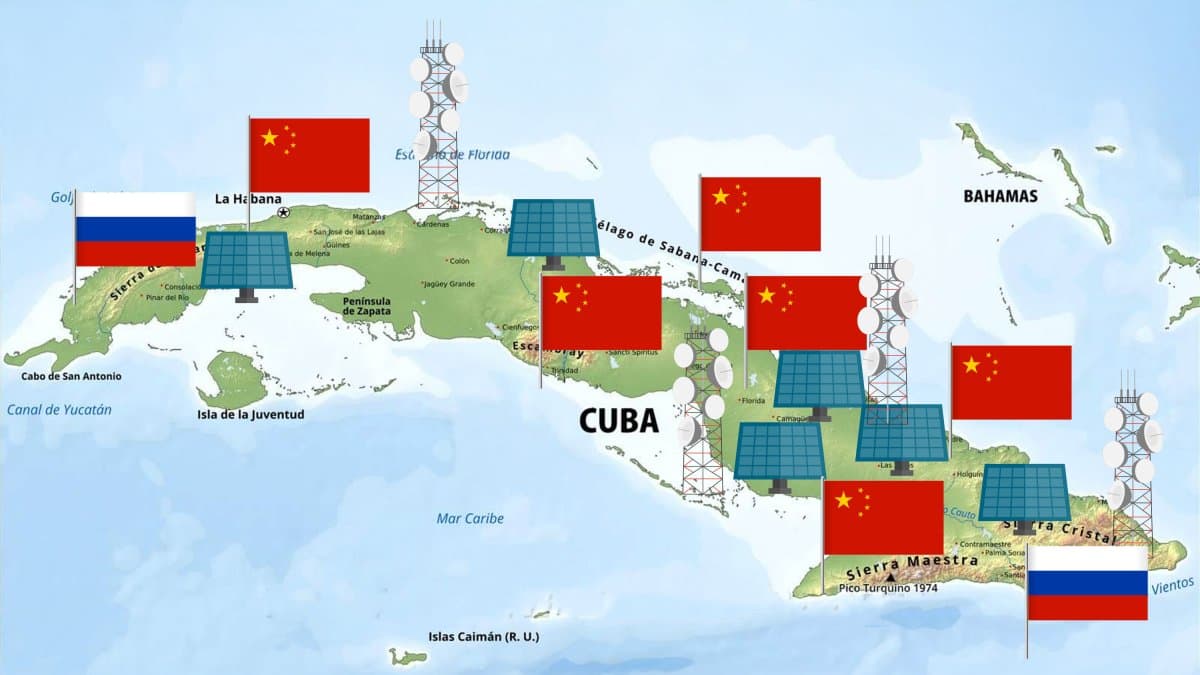

Cuba cannot save itself, and the regime knows it. In the midst of an energy and economic darkness, the island has reached out to its historic trading partners to try to weather the worst crisis in its history, and among them, some are quietly operating without it being known how the dictatorship will repay these favors.
In the back-and-forth that threatens the final blow to the Revolution, China has emerged as a pragmatic and discreet actor in Cuba, while on the other hand, the Russian promises—an unconditional friend of Castroism for decades—fade into inaction. This was highlighted in a report by Reuters news agency this week.
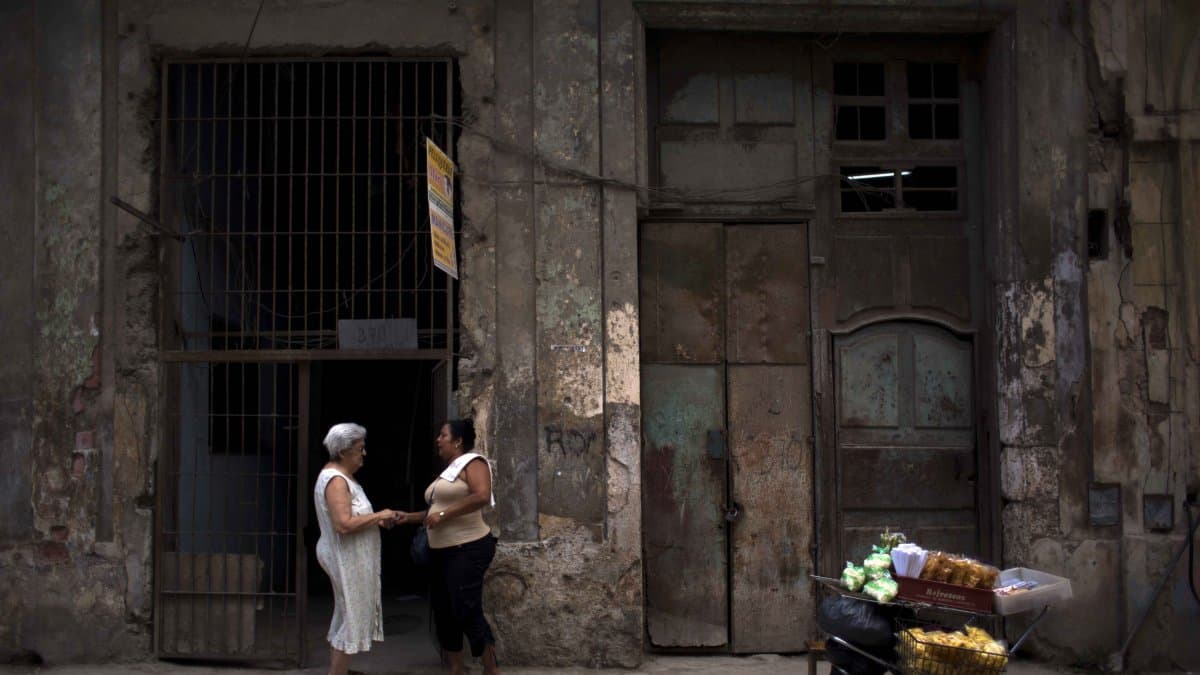
Shortages of food, fuel and medicine, along with prolonged blackouts, mass exodus, a brutal drop in tourism and other affectations in key sectors such as tobacco production, have left the country in a critical condition.
Amid the complex panorama, while many Russian projects have faded away—even after being announced and glorified by the official media—, China has acted more quietly and decisively, promoting key proposals on the island, the analysis published by the agency underlines.
Since Cuba joined the Belt and Road Initiative in 2018, Xi Jinping's communist government has invested in strategic infrastructure on the island, including transportation, ports and telecommunications. Russia, meanwhile, engrossed in the war in Ukraine and more reluctant to take financial risks, has lost prominence, says the British media outlet.
"Russia's promises have always been greater than its results," William LeoGrande, professor of Latin American politics at American University, told Reuters. "If China is stepping up its aid given Cuba's desperate conditions, that could be a real lifesaver."
China's solar bet on Cuba
In February, a solar park was inaugurated in the Havana municipality of Cotorro, on the outskirts of the city, in the presence of Chinese Ambassador Hua Xin and Cuban President Miguel Diaz-Canel, who celebrated the work as a "collaboration of our sister Republic of China."
Since then, at least eight more solar parks have been put into operation, which according to official data provide some 400MW, a third of the island's daytime energy deficit. The Chinese projects are expected to raise that figure to more than 1,100MW by the end of the year, which would cover almost all the daytime demand, allowing to conserve fuel for the night, the most critical time, when the country practically runs in the dark.
Let's remember that the country's national grid collapsed four times in the last year alone, leaving millions of people in the dark, without basic services, and closing schools and businesses. The regime acknowledged weeks ago that the situation is "serious." But the goal with China seems to be even more ambitious: build 55 more parks by end of 2025 and another 37 by 2028, totaling 2,000MW, which would represent two-thirds of the current demand.
The Cuban regime has bet everything on solar energy, and the state-owned Unión Eléctrica includes in its daily reports the energy production of the photovoltaic parks, however experts question the viability of the project without the backing of an adequate infrastructure, as is the case.
"Solar energy helps, but it is not the solution to the structural problem Cuba has," Jorge Piñon, director of the Energy Program for Latin America and the Caribbean at the University of Texas, commented to Martí Noticias last May, who considers that the island's electro-energy crisis is "structural" and that it has no remedy in the short or medium term.
Other moves by China to 'save' the Caribbean regime
On the other hand, Chinese shipments to the port of El Mariel—the country's main economic reactivation and foreign capital zone—, according to shipping data reviewed by Reuters, have grown since August 2024. Ships arrive with solar panels, tools, steel and fuel for transport. This presence is already visible on the roads of the Cuban interior, where trucks with Chinese markings are traveling the battered highways to remote areas of the island to install their promising solar parks.
While Chinese investments are a relief, they are not the total solution, warned former US intelligence official Fulton Armstrong: "Havana can count on neither Russia nor China as magical saviors. Only a massive volume of Chinese trade and assistance could pull the island forward, and that doesn't seem plausible," he told the British media.
Since 2024 other Chinese companies and investment groups have also been seen loitering in Cuba: Haitech and Huaxing Group International are among them.
Unfulfilled promises of a Kremlin at war
In May 2023, Russia also seemed ready to help, just as it did in the 1970s and 1980s. Deputy Prime Minister Dmitry Chernyshenko took part in the reopening of the country's largest steel mill, thanks to $100 million in Russian funding. A production target of 62,000 tons was promised for 2024. The reality: only 4,200 tons were produced, according to Cuba’s National Statistics Office (ONEI).
Currently, the plant is inactive, according to testimonies of neighbors in the area obtained by the media. It is not the only project that has been left up in the air in recent years.
The 2023 announcements of cooperation between Moscow and Havana included agreements for the supply of wheat, opening of Russian markets, restoration of historic buildings and even the renovation of the beach community of Tarará, east of the capital.
Two years ago, a Russian company, Progress Agro, announced it would import machinery, fertilizers and know-how to revitalize a decrepit sugar mill in Jatibonico, in the center of the country and once the largest on the island, which once employed 2,000 people. Everything remains the same in the area, but less than two kilometers from the old sugar mill, China is currently preparing the land to plant one of its vaunted photovoltaic parks.
Today, most Russian-backed projects remain stalled or abandoned. Many—such as the sugarcane milling initiative—have been met with complete silence. Meanwhile, China, as it has consistently done throughout the region, has seized the opportunity to plant its flag and extend a friendly hand to its struggling communist ally flailing in the middle of the Caribbean.
On the other hand, the Reuters report points out that some Russian aid—potentially diminished since Moscow attacked Kiev in 2022—has reached Cuba, including food supplies, oil, and the arrival of tourists, which is apparently on the decline.
Cuba loses half of Russian tourism so far this year
In 2024, Russia reached an all-time record in tourist trips to Cuba, with 185,800 visitors, demonstrating the importance of this market for the Cuban tourism industry.
However, the first months of 2025 have seen a significant drop in the number of Russian tourists, with a 49% decrease compared to the same period of the previous year, according to preliminary data from the Ministry of Tourism.
In May 2025, Chernyshenko also announced a new plan to subsidize investments in the regime-run island by up to $1 billion. "We will advance little by little. You can't achieve everything as if by magic," the Kremlin official said from Moscow, eager to encourage his bidders. Few have raised their hands to enter Cuba, at least officially.
China expands its operations in Cuba: from solar energy to espionage
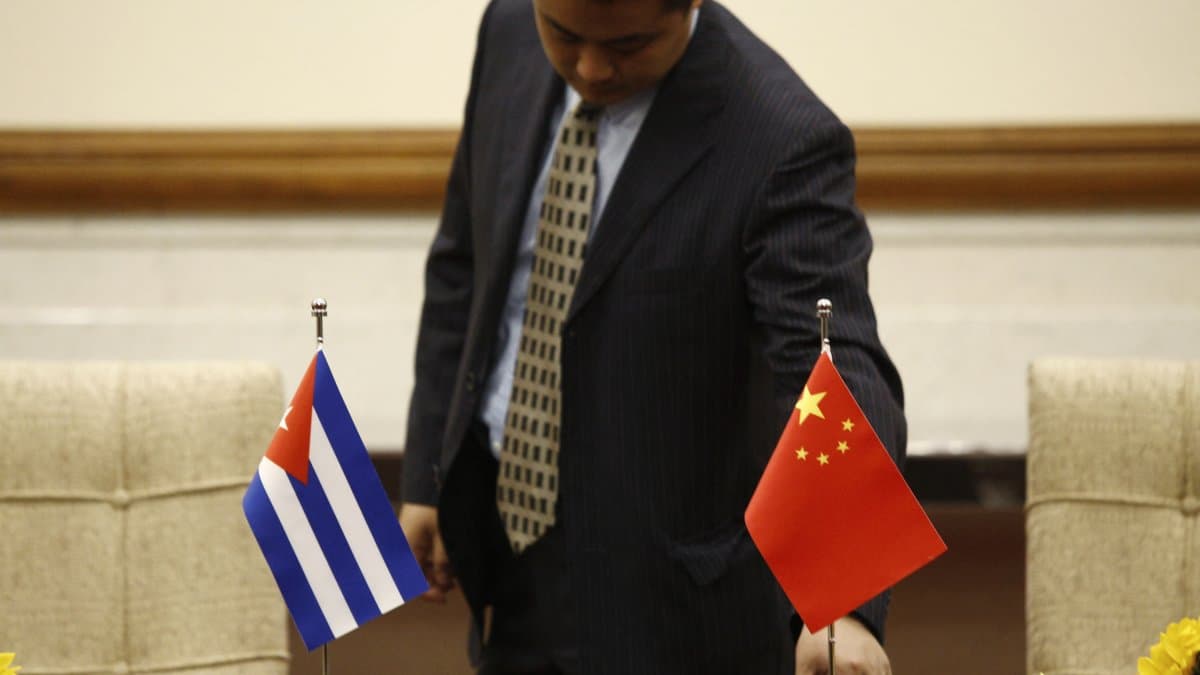
As the alliance between Beijing and Havana strengthens in energy, health and technology, questions are growing about the negative influence that the Asian giant could exert from Cuba towards the hemisphere.
In early June, experts and activists warned at a press conference in Miami that the island has become an "aircraft carrier of espionage" at the service of the Chinese Communist Party just 90 miles from the United States.
The concerns come, fundamentally, because of the at least 12 signals intelligence (SIGINT) sites active in Cuban territory, including bases in Bejucal, Calabazar, Havana, Santiago de Cuba, Mariel, Matanzas, Cienfuegos and Isla de la Juventud, which would be operated by China. Both communist regimes have denied the presence of military operation and monitoring bases in the Caribbean country.
These sites would have the capability to intercept telecommunications, conduct cyber surveillance, industrial and military espionage, and even operate electromagnetic pulse attacks, according to the assessment of a panel of experts presented in May to the U.S. Congress.
China's growing influence in LATAM and the Caribbean
Bilateral trade saw significant growth from US $261.288 billion in 2012 to US $489.047 billion in 2023. During the first three quarters of 2024, bilateral trade volume reached $427.4 billion, according to data from the Economic Commission for Latin America and the Caribbean (ECLAC).
China's power and entry into the region's economies, multiplied by 35 times since 2000, says a report by the Commission.
The House Foreign Affairs Committee has also identified major Chinese projects in the region aimed at cementing Beijing’s dominance and presence in strategic locations. Among them are a $3 billion deep-water port development in Grand Bahama—just 88 kilometers from the U.S. mainland—and a $600 million investment to upgrade the Dominican Republic’s electrical grid.
According to Forbes, China is financing projects worth $2.US$1.1 billion in Jamaica and US$773 million in Suriname.
By 2022, ten Caribbean countries had joined Beijing's Belt and Road Initiative, a major Chinese economic program that critics have called a Trojan horse for its geopolitical ambitions: Cuba, Suriname, Guyana, Trinidad and Tobago, Grenada, Barbados, Dominica, Antigua and Barbuda, Dominican Republic and Jamaica.
How does Cuba pay the million-dollar debt it owes to China?
Cuba owes more than 4.6 billion dollars to China for development aid, a financing modality applied by the Asian country for Third World nations, says a research by the College of William & Mary (CWM).
Although the figures Beijing allocates for development aid remain secret, the CWM research reconstructed the approximate amount by examining 13,427 projects in 165 countries over 18 years, worth $843 billion.
Years ago, China already forgave part of a larger debt that existed from the island, however, the figure is still astronomical. Despite this, the Chinese communist regime continues to send support to its allies.
It also gives support to the programs of computerization of the Cuban society, food donations and palliatives for other first order needs requested and always thanked by the high officials of the regime.
Beijing and Havana for years have presented cybersecurity agreements, and over the past two decades Chinese groups Huawei, TP-Link and ZTE have installed fiber optic cables, WiFi access points and other digital infrastructure throughout the island.
Last April, a business fair and scientific meeting was held between the two countries where 15 contracts were signed between Chinese agencies and the Comercializadora de Servicios Médicos Cubanos to promote health tourism. These were accompanied by large-scale rice donations from the dragon to the Caribbean crocodile, along with other "exchanges in the fields of mining and geology."
Cuba, for its part, still exports minimal quantities of nickel, zinc, crustaceans and luxury cigars to China, cooperates in biotechnology and lends its yard to prepare Asian expansion projects. Will it be enough to forgive a debt of these categories?
🛠 Do you think there is an error in this article?
Recommendations




LATEST