Trinidad and Tobago authorizes US military aircraft to operate on the island to combat narco-terrorism
The Ministry of Foreign Affairs informed that the flights will be used to replenish supplies and facilitate the rotation of personnel.

Prime Minister Kamla Persad-Bissessar of Trinidad and Tobago.

The Government of Trinidad and Tobago announced that it will allow the use of its airports by U.S. military aircraft in the coming weeks, a decision that comes as tensions between Washington and the Venezuelan regime escalate. The Caribbean country's authorities stressed that the U.S. movements will be strictly logistical in nature.
The Ministry of Foreign Affairs informed that the necessary approvals for the transit of U.S. military aircraft have already been granted. According to the notification received by the Port of Spain, the flights will be for the replenishment of supplies and to facilitate the rotation of personnel, with no additional details disclosed on the extent of the deployment.
Security cooperation
In an official statement, the Foreign Ministry noted that Prime Minister Kamla Persad-Bissessar reaffirmed the government's commitment to security cooperation and collaboration, both for Trinidad and Tobago and the wider region. The ministry did not elaborate on the information or provide details on the duration of the agreement.
The decision takes on special relevance due to the country's geographic proximity to Venezuela, located just seven miles away at its closest points, which makes Trinidad and Tobago a key player in the current regional scenario.

World
Venezuela: After Maduro's ultimatum expires, Trump gathers his team and evaluates the next measures against the Chavista regime
Emmanuel Alejandro Rondón
A growing role in the dynamics between Washington and Caracas
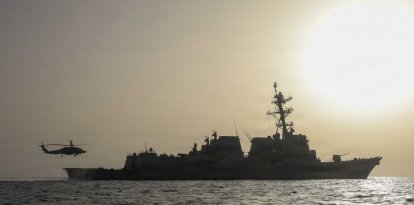
In recent months, Trinidad and Tobago has increased its military cooperation with the United States. On October 26, the guided-missile destroyer USS Gravely docked in the country, and joint military exercises with the U.S. 22nd Marine Expeditionary Unit Marines were subsequently conducted in late October and mid-November.
In late November, the U.S. military installed an AN/TPS-80 G/ATOR radar unit at ANR Robinson International Airport, Crown Point. The government touted the installation as part of efforts to combat illicit drug trafficking in the region.

World
US installs radar in Trinidad and Tobago to reinforce surveillance in the Caribbean
Diane Hernández
Regional pressure and U.S. operations
In parallel, the United States has beefed up its military presence in the Southern Command area, deploying warships, fighter jets, Marines and the aircraft carrier USS Gerald R. Ford, as Washington intensifies pressure on the Nicolás Maduro regime.
LATEST