Poll: The vast majority of Venezuelan opposition supports the US and wants Trump to be aggressive with Maduro
Across the board, 63% of respondents do not consider Nicolás Maduro legitimate and 61% believe Venezuela is a "narco-state." A majority also favors the U.S. making an effort to depose Maduro from power.

Dictator Nicolas Maduro (l) and opposition leader Maria Corina Machado (r)

While the Trump administration noticeably increases pressure against Nicolás Maduro's regime, a poll showed that the vast majority of Venezuelan opponents back the White House's actions and support an aggressive approach against the socialist dictator.
According to a survey by the British firm Panterra, conducted in Venezuelan territory from August 21 to 31, 2025, among 1,200 adults, the majority of Venezuelans consider Nicolás Maduro an "illegitimate" leader and feel represented by the leadership of María Corina Machado, the main opponent to the Chavista regime. In that sense, most opponents in Venezuela consider the actions that the Trump administration is taking against Maduro and his allies to be positive.
According to the poll, 70% of the sample does not identify with Chavismo (45% consider themselves opposition and 25% say they are "neither Chavista nor opposition." At the general level, 63% of respondents do not consider Nicolás Maduro legitimate, compared to 33% who do, a number that coincides with the electoral results of the presidential election on July 28, 2024, when opposition candidate Edmundo González defeated Nicolás Maduro by a margin of 67% to 30%. Ultimately, the electoral authority, which is aligned with Chavismo, declared Maduro the winner, despite the electoral records indicating results in favor of the opposition.
The sample also shows a clear alignment with Trump's policies. Among "non-Chavistas," 75% believe that Venezuela should be allied with the U.S., and 61% say they would have a more favorable opinion of President Trump if he helps remove Maduro from power.
When asked about preferred actions on the part of the White House, 30% support imprisoning Maduro and his second-in-command, Diosdado Cabello, for his links to drug trafficking. Likewise, 17% call for severe economic sanctions against the Chavista regime. Another 17% demand individual sanctions, and 10% directly call for military intervention. Adding all the positions together, the "iron fist" option (intervention or apprehensions of Maduro and Diosdado) reaches a solid majority of 40%. Only 8% prefer U.S. neutrality, and only 7% prefer to negotiate with the Chavista regime.


World
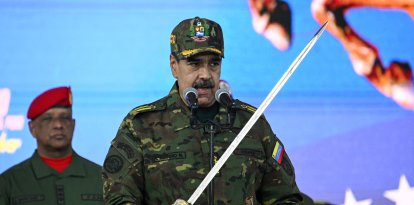
Maduro grants himself special military powers in light of the possibility of a US offensive
Virginia Martínez
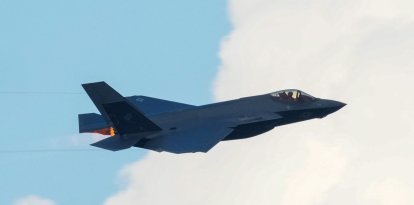
The context of the poll takes place in the midst of Trump's anti-narcotics offensive. The results come as the White House pushes a campaign against transnational organized crime, including a major military deployment in the Caribbean Sea, the increase of the bounty on Maduro to $50.000,000 (the highest in the history of the country), and the designations of the Cártel de los Soles and the Tren de Aragua as terrorist organizations.
In that framework, more than half of the "non-Chavistas" surveyed declare feeling "hopeful" about three recent headlines: $50 million reward for Maduro (58%), the designation of Maduro as head of the Cartel de los Soles (55%) and the designation of the Cartel as a terrorist group with the threat of military action (53%).
In addition, 61% agree that "Venezuela is a narco-state." Only 25% of respondents judge that qualification as " exaggerated."
Likewise, a large majority of non-Chavistas (77%) believe that family members or their friends in the U.S. would return to the country if there are democratic elections and regime change, and 86% maintain that a democratic Venezuela would be a reliable ally of the U.S. if Trump contributes to Maduro's ouster. On the reasons to free Venezuela from Maduro's yoke, 44% respond "because it is the right thing to do for the Venezuelan people," and 38% highlight the return of the diaspora.

World
Military, diplomatic, and intelligence officials say US military deployment in the Caribbean seeks to oust Maduro from power
Emmanuel Alejandro Rondón

Regarding opposition leadership, the hegemony remains clearly in the hands of María Corina Machado, who, by a wide margin, is the one who best represents the unity of the opposition (55%).
Likewise, 54% of "non-Chavistas" say they totally trust Machado; 24% "trust her a little" and 16% "do not trust her at all." In personal favorability among non-Chavistas, Machado registers a 66% positive image compared to 26% negative. Edmundo González, last year's president-elect, has a 59% favorable image versus 30% negative. In addition, other Venezuelan politicians considered opponents, such as Manuel Rosales (22/65) and Henrique Capriles (18/70), exhibit very unfavorable balances due to their ambiguous positions and sometimes close to Maduro. As for the immediate course, 69% of those polled want Machado to continue leading; only 12% suggest that she should hand over the leadership or operate from abroad.
When asked about the role of the U.S. and its role in the Venezuelan case, 60% of non-Chavistas support the leadership of Machado and Edmundo Gonzalez, compared to 16% who support negotiating with the dictator Maduro.
Following the poll, more than a year after the July 28 electoral fraud in Venezuela, the picture remains clear: the majority of Venezuelans support a potential alliance with the U.S. and demand maximum pressure - judicial, economic and even military - to force Maduro out, with Machado at the head of the Venezuelan opposition.
LATEST