Downing Street earthquake: Starmer reshuffles cabinet after Rayer's departure
The resignation of Rayner, a key Labour figure, has forced Prime Minister Keir Starmer to implement an emergency cabinet reshuffle, barely 14 months after his election victory.
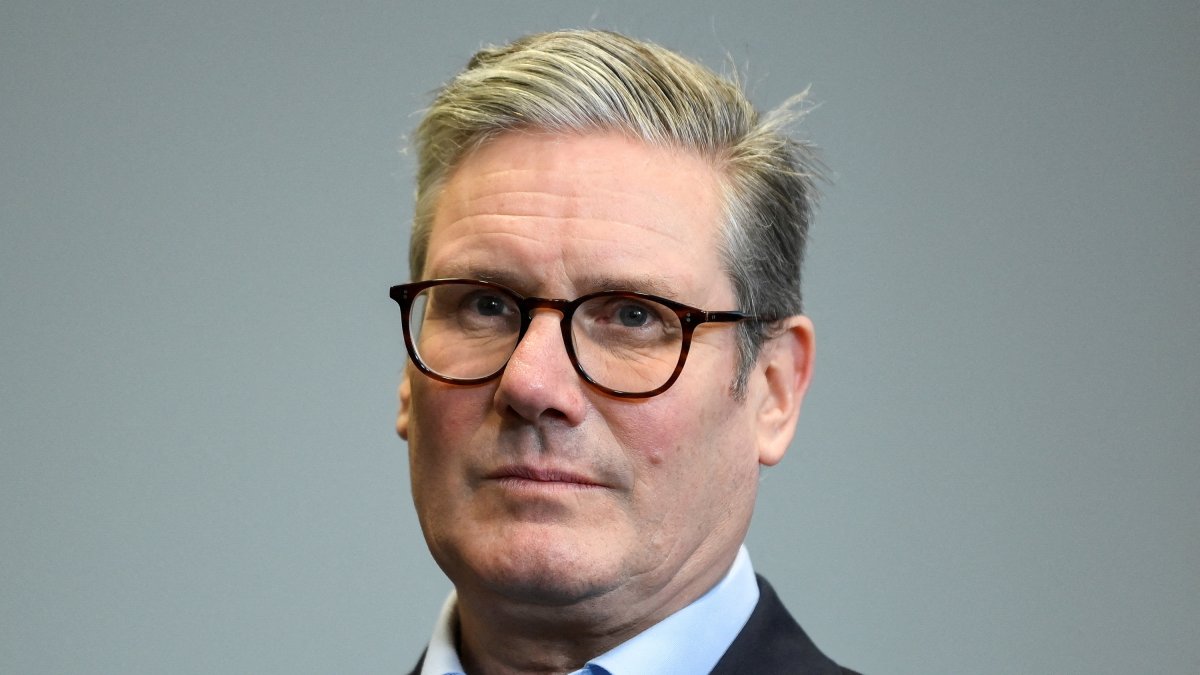
Prime Minister of the United Kingdom, Keir Starmer

A veritable political earthquake has shaken the UK government following the resignation of Angela Rayner, deputy prime minister, housing minister, and deputy leader of the Labour Party, over a tax scandal that has unleashed an unprecedented crisis in Keir Starmer's Executive.
In that regard, the resignation of Rayner, a key Labour figure, has forced the prime minister to execute an emergency reshuffle of his cabinet, barely 14 months after his election victory.

Emergency reshuffle: Starmer's new cabinet
The departure of Rayner, who held three key positions (deputy prime minister, housing minister, and deputy leader of the Labor Party), triggered an immediate cabinet reshuffle, with 12 appointments announced recently, according to reports from The Sun. The main cabinet changes are as follows:
- David Lammy: new deputy prime minister and justice minister, replacing Rayner in the former post and Shabana Mahmood in the latter. Lammy, until now foreign minister, is considered a Labor heavyweight and assumes a central role in the government.
- Yvette Cooper: moved from Minister of Home Affairs to Minister of Foreign Affairs, Commonwealth and Development. Her tenure at Home Affairs was criticized for the increase in crossings of small boats with migrants in the English Channel, a politically sensitive issue.
- Shabana Mahmood: new Minister of the Interior, coming from Justice. Of Pakistani descent, Mahmood is a supportive figure for the pro-Palestinian cause, a bid by Starmer to counter Reform UK's conservative narrative.
- Steve Reed: taking over the Ministry of Housing, Communities and Local Government, formerly led by Rayner, after his stint at Environment.
- Pat McFadden: appointed Minister for Work and Pensions, a new department incorporating skills competencies from the Department for Education. Previously, McFadden was chancellor of the Duchy of Lancaster.
- Peter Kyle: new minister for Enterprise and Trade, coming from Science and Technology.
- Liz Kendall: minister for Science, Innovation and Technology, formerly in Work and Pensions.
- Emma Reynolds: new minister for Environment, Food and Rural Affairs, following her role as economic secretary to the Treasury.
- Douglas Alexander: new minister for Scotland, replacing Ian Murray.
- Jonathan Reynolds: takes over as chief parliamentary disciplinarian and parliamentary secretary to the Treasury.
- Alan Campbell: new leader of the House of Commons, replacing Lucy Powell.
- Darren Jones: chancellor of the Duchy of Lancaster and principal secretary to the prime minister, with duties similar to a ministry of the chair.
Those who remain in office
Remaining in their posts are John Healey (Defense) and Rachel Reeves (Treasury), the latter focused on drafting the state budget, which will be presented on November 26 and will include a fiscal adjustment of at least 20 billion pounds.
Those dismissed from Starmer's team
On the other hand, Lucy Powell (leader of the House of Commons) and Ian Murray (minister for Scotland) were dismissed, marking a significant turnaround in Starmer's team.
A government in trouble
Factors such as the economic crisis, rising illegal immigration, and mistakes in welfare reform have eroded public support, with only 24% looking positive, according to the latest YouGov poll that was released in mid-August.
In addition, the rise of Reform UK, led by Nigel Farage, represents a growing counterpart, as it is gaining ground for its anti-illegal immigration and pro-free speeches. In that regard, the latest figures obtained also by YouGov show that a third of Britons (32%) have a favorable opinion of the Reform UK party leader.

Politics
Nigel Farage shakes US Congress with explosive speech about lack of freedom of speech in the UK
Leandro Fleischer
Starmer on Rayner's resignation
Starmer, in a handwritten letter published by Downing Street, expressed sadness at Rayner's resignation, noting that “you have given your all to making the Labour Government a success” and assuring that she will remain “a major figure” in the party.
However, the prime minister stressed that Rayner made "the right decision" in resigning.
Opposition capitalizes on crisis
The opposition has not missed the opportunity to capitalize on the crisis. Nigel Farage, leader of Reform UK, hailed the resignation as a sign of weakness in Labour.
Angela Rayner resigns.
— Nigel Farage MP (@Nigel_Farage) September 5, 2025
The splits in Labour are coming. pic.twitter.com/EnEo728qZ2
While Kemi Badenoch, leader of the Conservative Party, accused Starmer of lacking "courage" to sack Rayner earlier.
Angela Rayner is finally gone.
— Kemi Badenoch (@KemiBadenoch) September 5, 2025
But it’s only because of Keir Starmer’s weakness that she wasn’t sacked three days ago.
Britain deserves better. pic.twitter.com/iywJimoKfE
The scandal that brought down Angela Rayner
Rayner, 45, paid less than the appropriate stamp duty tax, saving some £40,000 (about $54,000), The Telegraph reports.
In her resignation letter, published Friday, Rayner took “full responsibility for this error” and regretted not seeking more specific tax advice and noted, "I would like to take this opportunity to repeat that it was never my intention to do anything other than pay the right amount."
LATEST