ANALYSIS
Obama clings to politics, straining his family life
The former president acknowledges that his return to the public debate, spurred in part by the figure of Donald Trump, has generated friction in his personal life as he redefines his role within the Democratic Party.
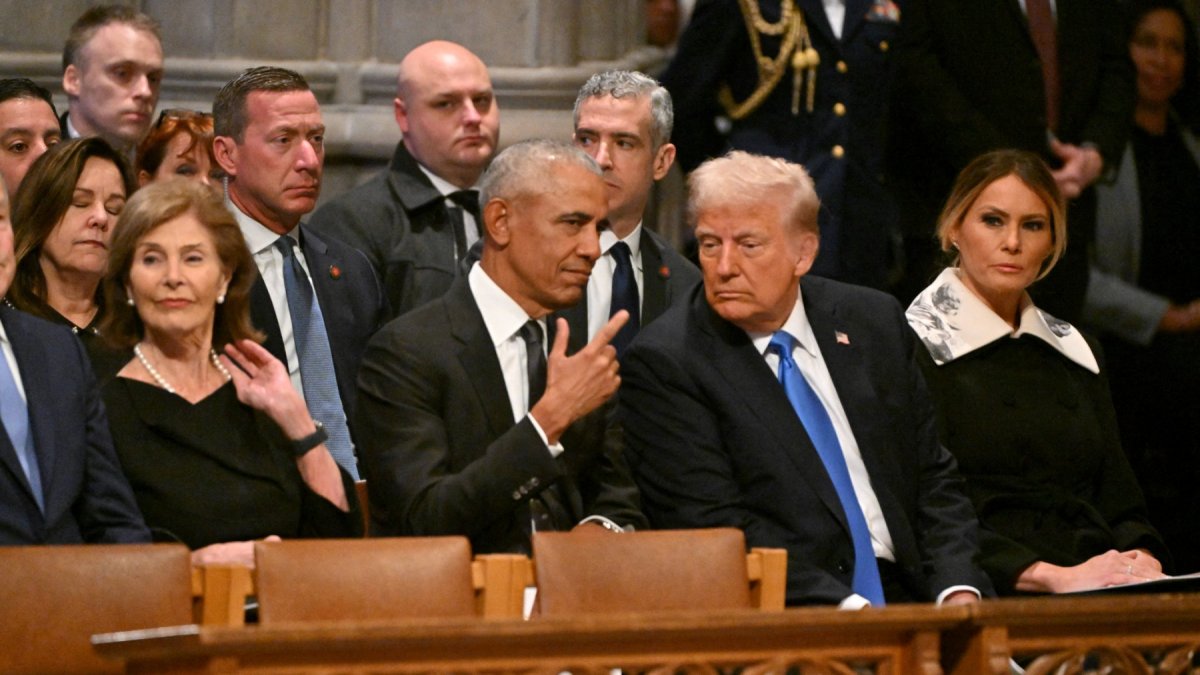
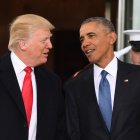
Former President Barack Obama speaks with President Donald Trump.

Former President Barack Obama has publicly acknowledged that his political involvement after leaving the White House has led to tensions in his marriage to Michelle Obama. In an interview with The New Yorker, Obama admitted that his positioning against Donald Trump has had a direct impact on his family life.
"This does create real tension at home, and it frustrates her," the former president said, alluding to his wife's desires for a quieter life after years in power.
Politics, legacy and personal wear and tear
Obama, 64, explained that his initial intention after leaving office in 2017 was to step away from the political spotlight. However, the context generated by the figure of Trump led him to get more involved than expected.
"She wants to see her husband relax and spend more time with her, enjoying what's left of our lives," he noted in the interview.
The politician also defended his prudent approach in the face of constant provocations from the current president, who has repeatedly spread personal attacks and conspiracy theories against him.
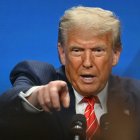
Politics
Trump claims Obama is "guilty" of "treason" for allegedly fabricating the Russian plot
Williams Perdomo
Unusual leadership behind the White House
Since leaving office, Obama has assumed an atypical role: becoming one of the main voices of the Democratic Party during multiple election cycles. This continuity has been key, but it has also raised questions.
In Obama's own words, "If I functioned like Jon Stewart...I would not be a political leader, but a commentator."
His historic strategist, David Plouffe, reinforced this idea in statements also picked up by The New Yorker: "Those who will be decisive in the next elections do not seek political information, they find it".
Beyond traditional politics
The former president has diversified his influence by participating in platforms such as Netflix, collaborating on podcasts and connecting with young audiences through digital creators.
This approach responds to a transformation of the media ecosystem, where - according to Obama - political impact no longer depends solely on speeches or institutional appearances.
"The media environment is so complicated that people don't even know everything I do," he explained.
Between political duty and personal life
In this case, the differentiating factor is the figure of Trump, whose polarizing presence has forced a redefinition of the limits of the role of a former president. Unlike his predecessors, Obama has chosen to remain an active actor, which strengthens his leadership within the Democratic Party but also prolongs personal attrition.
A balance still under construction
As new key elections approach in the nation, Obama's figure continues to be influential-though not without personal costs. His testimony not only provides a rare intimate glimpse, but also illustrates the challenges of leadership in an era marked by hyper-exposure, political confrontation, and the transformation of public debate.
LATEST