ANALYSIS
2026 FIFA World Cup: The extinction of the ‘Group of Death’
With the new design, the FIFA World Cup 'loses' one of its attractions: more groups, more qualifiers for the next round and less excitement.
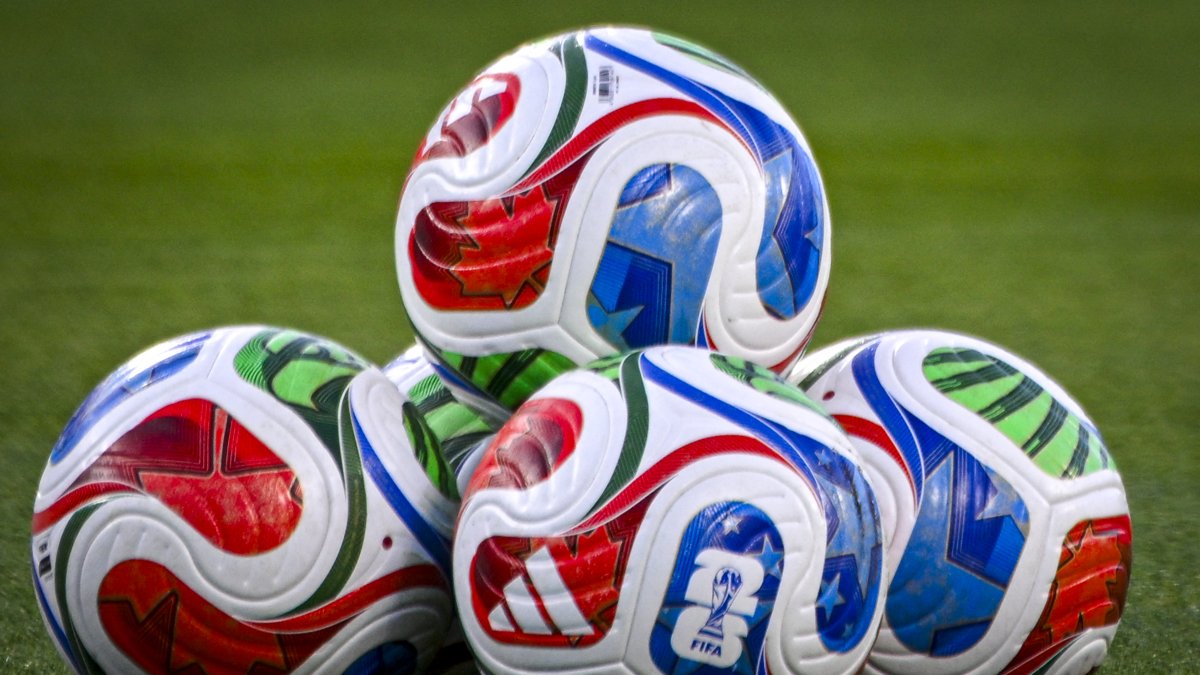
Trionda, official ball of the 2026 FIFA World Cup

Until now, talking about the Group of Death at each World Cup event - that group in which several of the favorite participants were drawn - was fascinating territory. However, in the 2026 FIFA World Cup it becomes a somewhat murky subject. With the change in the format of the biggest tournament in the soccer world, this definition has become more debated than ever, considering that the surprise factor of seeing one of the favorite national teams fall at the first hurdle could be lost.
More groups, more qualifiers and less excitement
The introduction of 48 national teams in the FIFA World Cup - instead of 32 - for the first time in history has conditioned the usual development of the tournament. Simply for numerical reasons.

In the previous FIFA World Cup format, advancing from the group stage to the round of 16 was an exercise in precision: either you were in the top two groups or you were already eliminated. There was always a group - or more - in which there were three powers that fought tooth and nail for the two places that would take you through to the next round.
However, now, in the 2026 edition - which will have 12 groups -, in addition to the top two in each group, the eight best third-placed teams will also advance to the next round, so it is easier that, in that group in which three powers have been drawn, all three will continue in the FIFA World Cup.
It must be considered that in this edition, with a greater number of groups, the favorite national teams are distributed in a more dispersed manner, making the level of difficulty of each of the groups considerably lower and less exciting.

Sports
Chronicle of the unprecedented: The countries making their FIFA World Cup debut in 2026
Alejandro Baños
With the new format, 66% of the participating national teams - 32 out of 48 - will compete in the 32nd round - a new round that the Fédération Internationale de Football Association (FIFA) has added to the FIFA World Cup-.
The most 'evenly matched' groups for the 2026 FIFA World Cup
Even knowing that there will not be a Group of Death as such, it is true that there are three groups in which there may be greater equality.
The first is Group H. Spain and Uruguay, two national teams that know what it's like to win a FIFA World Cup, start as clear favorites to advance. But they will have to measure their strength against Saudi Arabia, whose authorities have invested money and efforts to improve their country's soccer, and Cape Verde, which is postulated as one of the possible big surprises of the tournament.
There is also Group I, in which two of the best players in the world today will face off: Kylian Mbappé, who will lead a France that comes in with one of the best squads in the 2026 FIFA World Cup, and Erling Haaland, who will lead Norway to try to reach new heights in the tournament. Here will also be the national teams of Senegal, which is coming off a great performance at the 2026 Africa Cup, and Iraq, which, for the soccer world, has a lot to say in this World Cup edition.

Finally, there is Group L, in which England will face Croatia - which has played very good tournaments in the last two editions -, with Ghana - with young players who stand out in major European leagues - and Panama - which will be one of the Hispanic representatives -.
LATEST