LIVE | Trump calls war with Iran 'a little skirmish'
The United States and the Islamic Republic are engaged in a tug-of-war over control of this strategic Strait of Hormuz, through which one-fifth of the world's hydrocarbon trade used to pass.
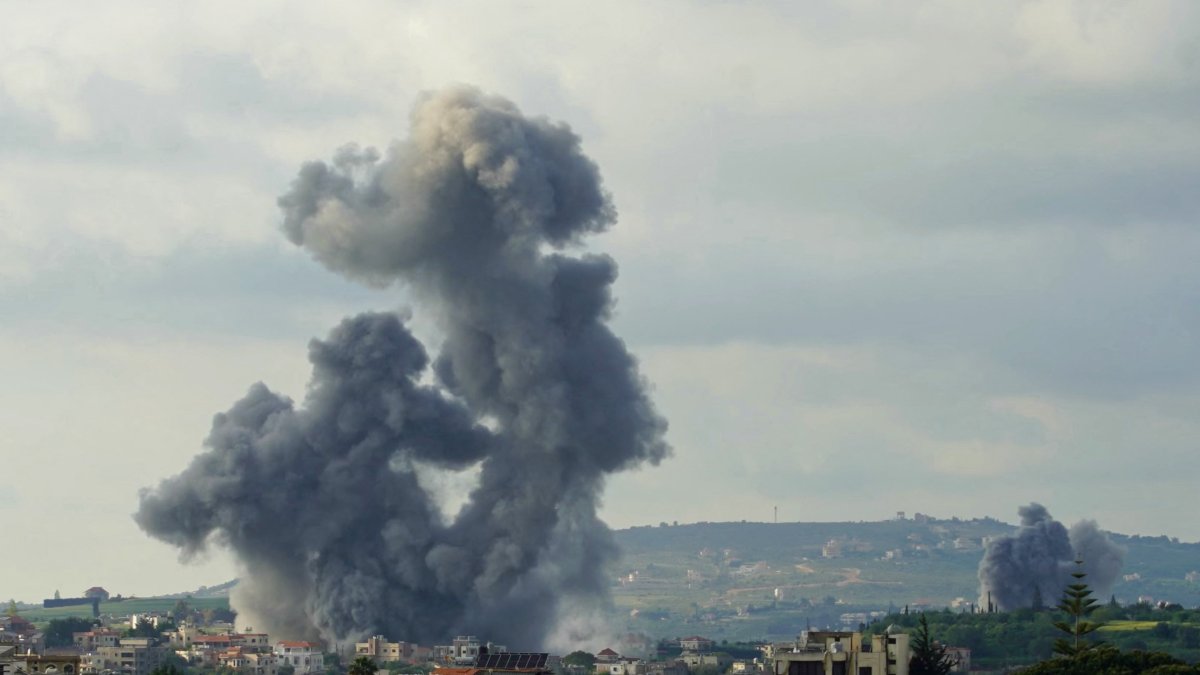
Smoke rises from the site of Israeli airstrikes.
Iran on Tuesday harshened the tone of its threats in the face of a U.S. operation to escort ships in the Strait of Hormuz, a day after several attacks in the region that put the ceasefire at risk.
The U.S. and the Islamic Republic are engaged in a struggle for control of this strategic passage, through which a fifth of the world's oil trade used to pass.
Washington is trying by all means to put pressure on Tehran and is demanding that it abandon its nuclear program.
Timestamps are Eastern Standard Time (EST).
Trump calls war with Iran "a small skirmish"
President Trump said Tuesday that war with the Iranian regime is "a small skirmish."
"We are in a little skirmish. I call it a skirmish, because Iran has no chance. They never did. They know it," the president said during an Oval Office event on physical activity among American children.
"They should do the smart thing, because we don't want to go in and kill people. Really don't. ... I don't want to, it's too tough," Trump told reporters.
U.S. threatens Iran with "devastating firepower" if it attacks commercial ships
The United States on Tuesday threatened the Iranian regime with "devastating firepower" if it attacks commercial ships in the Strait of Hormuz, where the U.S. military is conducting an operation to ensure free navigation.
"We're not looking for a fight. But Iran also cannot be allowed to block innocent countries and their goods from an international waterway," Pentagon chief Pete Hegseth told a news conference.
"If you attack American forces or neutral commercial vessels, you will face massive and devastating U.S. firepower," he added.
Iran "hasn't even started"
Iran's chief negotiator in talks with the United States, Mohammad Bagher Ghalibaf, warned that his country had "not even started" in its standoff over the strategic waterway and that U.S. actions in the Strait of Hormuz had put navigation at risk.
Stock markets fall on rising tensions
Asian stock markets fell as a fresh spike in Middle East tensions stoked fears over a fragile U.S.-Iran ceasefire, and oil prices retreated slightly after Monday's gains.
Maersk sails through the Strait of Hormuz
Danish shipping giant Maersk stated that one of its vessels had sailed through the Strait of Hormuz under U.S. escort, adding that the transit was completed "without incident."
India criticizes attack on UAE
India condemned the drone attack on an energy facility in the United Arab Emirates, in which three Indians were injured, and urged that uninterrupted access to the Strait of Hormuz be ensured.
South Korea weighs possibility of engaging in the Strait of Hormuz
South Korea stated that it would "review its stance" on joining U.S. operations in the Strait of Hormuz after President Donald Trump urged Seoul to participate following an apparent Iranian attack on one of its ships.
Britain calls for de-escalation
British Prime Minister Keir Starmer called for de-escalation in the Middle East after the United Arab Emirates reported attacks for the first time since a truce was declared almost a month ago.
Iran says there are no plans to attack the United Arab Emirates
Iran had "no premeditated program" to attack oil facilities in the United Arab Emirates, according to statements by a military official quoted by Iranian state television, after the United Arab Emirates blamed the Islamic republic for a drone strike on an energy facility in Fujairah.
"What happened was the product of the U.S. military's adventurism to create a passage for ships to illegally pass through" the Strait of Hormuz, the official said. "The U.S. military must be held accountable for it."
U.S. claims to have destroyed Iranian ships
A senior U.S. admiral claimed that U.S. forces had destroyed six Iranian vessels and shot down missiles and drones fired at U.S. Navy ships and merchantmen by Tehran's military, although Tehran denied that any vessels had been sunk.
Trump: "No damage" at Hormuz
President Donald Trump downplayed tensions after U.S. warships entered the Strait of Hormuz, saying Iran had "fired a few shots" but had caused no damage other than that suffered by a South Korean vessel.
"Other than the South Korean Ship, there has been, at this moment, no damage going through the Strait,," Trump said on Truth Social.
UAE Attack
The United Arab Emirates claimed to have been the target of Iranian attacks, including one against its vital Fujairah energy hub in which three Indians were injured.
"These attacks represent a dangerous escalation and an unacceptable transgression," the UAE's foreign ministry said, adding that the country reserves the "right to respond."
The latest on the war:

LATEST