US sends three warships off Venezuelan coast to fight drug trafficking
The ships are the USS Gravely, USS Jason Dunham, and USS Sampson. According to a Trump Administration official, they are part of a larger deployment that will involve nearly 4,000 sailors and Marines.

A file image shows the U.S. guided missile destroyer USS Gravel

Three U.S. destroyers with Aegis systems and guided missiles will arrive off the coast of Venezuela in the next 36 hours as part of a White House offensive to confront major Latin American drug cartels, Reuters reported, citing senior Trump administration officials.
The ships are the USS Gravely, the USS Jason Dunham, and the USS Sampson and, according to an official who spoke on condition of anonymity, are part of a broader deployment that will involve about 4,000 sailors and Marines.
Another U.S. official quoted by the agency said the operation will also include several P-8 spy planes, at least one attack submarine, and other warships. The plan, in principle, is for the warships to carry out their missions for several months in international waters and airspace, with the possibility of targeted strikes if the Pentagon deems it indispensable.
Maduro, leader of the Los Soles Cartel under intense pressure
The news comes just four days after Reuters revealed that the Trump Administration ordered the deployment of naval and air forces in the southern Caribbean Sea to confront Latin American drug cartels, recently designated as terrorist organizations. Several days earlier, several media outlets reported that President Donald Trump secretly signed a directive authorizing the Pentagon to use the Armed Forces against cartels in the region.
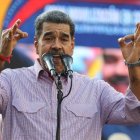
Among such cartels is the Los Soles Cartel, said to be led by Venezuelan dictator Nicolas Maduro and his number two, Diosdado Cabello, both indicted for drug trafficking in the US. Last July 26, the Los Soles Cartel was designated as a terrorist organization by the Treasury Department, and weeks later, Washington raised the reward to $50 million for information leading to the arrest of dictator Maduro. This is the highest reward in the country's history.

This step added to a past State Department designation, which included the Aragua Train, the Mara Salvatrucha (MS-13), the Sinaloa Cartel, the Jalisco New Generation Cartel, and other criminal structures as terrorist groups.
Caracas' response
Without referring directly to the U.S. naval deployment, Maduro warned on Monday in a televised speech that Venezuela "will defend our seas, our skies, and our lands." The dictator, whose government is accused of committing crimes against humanity, described Washington as "the crazy and extravagant threat of an empire in decline."
A new Washington strategy
The offensive against the cartels undoubtedly constitutes one of the pillars of President Trump's security agenda. According to a report by The New York Times, the secretly signed directive provides an unprecedented legal basis for the U.S. Armed Forces to carry out surgical military operations against designated terrorist organizations, even on foreign soil.
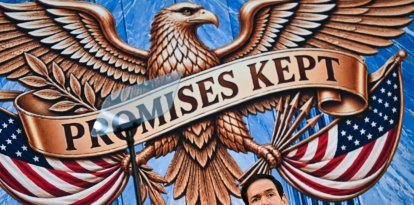
Weeks ago, Secretary of State Marco Rubio defended the measure, assuring that the designation of these groups as terrorists authorizes the Pentagon and U.S. intelligence services to use all available tools to target such groups.
"Here’s the thing: We cannot continue to just treat these guys as local street gang. They have weaponry that looks like what terrorists, and in some cases armies, have. They control territory in many cases. Those cartels extend from the Maduro regime in Venezuela—which is not a legitimate government; we don’t recognize the Maduro regime as legitimate... to the various different cartels that operate in Mexico."
World
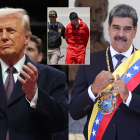
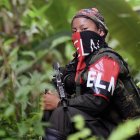
Cartel of the Suns, ELN, Hezbollah and Iran alliance revealed on Colombia-Venezuela border
Leandro Fleischer
The Secretary of State stated that this new policy turns the fight against drug trafficking into a matter of national security and not just law enforcement.
The directive, together with the doubling of the bounty on Maduro, the designation of the Los Soles Cartel, and the deployment of warships off the Venezuelan coast, reveals the new pressure established by the White House against Chavismo and marks an unprecedented escalation in the Caribbean.
LATEST