Cartel of the Suns, ELN, Hezbollah and Iran alliance revealed on Colombia-Venezuela border
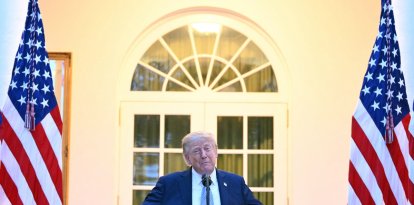
The document coincides with the increase of the reward offered by the United States to $50 million for the capture of Nicolás Maduro, accused of leading the Cartel of the Suns, and the authorization by President Donald Trump for military operations against drug cartels in international waters of the Southern Caribbean, near the Colombian and Venezuelan coasts.
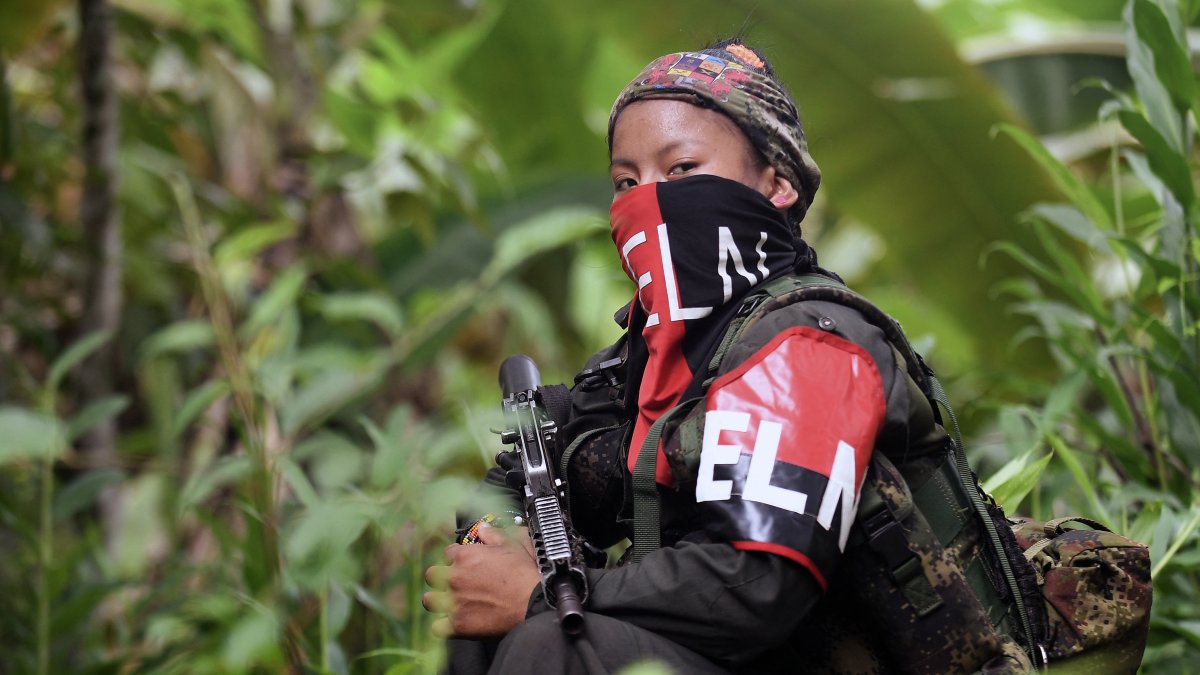
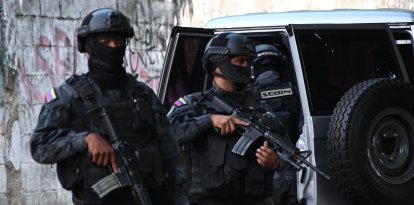
An ELN guerrilla

An international intelligence report, accessed by Blu Radio, uncovers the dark links between the Cartel of the Suns, led according to the United States by Venezuelan dictator Nicolás Maduro, the ELN guerrilla group, international terrorist networks such as Hezbollah and the government of Iran. This document, prepared in early 2025, exposes how this criminal alliance has consolidated a corridor of illicit activities on the Colombia-Venezuela border, especially in the Catatumbo region, encompassing areas bordering Arauca and Norte de Santander on the Colombian side.
The report details that this network has facilitated the establishment of drug trafficking corridors, safe havens, illicit military operations and extractive activities in the border zone. According to the document, the collapse of Venezuela's governance structure has allowed criminal networks, including the ELN, to infiltrate Venezuelan state institutions, consolidating camps, drug trafficking routes and training centers in the border states of Apure, Tachira and Zulia.
An alliance with transnational reach
The report notes that the Cartel of the Suns, initially identified as financing Venezuelan military elites through drug trafficking, has evolved into a more complex structure that collaborates with Colombian armed groups such as the ELN. Venezuela's Directorate General of Military Counterintelligence (DGCIM) acts as a protector of this network, guaranteeing impunity and eliminating internal dissidents. In addition, growing connections have been identified with international networks associated with the Lebanese terrorist group Hezbollah that provide financial, logistical and doctrinal support, especially in the transnational cocaine trade to West Africa and the Middle East.


The report also highlights the presence of Hezbollah on the binational border, where this organization, backed by the Iranian regime, is involved in money laundering and drug export activities. This alliance, described as a "hybrid actor" that combines insurgency, organized crime and state protection, represents a significant threat to regional security and hinders progress in peace processes in Colombia.
Context of violence and regional escalation
The document coincides with recent events in the region, such as the increase in the reward offered by the United States to $50 million for the capture of Nicolás Maduro, accused of leading the Cartel of the Suns, and the authorization by President Donald Trump for military operations against drug cartels in international waters in the Southern Caribbean, near the Colombian and Venezuelan coasts. These actions reflect Washington's growing concern over the impact of drug trafficking and transnational crime on hemispheric security.
On the ground, the alliance between the ELN and the Venezuelan regime has intensified violence in areas such as Arauca and Catatumbo, where the guerrilla group maintains camps in Apure and launches border attacks as it disputes territorial control with dissidents of the FARC and other criminal gangs. A recent example is the ELN armed attack against dissidents of the 33rd Front in Catatumbo, as well as the death of Zarco Aldinever in Apure, last August 4, amid speculation about his involvement in attacks in the region.
Recommendations and challenges for the region
The report proposes urgent measures to counter this criminal network, including international sanctions against Venezuelan officials involved, such as generals of the DGCIM, the Bolivarian National Armed Forces and the Bolivarian National Guard, whose names, although identified, have not been prosecuted. It also recommends strengthening intelligence on the border, expanding international cooperation against Hezbollah's financing networks and developing comprehensive territorial control strategies that combine security, justice and social development.

Colombian Defense Minister Pedro Sanchez expressed his support for U.S. operations in the Caribbean, as long as they respect sovereignty and international cooperation protocols. Sanchez highlighted that 95% of drug trafficking is carried out by sea and noted that Colombia has seized 601 tons of cocaine in 2025, 16% more than the previous year, thanks to joint strategies with countries such as the United States and France.
A call for regional action
This intelligence report highlights the magnitude of the threat posed by the convergence of organized crime, terrorism and state complicity along the Colombia-Venezuela border. As the ELN strengthens its presence in the latter and international networks such as Hezbollah expand their influence, the region faces the risk of an escalation of the conflict in 2025. The question remains whether the Colombian governments and the international community will be able to act in a coordinated manner to dismantle these networks before the "explosive cocktail" described in the report further destabilizes the region.
Chevron will give oil to Maduro's regime as part of its reactivation in Venezuela
According to information from Bloomberg, sources familiar with the agreement explained that the scheme does not involve cash payments, but that part of the crude oil extracted will be transferred to the Venezuelan regime, which could then commercialize it in international markets such as China. The measure could represent an alternative means of income for Chavismo, even under U.S. economic sanctions.
LATEST