Venezuelans Couldn’t Be in Better Hands
"If there was only one person in the whole world that you could choose to lead this process, one person in the whole world that you wanted to be in the room making decisions, who would you choose? Well, I would pick Marco Rubio."
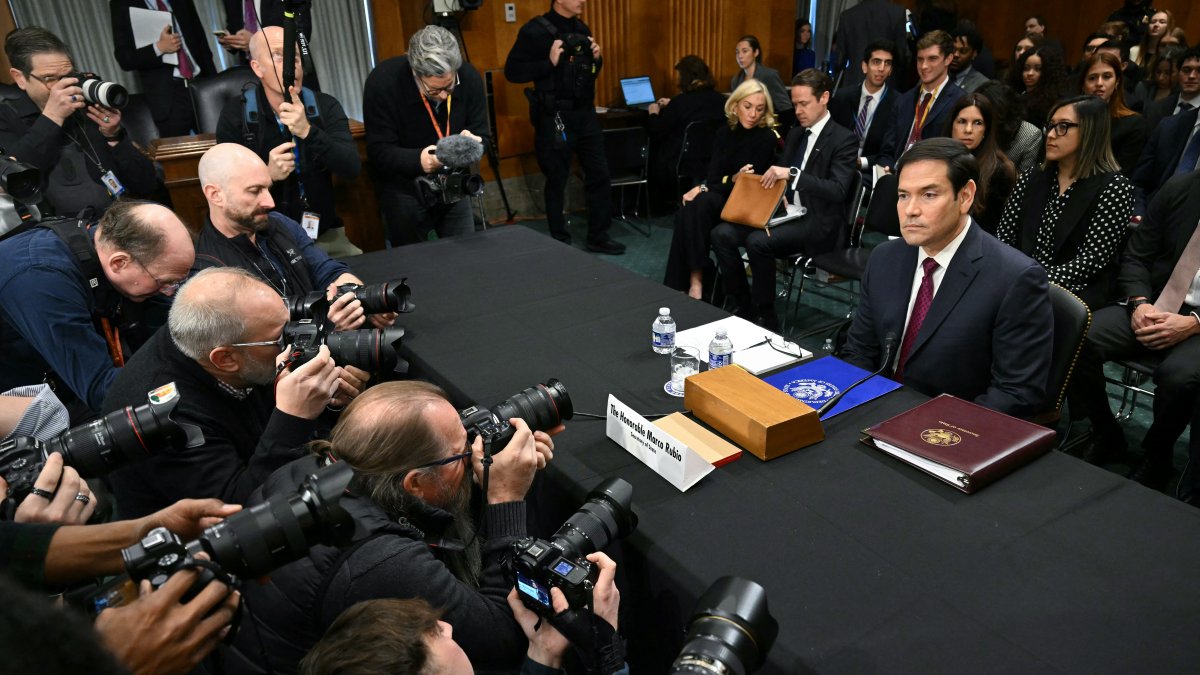
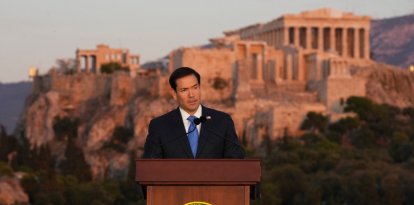
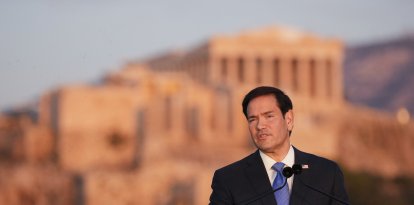
Marco Rubio during his Senate hearing.
Today's hearing of Secretary of State Marco Rubio before the Senate Foreign Relations Committee cleared many doubts and confirmed that we Venezuelans could not be in better hands.
Rubio elegantly addressed the Democrats' attempts to corner him or, in cases like Tim Kaine or Brian Schatz, entrap him. He did so impeccably and elaborated on his plan for Venezuela.
From the exchanges, I drew several conclusions about the plan:
1. Delcy Rodriguez is not permanent.
2. Cooperating is not an option for the regime; its survival depends on it.
3. We have never been in a better position than today for a free Venezuela.
4. The regime is going to receive funds that will be carefully controlled by the United States. They will be destined to help Venezuelans.
5. U.S. companies want to invest, but they need confidence and security.
6. The interim regime is cooperating and, for now, that is working for the United States.
7. The release of political prisoners will continue. The pace is not what Rubio would like. The U.S. is keeping a close eye on how the regime treats the prisoners and those released.
8. He spoke of quarterly deadlines: 3, 6, and 9 months. For each quarter, there must be substantial improvements.
9. The military threat is still on the table, although the U.S. hopes it will not be necessary to use it.
10. The goal is a free, prosperous Venezuela, where the opposition participates and takes power.
11. Maria Corina enjoys the respect and support of the United States and, particularly, President Trump.
12. The United States will work until all sectors of Venezuela are represented, until the diaspora returns if it deems it necessary, and until there is "reconciliation."
Rubio did not come up with his plan overnight. He, who has spent much of his congressional career has been about fighting communist regimes on the continent, has been preparing for this moment for years. And taking on this challenge seems like a life achievement.
I remember, just after the operation to capture Maduro and when uncertainty reigned about what would happen, a friend, in doubt and frustration, asked me, "If there was only one person in the whole world that you could choose to lead this process, one person in the whole world that you would want in the room making decisions, who would you choose? Well, I would pick Marco Rubio. If he, who is the most powerful Hispanic in the world, fails to land this plane, it's because it's impossible."
He's right. We couldn't be in better hands. Today, at the hearing before senators, it was clear. Thank God, the man in charge, under instruction from President Trump, is Secretary of State Marco Rubio. If, as he peeked today, he manages to land the plane in less than a year - in a period of, roughly, nine months - it would be an unmitigated miracle. And it would be his miracle. The Marco Rubio Miracle.
The challenge is tremendous, as Rubio himself put it. No one is naïve. Who better than he knows who the people who, after Maduro's capture, were left in charge of Venezuela are? But the landing, it is hoped, should be soft. Since the U.S. does not intend to commit troops for now but does keep the military threat in check, it aims to work with the actors on the ground - whose survival depends on how much they cooperate. And, Rubio has said, the response has been encouraging.
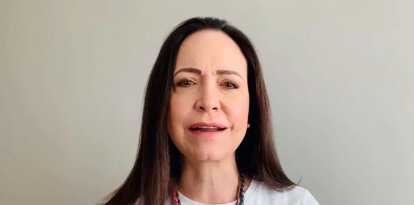
Indeed, it was noted by María Corina Machado herself after leaving her meeting with the secretary:
"We are beginning to see how the repressive apparatus is weakening. Is it enough? No. But the signs are extraordinary: political leaders who have taken to the streets, the parents who are demonstrating outside the prisons, and the brave students who are facing the regime." None of that, less than four weeks ago, before January 3, was even conceivable. Venezuela was subjected, under Maduro, to an implacable police regime that had plunged the whole society into terror.
There is no doubt: Venezuela has changed. The transition is advancing. And we are, fortunately, in the best possible hands. Great challenges will come, not everything will go as expected, but today, at least, we can have these discussions.
LATEST