Venezuela opens its oil industry to encourage foreign investment while the US relaxes sanctions
The reform relaxes the rules on private participation in oil projects, enables international arbitration and recognizes the possibility of international arbitration.
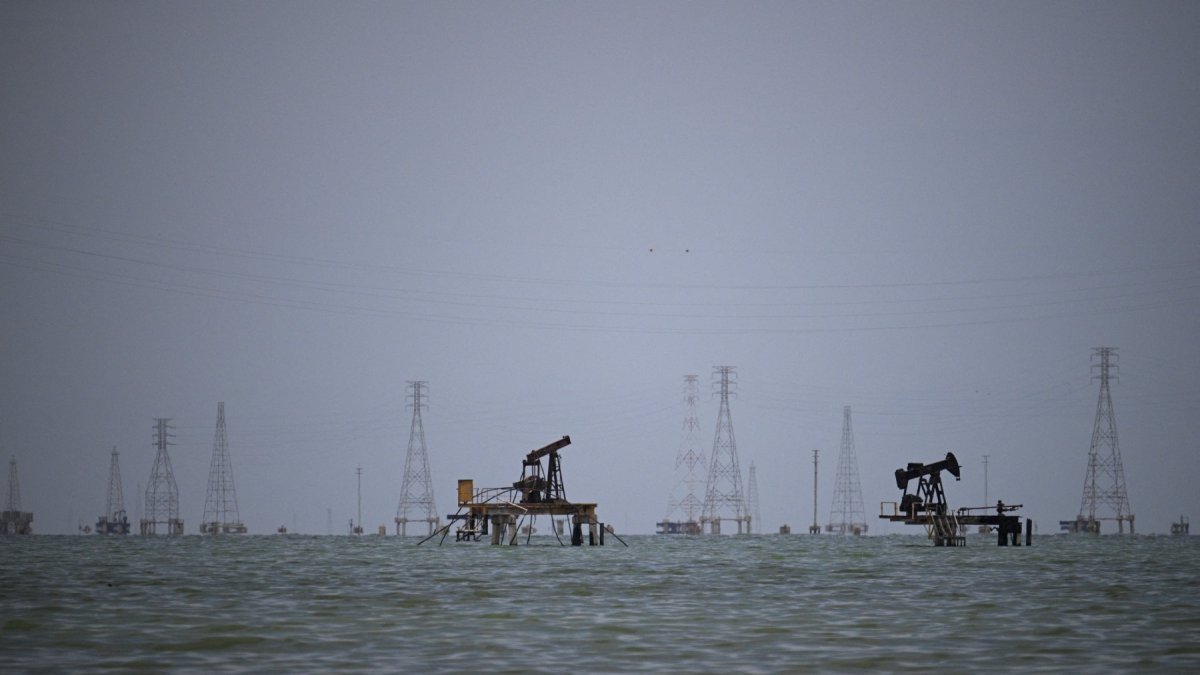
Oil platforms in Venezuela.

Venezuela's illegitimate parliament, controlled by the Chavista regime, unanimously approved a partial reform of the Organic Law of Hydrocarbons that dismantles part of the state control imposed during the last twenty years. The shift comes weeks after the capture of dictator Nicolás Maduro following a U.S. military operation in Caracas and amid direct pressure from President Donald Trump's administration to reorganize the Venezuelan energy sector.
The measure seeks to open the country's main industry to private and foreign investment after years of productive collapse, structural corruption and capital expulsion. The law will go into effect once it is enacted by Delcy Rodriguez and published in the Official Gazette.
A forced rollback of the chavista model
The reform relaxes the rules for private participation in oil projects, enables international arbitration, recognizes the possibility of international arbitration in investment disputes and establishes a scheme that allows a more direct payment of royalties to the Venezuelan State.
According to official information, investors will assume the operating costs and financing risks. The regime maintains that the reform seeks to attract capitals that moved away from the country after the legal changes implemented during the mandate of Hugo Chávez.
Delcy Rodríguez stated that it is a "clear law, with legal certainty, with regulations, adapted to the international practices of this sector," emphasizing that the oilfields will remain the property of the State.
The 2006 precedent
Treasury license and easing of sanctions
In parallel, the U.S. Department of the Treasury announced an easing of sanctions on the Venezuelan oil sector through a general license issued by the Office of Foreign Assets Control (OFAC).
General License No. 46 authorizes transactions involving the Venezuelan regime and PDVSA that are "ordinarily incident and necessary" to activities such as the extraction, export, re-export, sale, storage, marketing, transportation and refining of Venezuelan-origin crude oil, provided they are conducted by an "established U.S. entity."

Contracts and payments under U.S. control
Payments that are not commercially reasonable are not authorized, nor are transactions involving exchanges of debt, gold, or digital assets issued by the Venezuelan state, including petro. Transactions linked to Russia, Iran, North Korea, or Cuba, or to companies controlled by Chinese capital, are also prohibited.
Companies will be required to submit detailed reports to the Department of State and the Department of Energy, with information on the parties involved, volumes, values, destinations and payments to the regime. The Treasury clarified that the license does not exempt compliance with other federal regulations.
LATEST