‘Holocaust erasure’ on the BBC
International Holocaust Memorial Day cannot be uncomplicatedly marked in the way that it is intended: as a commemoration of the Nazi slaughter of 6 million Jews for the sole reason that they were Jews.

BBC headquarters in Portland Place, London
About 30 years ago, I ran into an old BBC colleague while on a reporting trip in the Balkans. After spending an evening drinking in a local bar with a few other journalists, we walked back to the hotel where we were both staying. A bizarre conversation ensued.
My colleague told me he had been spending a lot of time in Jerusalem, a city I knew well because my father lived there. I asked him where he stayed when in town.
He looked at me askance, as if the answer was so obvious that there was no need for me to have asked the question. “At the American Colony, of course!” he exclaimed, referring to the handsome Palestinian-run hotel in eastern Jerusalem. Then he told me that whenever he landed in Tel Aviv, he couldn’t wait to get to the hotel, as he would now be among Palestinians and not Israelis.
He said all this knowing that I was Jewish. His tone, moreover, was not hostile or challenging. To him, this was evidently just common sense, unarguable and not at all objectionable.
That encounter has stayed with me all these years for one simple reason: The BBC and its institutional culture haven’t changed in all that time.
"There is a long tradition on the left of excising Jews from their own tragedy."
I spent much of the 1990s working for the British public broadcasting corporation, both on staff and as a freelancer. I encountered antisemitism there on more than one occasion, including the time when a colleague called me a “Jew boy” in the context of a banal discussion over who owed what when a takeaway meal for the editorial team arrived. He was never disciplined for invoking the stereotype of a money-grubbing Jew; I, on the other hand, received a formal warning from a senior editor because, in my frustration, I had shoved my abuser when he refused to apologize, asking me where my sense of humor was instead.
It’s striking that this incident occurred at a time when the conflict between Israel and the Palestinians was comparatively less acute, and antisemitism was hardly the mass social phenomenon it is today. What it shows is that the casual disdain for Jews that marks current BBC coverage has always been lurking in the minds of too many of its reporters and producers.
Of course, the BBC is primarily a British problem, but it is not solely one. Thanks to its World Service, which was genuinely a lifeline during the Cold War for residents of the Soviet bloc and other authoritarian states, it has long been a global brand. Its offerings in drama, music and comedy are regularly found on streaming and cable platforms in the United States and around the world, as are its news channels.
Throughout the war in Gaza, British Jews openly despaired at the bias embedded in the BBC’s coverage, along with its echoing of patently false claims, such as the libelous accusation that the Israel Defense Forces deliberately targeted medical staff at the Shifa Hospital in Gaza City in November 2023. Last week, however, its coverage took an even more sinister turn on an issue that is not directly related to the Palestinians but deeply relevant to Jews.
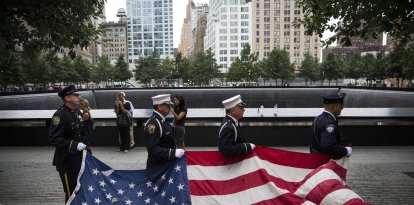
As the world marked International Holocaust Memorial Day on Jan. 27, BBC anchors on several programs told their audience that what was being commemorated was the extermination of “6 million people.” Not 6 million Jews; 6 million people. The omission amounted to what the French philosopher Bernard-Henri Lévy called “Holocaust erasure”: acknowledging that the event took place without specifying who was targeted or why.

In its subsequent apology, the BBC did not explain how the script ended up “incorrectly worded” so that “Jewish” was dropped in between the terms “6 million” and “people.” We are therefore forced to guess why, and the plausible answer comes from examining the culture which the BBC itself represents.
To begin with, there is a long tradition on the left of excising Jews from their own tragedy. In the Soviet Union, memorials to the victims of the Nazi genocide referred to them as “Soviet citizens” with any mention of “Jews” strictly forbidden. It is no accident that this coincided with the Soviet Union’s aggressive pushing of an “anti-Zionist” foreign policy, which meant repressing Soviet Jews domestically by stigmatizing their religion, banning the study of Hebrew and preventing them from making aliyah to Israel.
These attitudes have been transplanted to the West. In an environment where Jews are perceived as privileged whites whose Israeli cousins have dispossessed an indigenous nation, talking about their historic victimhood won’t do. And if you sincerely believe that Israel is guilty of genocide in Gaza, then you will likely find that discussion of the Holocaust leaves a bad taste in your mouth. After all, legacy media outlets, of which the BBC is one, have not been immunized from the dunderheaded “oppressor/oppressed” bifurcation that distinguishes so many of the political contributions on social media.
Or you may feel that the proper purpose of Jan. 27 is now to encourage, or even compel, Jews to atone for Israel’s supposed crimes against the Palestinians—for doing to them, in other words, what was done to us.
Whatever the motivation, the fact remains that for the BBC, Holocaust Memorial Day cannot be uncomplicatedly marked in the way that it is intended: as a commemoration of the Nazi slaughter of 6 million Jews for the sole reason that they were Jews. With its ostensible “mistake,” coupled with its apparent refusal to investigate whether the omission really was an error, or whether it might have been deliberate, the BBC has demonstrated that it can be swayed by the antisemitic tropes that are increasingly common in the cultural and discursive environment in which we live.
It’s worth pointing out that unlike its competitors, the BBC receives a whopping 65% of its income by levying a so-called “license fee,” currently priced at around $250, on its British audience. While BBC executives bristle when the corporation is described as a “state broadcaster,” the fact remains that as an institution, it could not survive without forcing the British public to cough up the cash for its operations.
Increasing numbers of Britons, including those who appreciate the BBC, are tired of subsidizing such bias and believe that the corporation should be forced to stand or fall in the marketplace, just like other broadcasters. They are, quite simply, correct.
© JNS
LATEST