Russia launches a new massive attack of 300 drones and 30 missiles against Ukraine, defying Washington's warnings
The Ukrainian Armed Forces reported that they managed to intercept approximately 208 projectiles, although some areas of the country, such as the Sumy region, suffered damage to critical infrastructure.

Ukrainian air defenses deployed against Russian drones

Russia continued its fierce air offensive against Ukraine overnight Friday and Saturday, launching more than 300 drones and 30 missiles against various cities, in what is one of the heaviest attacks of the month.
As confirmed by Ukrainian President Volodymir Zelensky, at least one person was killed and six injured, including a minor, after drones struck a residential building in Odessa.
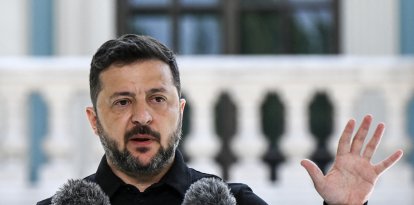
"Last night, our warriors from various units repelled another Russian attack. More than 300 strike drones and over 30 missiles of various types were launched against our cities," Zelensky tweeted Saturday. "Target elimination is still ongoing — drones remain in the air."
The Ukrainian Armed Forces reported that they managed to intercept approximately 208 projectiles, although some areas of the country, such as the Sumy region, suffered damage to critical infrastructure.
This new shelling came just three days after another massive Russian attack, which occurred on July 16, when the Kremlin ordered the launch of 400 drones and a missile against the regions of Vinnytsia, Kharkiv, Odessa and Kryvyi Rih, causing at least two deaths and more than a dozen injuries.
The aim of that attack, according to Kiev, was to strike at the national energy infrastructure.


World
Rusia bombardeó cuatro regiones de Ucrania a pesar de las advertencias de Trump
Luis Francisco Orozco
Both massive attacks represented a direct challenge to public warnings from President Donald Trump, who demanded the Kremlin stop its offensive immediately or face harsh economic sanctions.
However, senior Russian officials dismissed the threats, describing them as "theatrical."
Trump issued a theatrical ultimatum to the Kremlin.
— Dmitry Medvedev (@MedvedevRussiaE) July 15, 2025
The world shuddered, expecting the consequences.
Belligerent Europe was disappointed.
Russia didn’t care.
In response, Trump finally agreed to help Ukraine with weapons and announced this week a new military assistance plan through NATO allies: the United States will sell weaponry, including Patriot systems, to European countries, who will then send it to Kiev. According to the Republican leader, the advantage of this measure is that it will not incur costs for U.S. taxpayers, although some members of his party have doubts about this approach.
Russia does not seem to want peace
The next day, Donald Trump threatened stiff tariffs if Moscow did not cease its offensive. However, from the Kremlin, they limited themselves to scoffing at the ultimatum. Dmitry Medvedev, deputy chairman of the Russian Security Council, said that "The world shuddered, expecting the consequences. Belligerent Europe was disappointed. Russia didn't care."
LATEST